
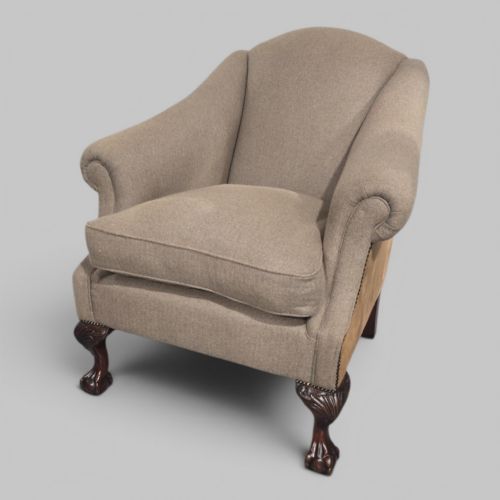


Chippendale Wing Chair
A chippendale wing chair brings grand mahogany frames and sheltering upholstered wings together for serious fireside sitting.
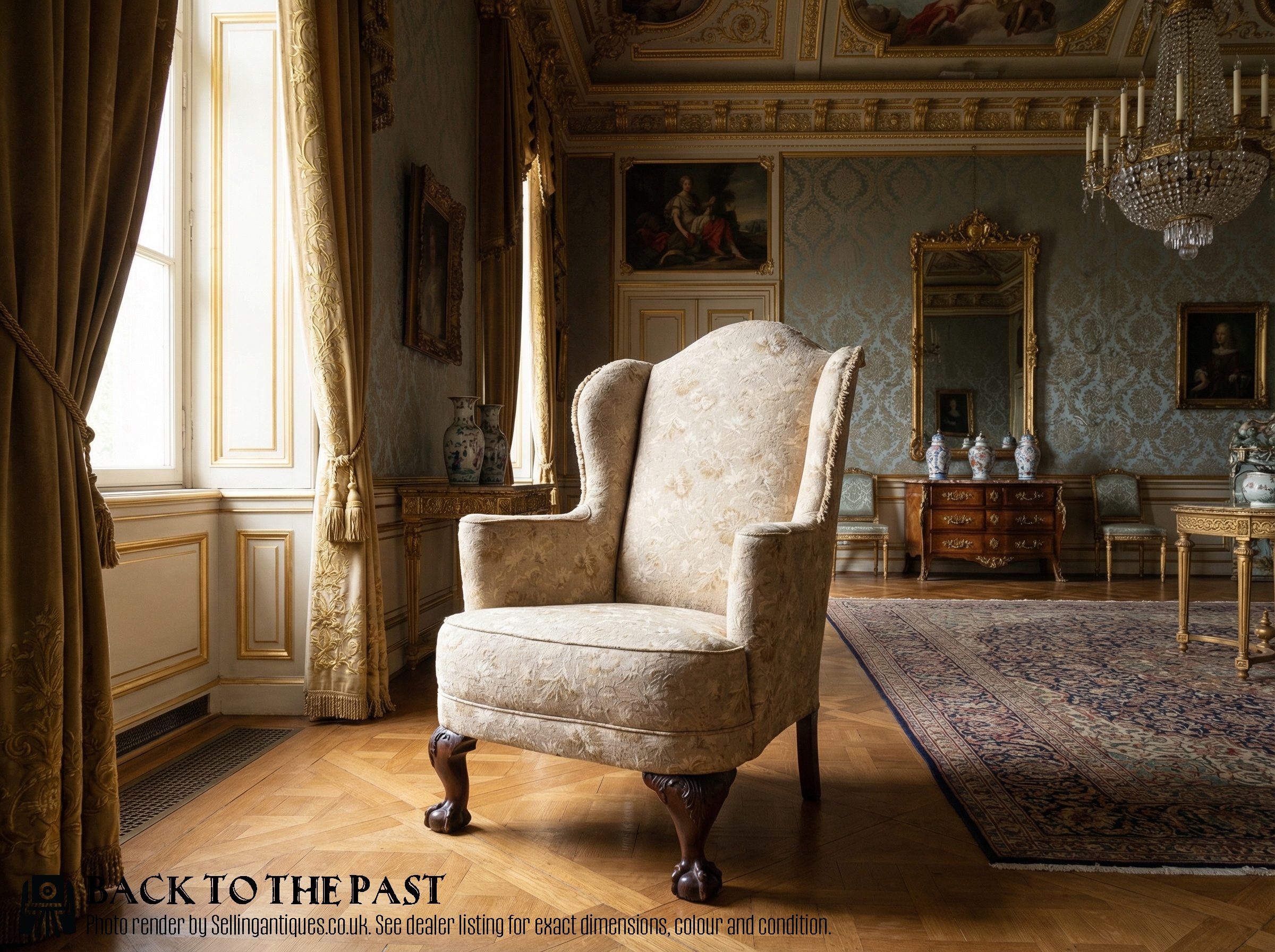
Chippendale Wing Chair
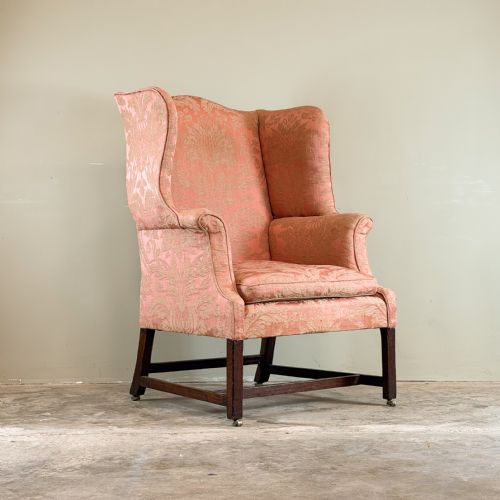
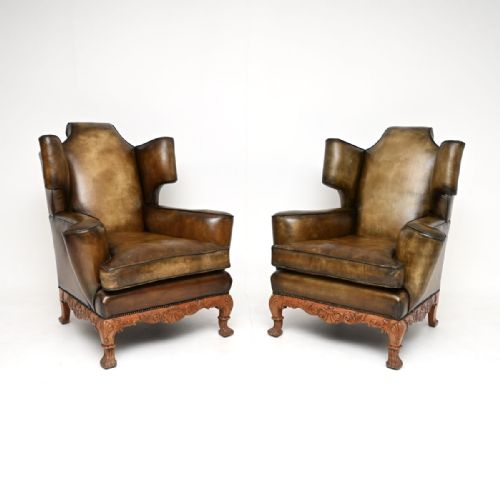
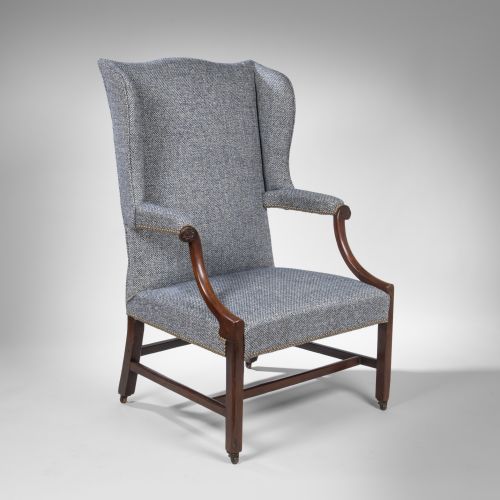
The form combines exposed mahogany frames with deep upholstery in leather, damask, velvet, or calico. Many pieces follow George II or George III proportions, while others display the distinctive carved details of the Chippendale style.
Makers often drew on Chinese Chippendale or Irish design motifs to ornament the legs and stretchers. Pairs and single armchairs appear across periods spanning the Georgian era through to the Edwardian revival.
Materials and construction methods
Makers built the structural framework in solid mahogany and timber, relying on traditional joinery to support the heavy loads of deep upholstery. Brass details sometimes appear on castors or hardware.
Surface decoration ranges from plain polished timber to finely carved mahogany frames showing intricate cabinetmaker work. Upholstery techniques vary from traditional webbing and stuffing to buttoned leather and fitted fabric covers.
Chippendale Wing Chair Retail Price Guide 2026
Typical asking prices for chippendale wing chair among the pieces listed under this phrase on Sellingantiques today, from the lower quarter to the upper quarter. They describe what is for sale here now, not the wider market.
Early wing chairs effectively functioned as personal micro-climates, trapping peat fire warmth in their fabric ears while the servants froze.
Assessing quality in construction and design
The distinction between ordinary and exceptional pieces lies in the crispness of the mahogany carving and the integrity of the underlying timber frame. Early 18th-century examples display superior joinery and proportions compared to later revival items.
The choice of covering material and the precision of the upholstery work heavily influence the overall character. Heavy crimson leather or fine damask applied to a well-proportioned frame commands greater appreciation than standard fabric on a plain timber base.
The Chippendale Wing Chair Glossary
- Wingback
- An upholstered armchair with projecting side panels attached to the arms. These extensions originally kept fireplace heat close to the occupant.
- Chippendale Style
- Furniture following the 18th-century design vocabulary published by Thomas Chippendale. It typically incorporates mahogany frames and carved ornamentation.
- Revival
- Pieces produced in a later period, such as the 19th or early 20th century, imitating the aesthetic of earlier eras. These items utilise historical design forms with contemporary manufacturing methods.
- Calico Stage
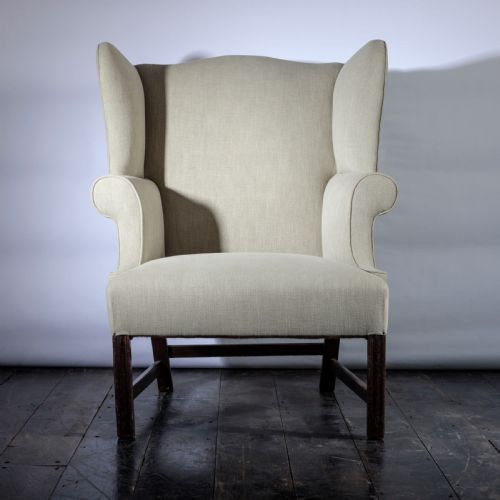
- An armchair upholstered in plain cotton fabric without a final decorative cover. This allows the buyer to choose their own upholstery finish.
Chippendale Wing Chair: Frequently Asked Questions
How do I date a wing chair?
Dating relies on examining the timber species, joinery methods, and the style of the carved mahogany legs. 18th-century pieces show hand-cut joinery and period-specific carving patterns.
Later revival chairs from the 19th and 20th centuries often feature machine-tooled elements or standardised construction methods typical of their actual decade of manufacture.
Are these chairs comfortable for daily use?
These armchairs were designed for relaxed seating, with deep padding and high backs that support the head and shoulders. Leather and fabric upholstery options both offer substantial physical support.
Modern comfort depends on the internal stuffing and whether the upholstery has been recently restored to standard firmness.
What is the difference between Georgian and revival chairs?
Georgian chairs were produced during the 18th century under the direct influence of contemporary cabinetmakers. They possess historical authenticity and period timber stock.
Revival versions were built decades later, copying the earlier aesthetic for Victorian or Edwardian homes. Both share similar silhouettes but differ in age and manufacturing context.
How should I care for leather upholstery?
Leather-covered armchairs require regular dusting and occasional treatment with appropriate conditioning balms to keep the hide supple. Keeping the leather away from direct heat sources prevents cracking.
Brown and crimson leather surfaces develop a natural patina over time that benefits from gentle cleaning rather than harsh chemical treatments.