


Chippendale Style Tray
These chippendale style tray pieces combine classical cabinetmaking with raised rims, offering both decorative presence and practical utility for modern interiors.
Chippendale Style Tray
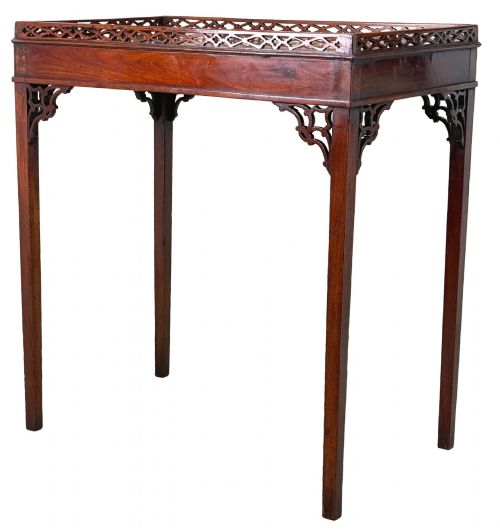
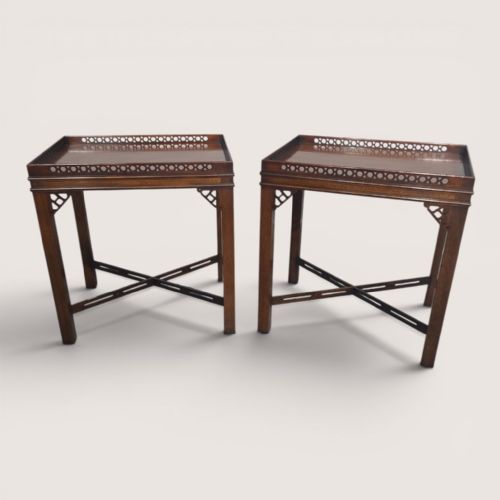
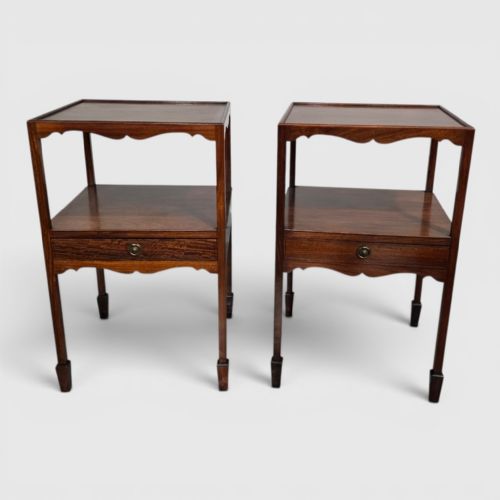
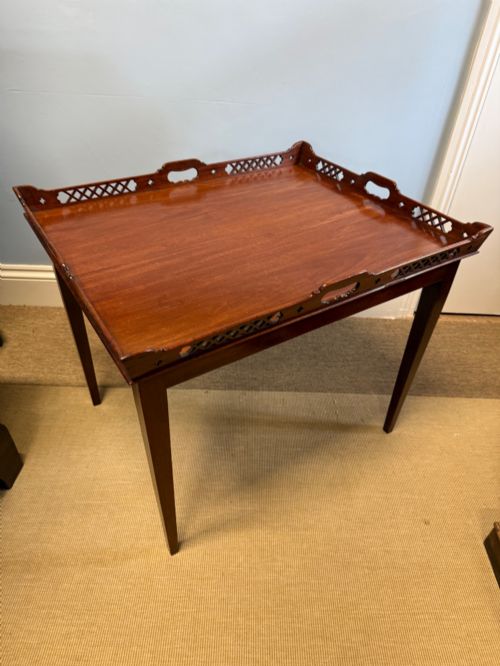
When you search for chippendale style tray pieces, you encounter a variety of forms including silver tables, occasional tables, and bedside variants spanning the eighteenth century to the twentieth century. These items typically feature raised edges designed to secure glassware or presentation silver during use.
The selection on this page ranges from eighteenth-century Georgian originals to later revivals from the Victorian, Edwardian, and 1930s periods. Mahogany dominates the offerings, alongside occasional examples in walnut and lacquer.
Materials and construction methods
Cabinetmakers relied heavily on solid mahogany and walnut to construct these tables, often incorporating carved details along the legs and gallery edges. Brass hardware appears on specific pieces to assist with handling and display.
Lacquered surfaces emerge in select nineteenth-century interpretations, showing alternative finish treatments applied to wooden frames. Joinery techniques reflect the period of manufacture, from eighteenth-century cabinet construction to Edwardian revival methods.
Listings feature mahogany, brass, walnut, and lacquer across periods from the 18th century to the 1930s.
Distinctions in quality and execution
The hierarchy of quality rests upon the crispness of the carving on the tray edges and table legs, separating standard production from exceptional cabinetwork. Period authenticity also plays a role, with eighteenth-century pieces commanding different attention compared to Edwardian or 1930s revivals.
Timber selection dictates the visual depth of the grain, particularly in mahogany and walnut examples where figured wood enhances the surface appearance. The integrity of the raised tray rim and its attachment to the base structure remains a central indicator of skilled construction.
The Chippendale Style Tray Glossary
- Silver table
- A form of display or serving table featuring a raised gallery edge to hold silver items. These tables date predominantly from the Georgian period onward.
- Tray-top
- A tabletop design incorporating a raised rim or gallery, originally intended to prevent items from sliding off during service. This feature defines the primary visual characteristic of these tables.
- Gallery
- A decorative raised border fitted around the perimeter of a tabletop or tray. Galleries can be pierced, fretted, or solid depending on the style and date.
- Chippendale revival
- A later period of furniture production, particularly common in the Edwardian era and late nineteenth century, which reinterprets eighteenth-century designs. These pieces emulate the proportions and ornamentation of Thomas Chippendale's style.
Chippendale Style Tray: Frequently Asked Questions
What is a chippendale style tray table used for?
These tables served historically for serving tea, displaying silver, or holding drinks in reception rooms. Today, they function effectively as side tables, coffee tables, or bedside surfaces.
The raised rim ensures that items placed on top remain secure, blending decorative utility with practical furniture design.
How do I date a mahogany tray table?
Dating relies on examining the timber species, joinery methods, and secondary woods used in the interior construction. Eighteenth-century pieces display hand-cut joinery and period-specific patination.
Revival pieces from the Edwardian era or the 1930s exhibit machinery marks and construction traits consistent with later manufacturing techniques.
Are these tables solid mahogany?
Many examples utilise solid mahogany for the structural frames, legs, and tray galleries, particularly those originating in the eighteenth and early nineteenth centuries. Secondary timbers may appear in secondary framing areas.
Later revival pieces sometimes incorporate mahogany veneers over supportive core woods to achieve similar aesthetic results.
What is the difference between a silver table and an occasional table?
A silver table specifically incorporates a raised gallery edge designed to hold presentation silver and tea services securely. An occasional table is a broader term for any small, movable table used for miscellaneous purposes.
Many tables featuring a chippendale style tray design fall under both categories depending on their exact rim depth and proportions.
How do I care for a lacquered walnut table?
Lacquered surfaces require protection from direct sunlight and excessive moisture to preserve the integrity of the finish. Dusting with a soft, dry cloth is sufficient for routine maintenance.
Avoid chemical polishes that can degrade historical or applied finishes over time.