

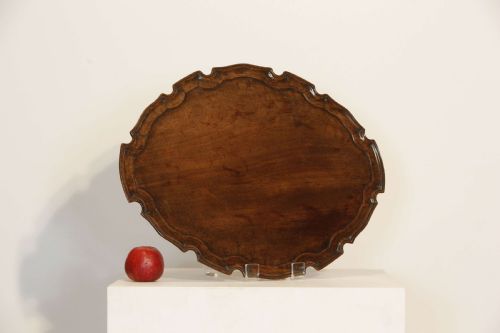


George III Tea Tray
A george iii tea tray brings genuine Georgian craft to the room, offering solid mahogany surfaces and raised rims designed to hold silver pots securely.
George III Tea Tray
When you search for a george iii tea tray, you encounter timber serving pieces and occasional tables from the Georgian period, often made of rich mahogany with shaped or inlaid edges. The pieces listed here span the eighteenth century into later revivals, alongside related forms like silver salvers and teapot stands.
You are most likely to meet mahogany variants on this page, ranging from plain oval trays to carved pie crust designs and multitiered tray tables. Some examples double as silver tables or tilt top occasional tables, reflecting how domestic serving furniture evolved during the period.
How they were made
Maker workshops shaped these items primarily from solid mahogany and satinwood, frequently employing fine inlay work to define the borders and centre panels. Craftsmen carved raised rims directly from the timber block or applied shaped mouldings to secure the tea service.
Metal elements also appear across the selection, with brass fittings and sterling silver employed for handles, mounts, and standalone salvers. Joinery relied on traditional cabinetmaking methods to ensure the tray tops remained stable over decades of use.
George III Tea Tray Retail Price Guide 2026
Typical asking prices for george iii tea tray among the pieces listed under this phrase on Sellingantiques today, from the lower quarter to the upper quarter. They describe what is for sale here now, not the wider market.
Listings for this phrase combine mahogany serving trays with silver salvers, teapot stands, and occasional tables spanning the Georgian and Victorian eras.
What varies in quality
Quality rests in the crispness of the carved detail on the pie crust edges and the precision of the satinwood inlay work. Superior examples show thoughtful grain selection in the timber and subtle, balanced proportions rather than heavy, utilitarian construction.
The integration between the tray top and its support structure dictates the piece's standing, particularly on tilt top tables and silver tables where the mechanism must operate smoothly. Finer items exhibit careful attention to secondary timbers and understated, harmonious joinery.
The George III Tea Tray Glossary
- Pie crust
- A raised, scalloped edge carved from the solid timber of a tray top. This decorative moulding mimics pastry work and requires skilled hand carving.
- Silver table
- A form of side table with a raised gallery edge designed to hold tea silver securely. They emerged during the eighteenth century as fashionable social furniture.
- Tilt top
- A tabletop mechanism that allows the surface to pivot to a vertical position when not in use. This clever design saved valuable floor space in smaller rooms.
- Salver
- A flat metal serving tray, usually elevated on small feet. Silver and sterling silver versions were standard for serving drinks in polite company.
George III Tea Tray: Frequently Asked Questions
How were tea trays used?
These trays served to transport teapots, cups, and silver sugar basins from the kitchen to the parlour for social gatherings. Their raised edges prevented porcelain from sliding off during transit.
Over time, many served decorative functions in the drawing room or doubled as low occasional tables when mounted on folding or fixed stands.
How do I clean mahogany?
Dust the surface regularly with a soft, dry cloth to prevent dirt accumulation in the carved details. Avoid modern silicone polishes that build up and dull the timber over time.
Feed the wood periodically with traditional beeswax to maintain a natural lustre and protect the antique finish. Keep the tray away from direct heat sources to prevent warping.
How do I spot a later copy?
Examine the timber underneath and inside the joints for signs of age, tool marks, and consistent wear patterns. Later reproductions often use incorrect secondary woods or machine cut elements.
Weight and balance offer further clues, as authentic Georgian pieces reflect the specific hand tools and structural logic of their period.