






Carved Mahogany Tray
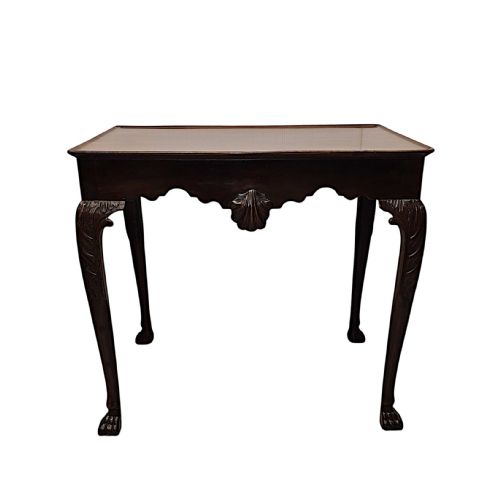
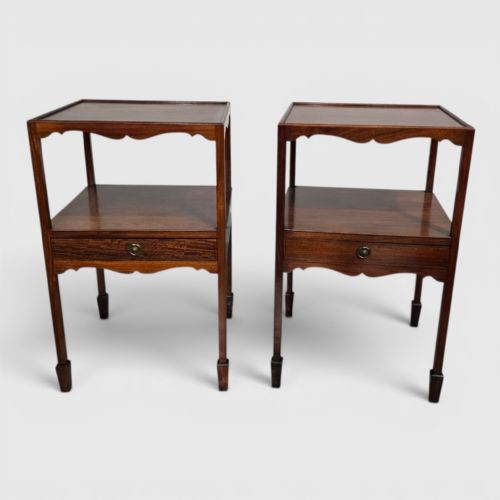
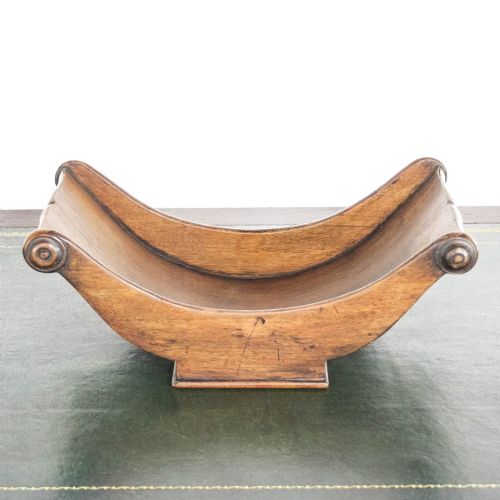
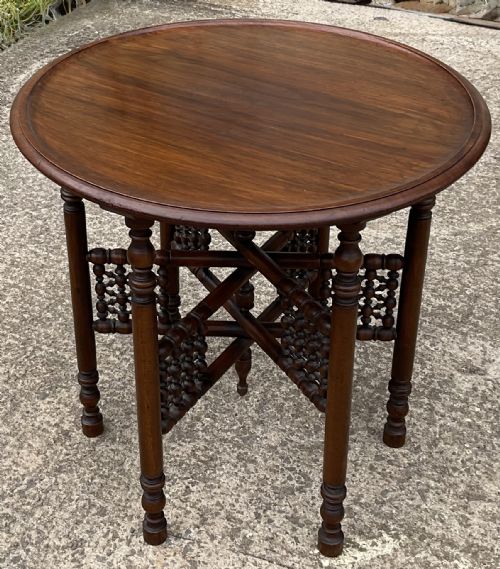
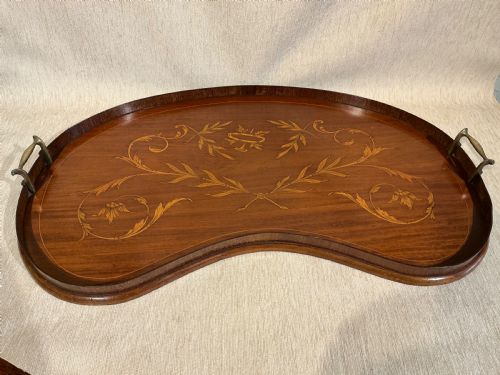
A carved mahogany tray brings rich timber grain and classic Georgian or Edwardian styling directly to your coffee table or sideboard.
Carved Mahogany Tray
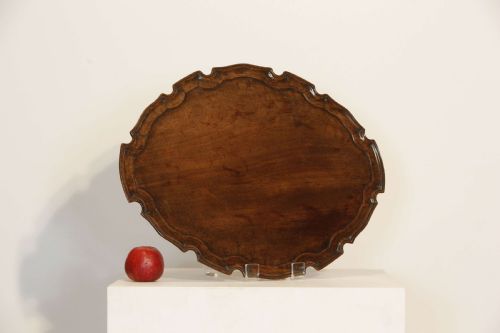
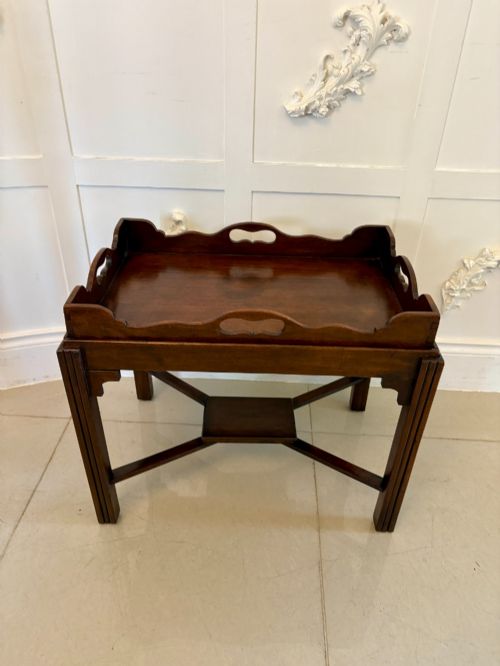
When you search for a carved mahogany tray, you encounter everything from oval pie-crust serving pieces and galleried tabletop accessories to larger butler trays mounted on folding stands. The selection spans the eighteenth century through the Edwardian era, taking in Georgian, Victorian, and Regency influences alongside Chippendale styles.
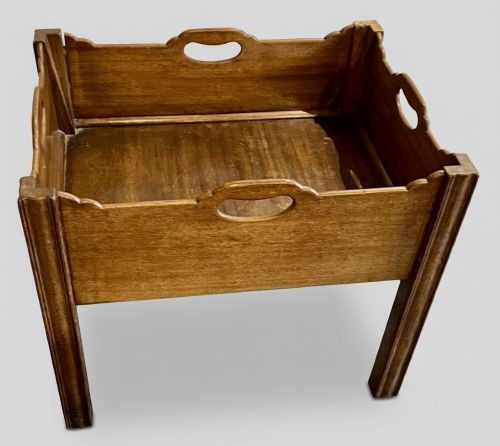
You are most likely to meet rectangular or oval examples featuring raised rims, scalloped edging, or pierced handles. Many of these pieces integrate smoothly with stands, transforming portable servers into stable occasional tables within a room.
How they were made
Cabinet makers utilised dense, durable mahogany as the primary timber, occasionally accenting surfaces with satinwood inlay, brass handles, or glass panels. Solid planks were shaped by hand to create raised rims and detailed borders.
Carving techniques ranged from subtle edge moulding to elaborate pie-crust profiles and Chippendale-inspired motifs. Surfaces were planed, scraped, and finished to highlight the deep reddish-brown grain of the wood.
Carved Mahogany Tray Retail Price Guide 2026
Typical asking prices for carved mahogany tray among the pieces listed under this phrase on Sellingantiques today, from the lower quarter to the upper quarter. They describe what is for sale here now, not the wider market.
Listings span the 18th century, 19th century, Georgian, Victorian, and Edwardian periods, utilising mahogany, brass, glass, and satinwood.
What varies in quality
The standard of a carved mahogany tray rests on the crispness of the timber carving and the integrity of the joints around the gallery or rim. Superior examples display sharp, hand-cut detailing that remains clean and defined.
Proportion and timber selection dictate the overall presence of the piece, with finer items showcasing carefully matched wood grain across the entire surface rather than patched repairs or mismatched boards.
James Mein of Kelso·Gillows
The Carved Mahogany Tray Glossary
- Pie crust
- A raised, carved wooden rim shaped with decorative scalloped undulations resembling pastry edges. This technique appears on eighteenth-century and revival serving pieces.
- Gallery
- A low decorative border fitted around the edge of a tray or table top to keep items from sliding off. These can be pierced through the timber or left solid.
- Butler tray
- A portable wooden tray with hinged or fixed sides, frequently designed to lift off a folding wooden stand. They served functional roles in period dining rooms.
- Chippendale
- A style of furniture design originating in the eighteenth century characterised by intricate carved details, ribbon backs, and classical proportions. Pieces in this manner remain highly sought after.
- Regency
- A design period spanning the early nineteenth century defined by neoclassical lines, influences from ancient civilisations, and refined craftsmanship.
Carved Mahogany Tray: Frequently Asked Questions
How do I use a tray on a stand?
A tray on a stand functions as a flexible occasional table for serving drinks or displaying decorative objects.
The removable top allows you to lift the tray away from its folding base when carrying items across rooms.
What is a pie crust edge?
A pie crust edge is a carved, undulating wooden border shaped to resemble traditional pastry crusts.
Cabinet makers carved these decorative rims directly from solid mahogany planks on eighteenth-century pieces.
How do I care for mahogany?
Mahogany surfaces require gentle dusting with a soft, dry cloth to protect the polished wood grain.
Keep wooden trays away from direct heat sources and moisture to prevent warping or finish damage.
How do I date an antique tray?
Dating relies on examining the construction methods, timber thickness, and carving styles visible on the piece.
Comparing the design motifs against Georgian, Victorian, or Edwardian conventions helps establish the period of origin.