

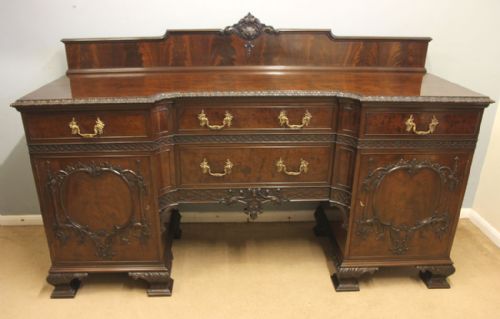


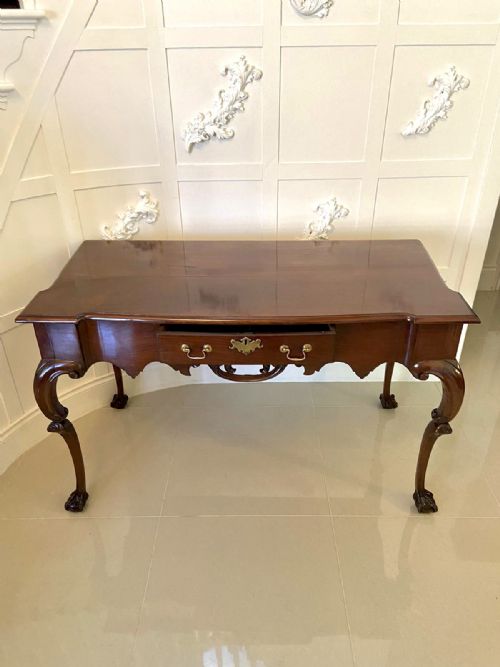


Chippendale Style Sideboard
A chippendale style sideboard brings stately proportion and carved mahogany into a dining room, offering serious surface space and historical presence.
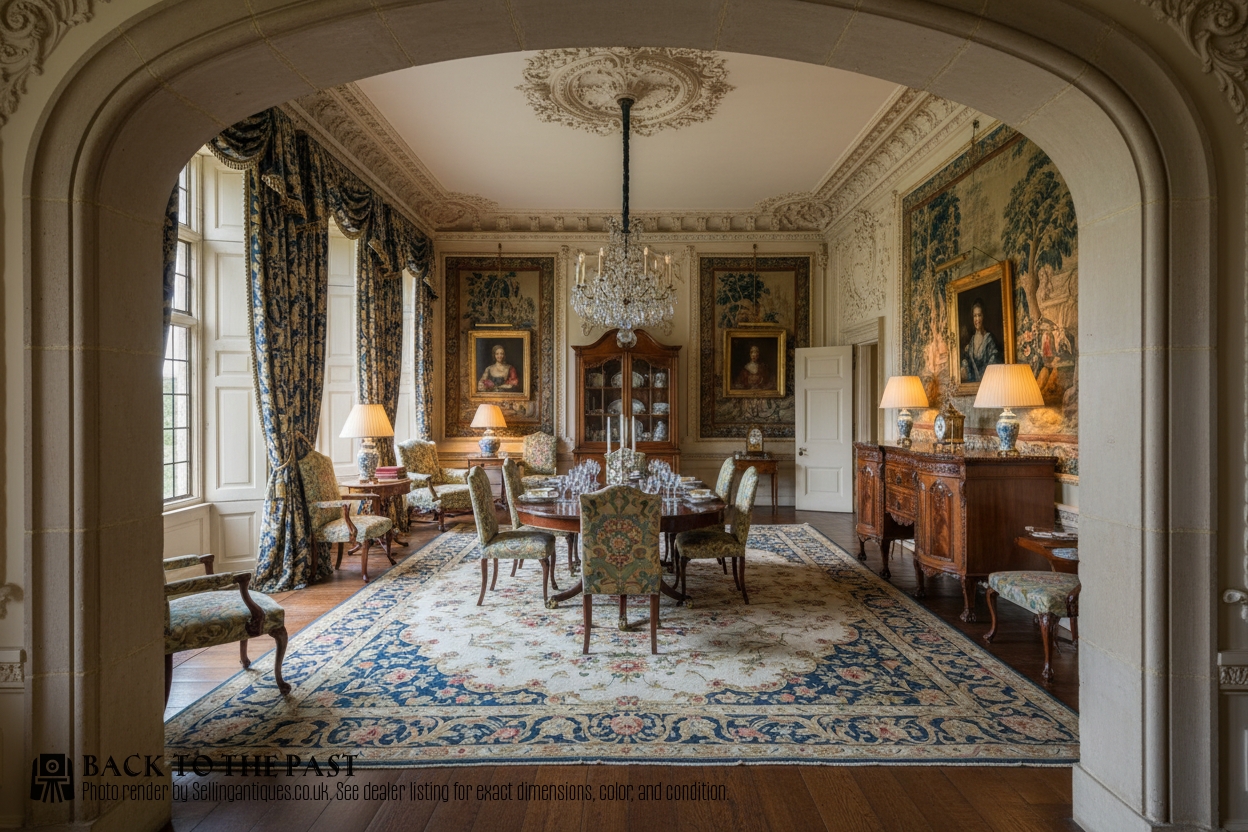
Chippendale Style Sideboard
When you search for a chippendale style sideboard, you encounter substantial serving tables, buffets, and sideboards shaped from mahogany across various periods. The selection spans authentic 18th century examples alongside 19th century Victorian interpretations and Edwardian revival pieces.
Most specimens you meet on this page date from the late 19th and early 20th centuries, reflecting the revival movements that favoured classic Georgian lines. Alongside conventional sideboards, the listings encompass related forms like serpentine serving tables, side cabinets, and display cabinets sharing the same stylistic vocabulary.
Makers drew on Georgian design principles, producing pieces with serpentine fronts, carved details, and occasional Chinoiserie influences. The forms vary from straightforward serving tables to large breakfront sideboards equipped with ample storage for dining ware.
Materials and construction
The primary material across these pieces is solid mahogany, frequently enhanced with flame mahogany veneer to create striking grain patterns on drawer fronts and cabinet doors. Satinwood details sometimes appear as contrasting inlay work, providing visual definition to the darker timber.
Cabinetmakers utilised traditional joinery techniques, shaping structural elements by hand and applying detailed carving directly to the mahogany. Brass hardware, including handles and key escutcheons, provides functional and decorative accents against the polished wood surfaces.
Chippendale Style Sideboard Retail Price Guide 2026
Typical asking prices for chippendale style sideboard among the pieces listed under this phrase on Sellingantiques today, from the lower quarter to the upper quarter. They describe what is for sale here now, not the wider market.
One unexpected Edwardian offering pairs a serpentine console table with a cutlery set and canteen plate.
What separates the grades
The distinction between standard and superior pieces rests on the depth and crispness of the hand carving, particularly along the frieze and legs. Superior examples display sharply defined motifs and balanced proportions that reflect careful proportioning by the maker.
Selection of timber significantly influences the overall character, with figured flame mahogany veneers and dense, rich solid mahogany marking out the better workshop productions. The integrity of the secondary woods used for drawer linings and internal framing also indicates the standard of original construction.
Elkington and Co
The Chippendale Style Sideboard Glossary
- Serpentine front
- A furniture front characterised by a concave central section flanked by two convex ends, or the reverse. This undulating profile requires skilled carpentry to execute smoothly.
- Flame mahogany
- A veneer cut from timber where the grain resembles flickering flames. It creates a highly decorative and figured surface on drawer fronts.
- Dresser base
- A low cabinet traditionally used for storing and serving food in a dining space. It forms a sturdy foundation often fitted with drawers and cupboards.
- Chinoiserie
- European interpretations of Chinese artistic motifs and styles. In cabinetmaking, this appears as specific decorative carving and surface ornamentation.
- Breakfront
- A large cabinet or sideboard where the central section projects forward from the flanking outer sections. This architectural arrangement adds depth to the elevation.
Chippendale Style Sideboard: Frequently Asked Questions
How do I date a chippendale style sideboard?
Dating relies on examining the timber, construction methods, and hardware present on the piece. 18th-century originals show hand-sawn secondary woods and period joinery, while revival pieces from the Victorian and Edwardian eras display machine-cut elements alongside period revival styling.
Secondary indicators include the choice of veneer and the wear patterns on interior drawer sides. Comparing the specific carving style against documented revival periods helps narrow down the decade of manufacture.
Where should I place a sideboard?
These large serving pieces find their traditional home in dining rooms, positioned against a main wall to assist with serving meals. They also suit spacious hallways or living areas where surface display and interior storage are useful.
Ensure the room has sufficient clearance for the cabinet doors or drawers to open fully, particularly with serpentine or breakfront shapes that extend further into the space.
How do I care for mahogany surfaces?
Maintain mahogany by dusting regularly with a soft, dry cloth and avoiding silicone-based polishes that build up a hazy film. Periodic application of quality beeswax feeds the timber and preserves the natural lustre of the finish.
Keep the piece away from direct sunlight and heat sources to prevent the wood from drying out and the veneer from lifting over time.