


Chippendale Style Ottoman
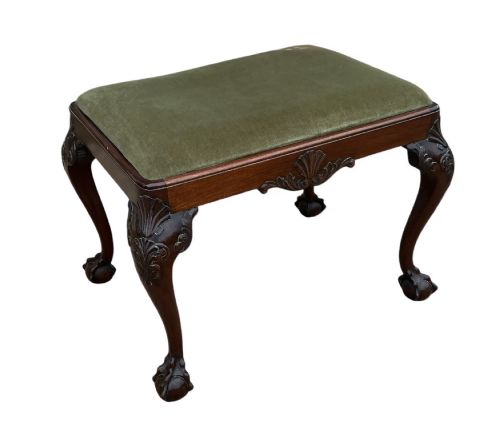
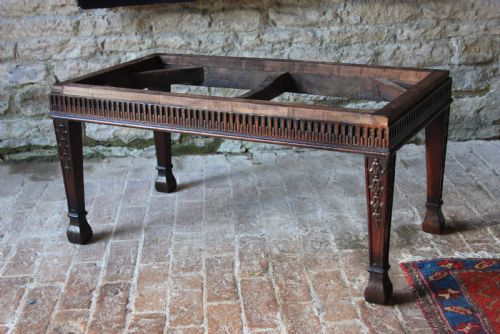
These pieces of chippendale style ottoman seating are solid timber footstools and centre stools designed to anchor a traditional room with character.
Chippendale Style Ottoman
A chippendale style ottoman typically appears as a stool, footstool, or long dressing stool rooted in revival periods and earlier centuries. The pieces available combine timber frames with upholstered seating designed for functional daily use.
Most examples found in the inventory date from the nineteenth and twentieth centuries, executed in revival styles that emulate eighteenth-century aesthetics. These range from compact foot-stools to larger centre stools featuring carved wooden details.
Materials and construction methods
Makers built these frames predominantly from solid mahogany, alongside occasional examples in walnut and oak. These durable timbers provided the structural integrity needed for heavily carved legs and feet.
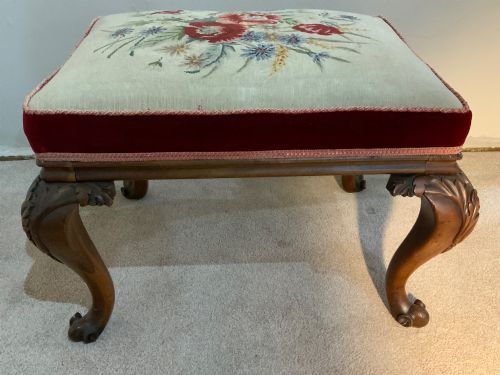
Upholstery materials vary from leather and hide to velvet, wool, fabric, damask, and needlework. Brass elements often appear as tack work or detailing, complementing the rich wood tones.
Upholstery choices range from plain leather and burgundy hide to decorative needlework, wool, and cream damask.
Distinguishing quality across pieces
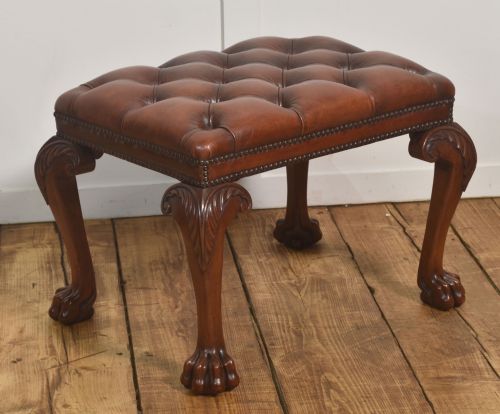
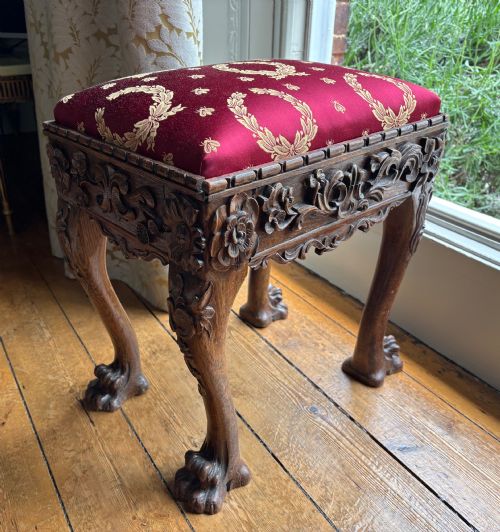
The depth and crispness of the wood carving separate standard production from superior examples. Finely carved ball and claw details and elaborate frame shaping require skilled craftsmanship.
The choice of covering material and the weight of the timber frame indicate the grade of the piece. Substantial mahogany frames paired with quality hide or damask upholstery represent the higher end of the range.
The Chippendale Style Ottoman Glossary
- Ball and claw
- A foot motif carved to resemble a bird's talon clutching a ball. This detail frequently terminates the legs of revival seating.
- Centre stool
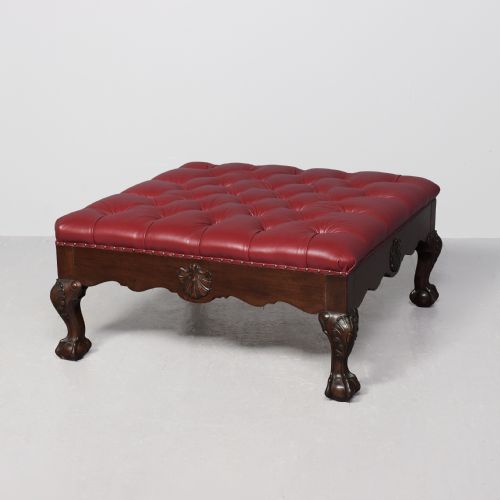
- A large, freestanding seat designed to sit in the middle of a room rather than against a wall. These substantial pieces often feature elaborate frame carving.
- Damask
- A reversible figured fabric traditionally woven on a jacquard loom. It provides a formal, patterned surface for traditional upholstery.
- Chippendale Revival
- A late nineteenth and early twentieth century design movement that recreated eighteenth-century cabinet-making styles. It produced many of the mahogany stools seen today.
Chippendale Style Ottoman: Frequently Asked Questions
What is a chippendale style ottoman?
It is a wooden stool or low seat featuring revival design elements inspired by eighteenth-century furniture makers. These pieces incorporate carved wooden frames and upholstered tops.
They serve primarily as footstools, dressing stools, or centre seating in traditional interiors.
How were these stools used historically?
They functioned as movable seats for dressing rooms, parlours, and large living spaces. Wealthy households utilised them to rest feet or provide extra seating during gatherings.
Their sturdy timber frames allowed them to endure frequent daily movement around the home.
How do I date a mahogany stool?
Dating relies on examining the timber grain, tool marks, and style of the carving. Nineteenth-century and revival pieces often exhibit machine-cut consistency alongside hand-finished details.
Comparing the upholstery style and structural wear to documented periods helps narrow down the decade of creation.
Where should I place a centre stool?
A large centre stool works best in open living spaces where it can be accessed from multiple sides. It functions as an alternative to a traditional coffee table or as standalone seating.
Ensure there is adequate clearance around the piece to appreciate the carved wooden frame.