

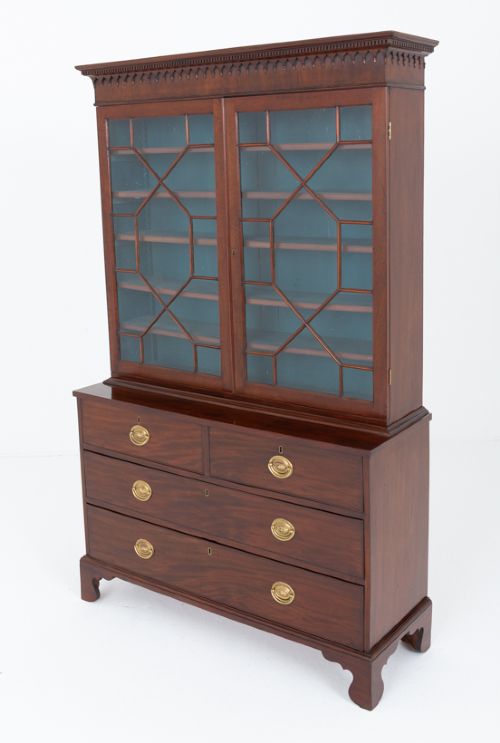
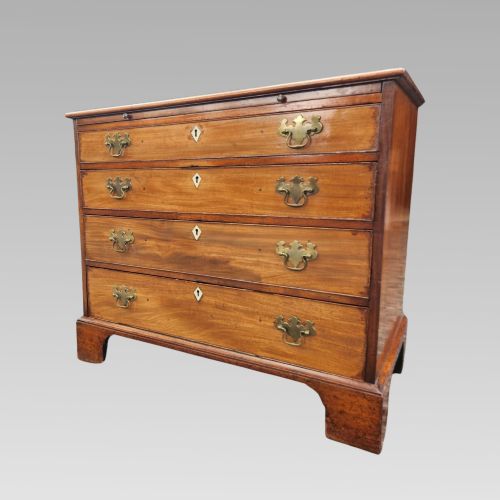
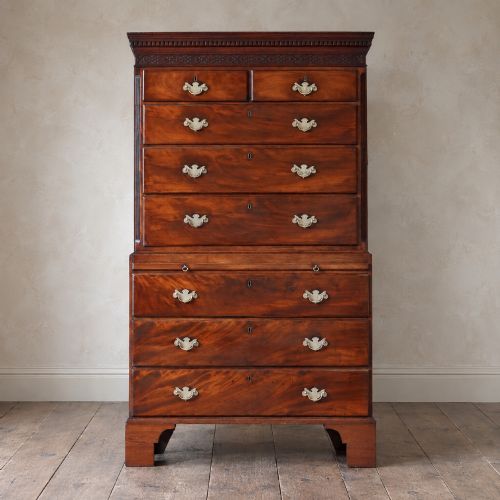
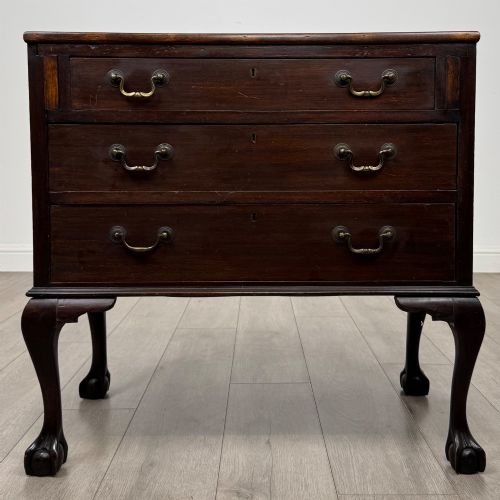

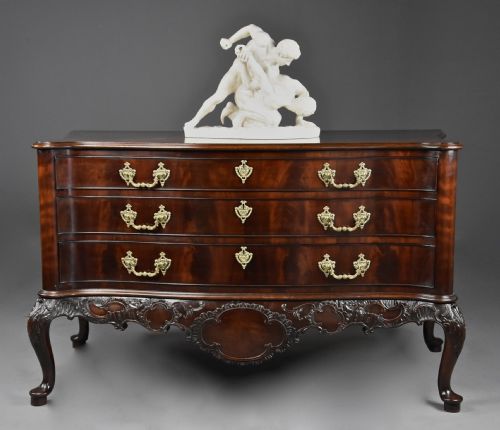


Chippendale Style Chest of Drawers
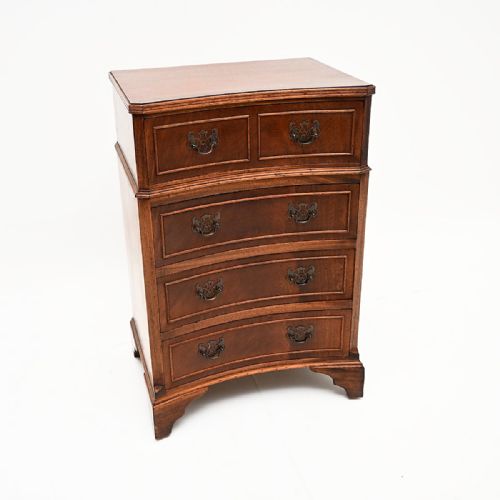
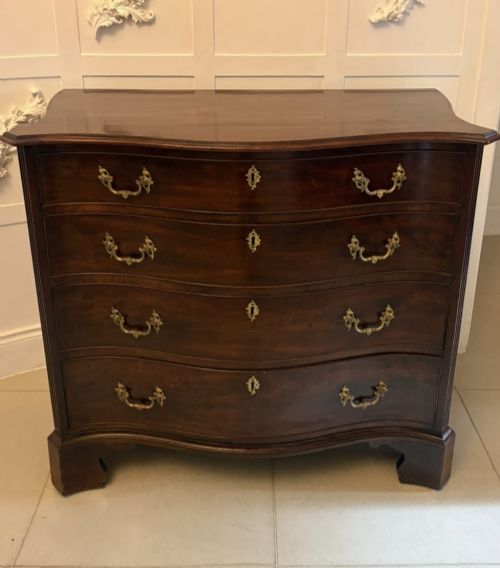
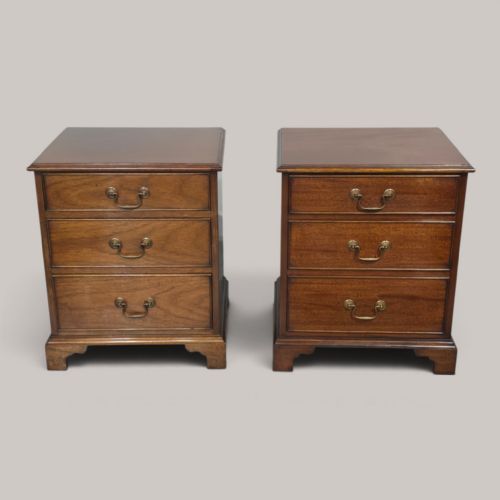
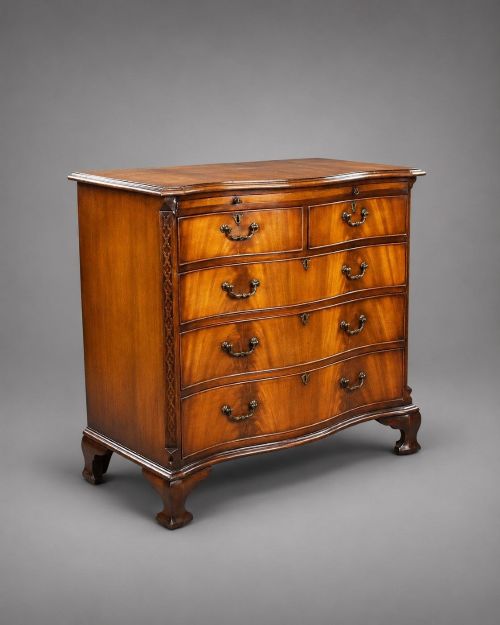
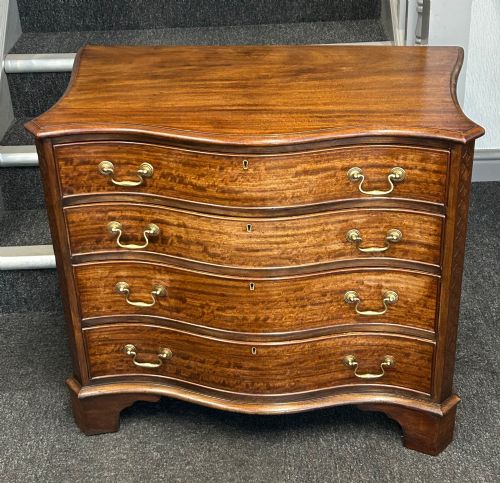
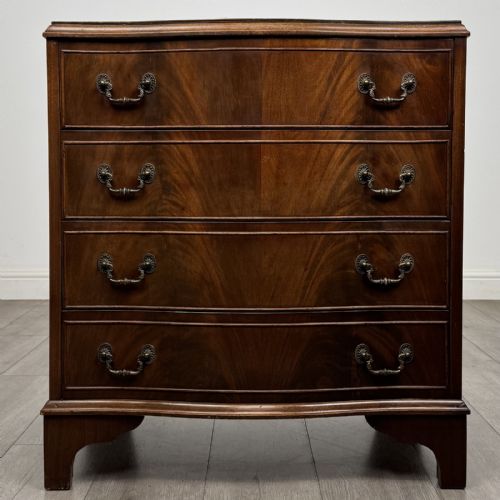
These chippendale style chest of drawers examples bring substantial mahogany timber and serpentine shaping into a room, offering both presence and storage.
Chippendale Style Chest of Drawers
A chippendale style chest of drawers brings together traditional cabinet work and distinct eighteenth century design roots. Buyers looking through this selection encounter pieces originating from the eighteenth century, the Georgian period, and revival eras including Edwardian and 1920s workshops.
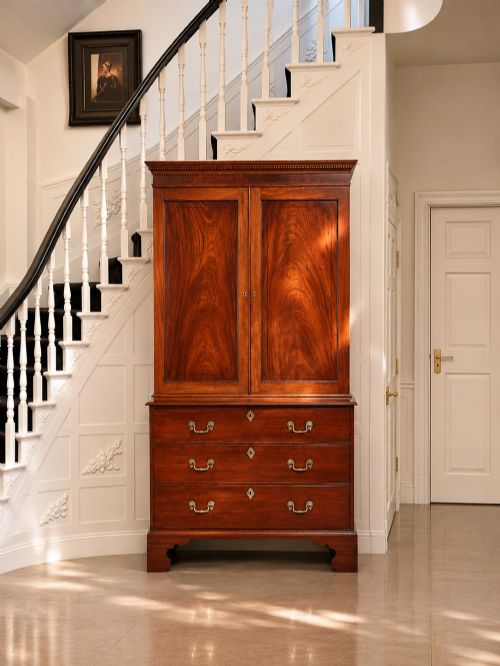
The assortment spans standard drawer configurations, tallboys, bachelors chests with sliding writing surfaces, and serpentine commodes. Mahogany forms the backbone of these listings, accompanied by occasional oak and contrasting inlay work.
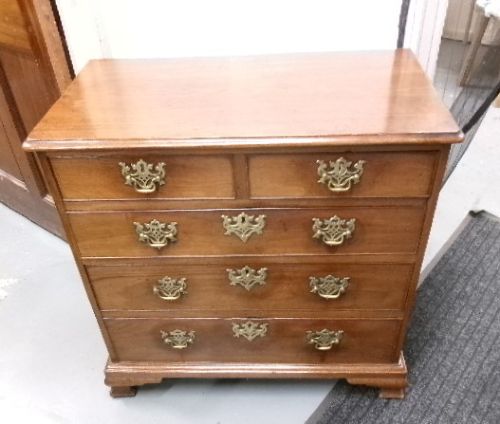
Most items on this page lean into Georgian and Chippendale revival aesthetics, offering curved fronts, bracket feet, and carved details rooted in historic cabinet making.
Materials and technique
Makers relied primarily on solid mahogany and flame mahogany veneer over sturdy secondary timbers, often accenting drawer fronts with boxwood inlay. Brass hardware, including drop handles and escutcheons, secures the drawers and complements the dark wood grain.
Construction techniques involve traditional dovetail joints for drawer construction and precise sawing to shape serpentine and concave fronts. Carved elements like claw and ball feet require skilled hand work from the cabinet maker.
Chippendale Style Chest of Drawers Retail Price Guide 2026
Typical asking prices for chippendale style chest of drawers among the pieces listed under this phrase on Sellingantiques today, from the lower quarter to the upper quarter. They describe what is for sale here now, not the wider market.
Current listings feature mahogany as the dominant material, alongside oak, brass, and satinwood.
Defining quality
The distinction between standard examples and top tier pieces rests on the choice of timber figure, such as richly grained flame mahogany, and the crispness of hand carved details on feet and mouldings. Secondary woods and the internal construction of drawer linings reveal the care taken during assembly.
Proportion and execution of complex forms like serpentine curves determine the visual balance of a chest. Pieces bearing documented maker attribution or refined hardware command higher regard among collectors.
Waring and Gillows·Muirhead Moffat and Co
The Chippendale Style Chest of Drawers Glossary
- Serpentine
- A front curving outward in the centre and inward at the sides. This shape demands precise woodworking to achieve fluid lines.
- Brushing slide
- A pull out shelf mounted above the top drawers used for writing or brushing clothes. It functions as a concealed workspace.
- Tallboy
- A tall chest of drawers built in two stacked sections, often called a chest on chest. It maximises vertical storage space.
- Lowboy
- A small dressing table featuring one or more rows of drawers supported on four legs. These typically match the period style of larger chests.
Chippendale Style Chest of Drawers: Frequently Asked Questions
What is a bachelors chest?
A bachelors chest is a compact drawer unit featuring a pull out slide used for writing or folding garments. These pieces date back to periods when efficient use of space in smaller dressing rooms mattered.
They combine standard storage with a functional surface, making them versatile for modern bedrooms or studies where floor space is limited.
How do I identify a serpentine front?
A serpentine front curves outward at the centre and gently curves inward toward the outer edges. This sophisticated shape creates movement across the facade of the chest.
Craftsmen achieved this profile by carefully shaping solid timber or applying thick veneers over curved drawer rails.
Where were these chests made?
The pieces listed span original eighteenth century English and Irish workshops as well as later Edwardian and twentieth century revival cabinet makers. British timber traditions heavily influence the construction across all listed eras.
Regional cabinet makers and larger firms both produced these forms, drawing inspiration from Thomas Chippendale pattern books.
How do I care for antique mahogany?
Antique mahogany benefits from stable room humidity and protection from direct sunlight to prevent the timber from fading or drying out. Gentle dusting with a soft cloth preserves the polished surface.
Avoid using silicone based polishes, opting instead for traditional natural waxes that nourish the wood grain over time.