


Georgian Style Drawers
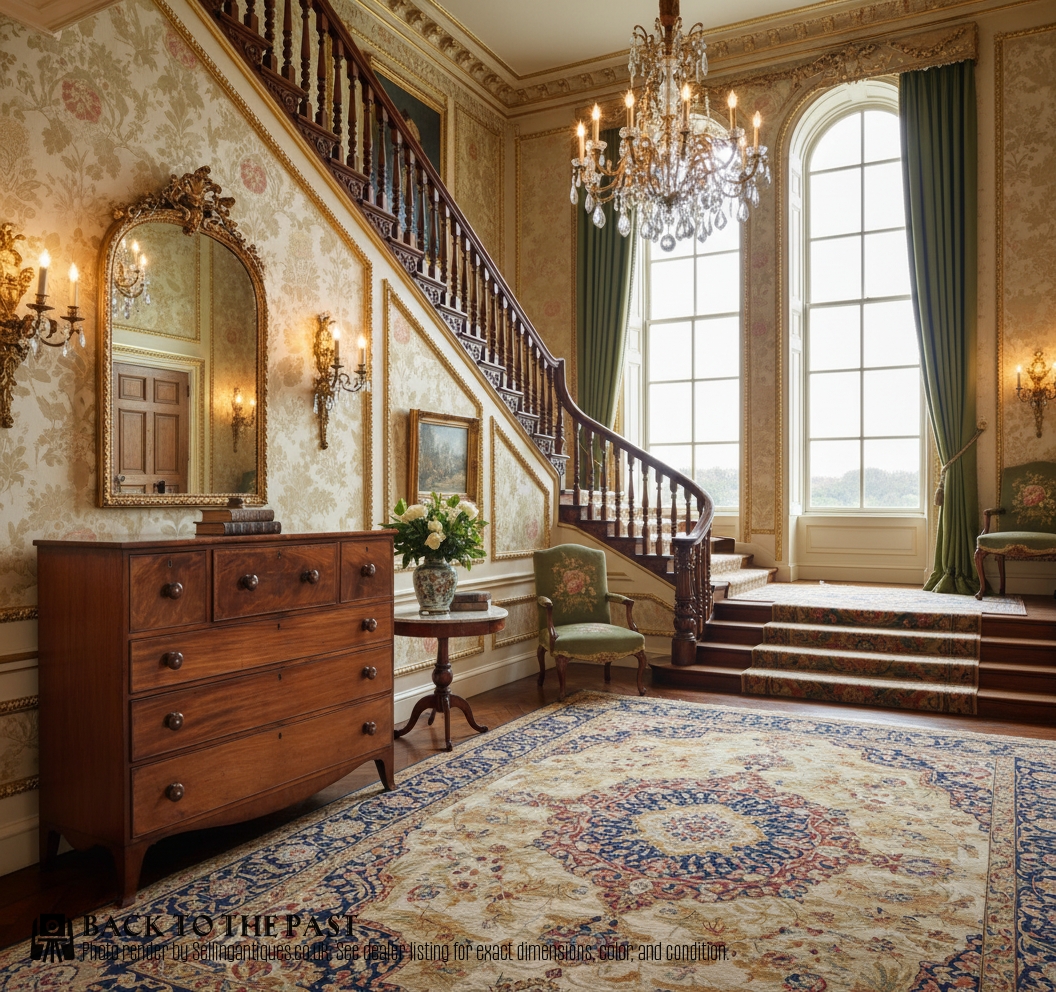
Georgian style drawers bring classical proportion and rich timber into a room, offering timeless storage built for daily utility.
Understanding Georgian style drawers
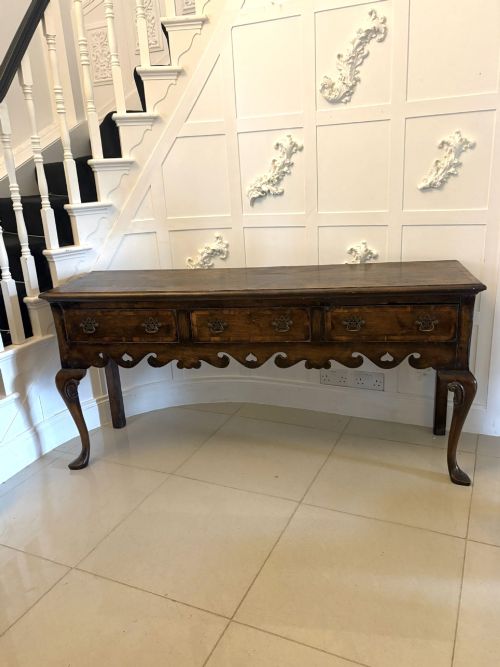
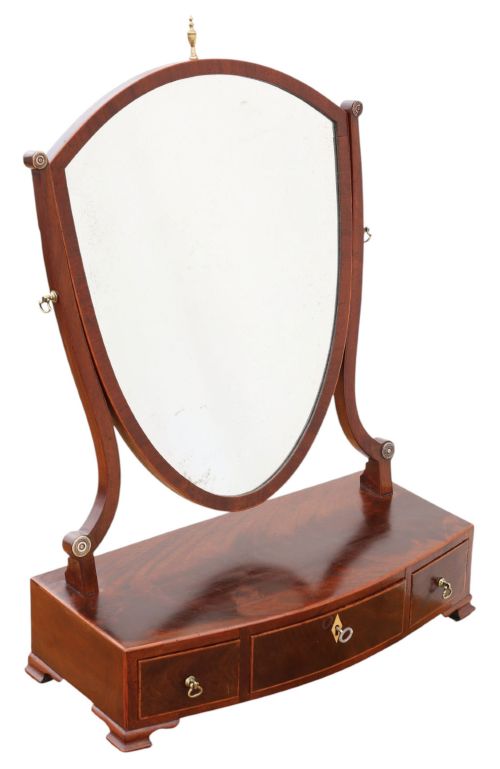
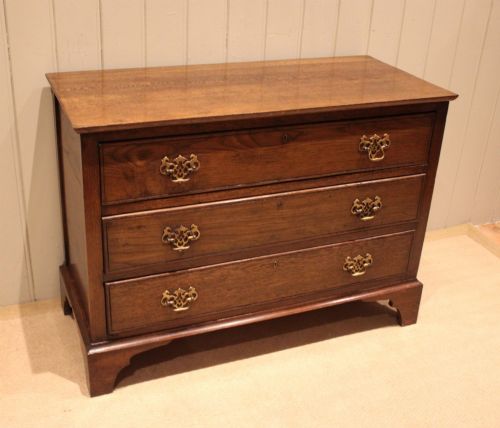
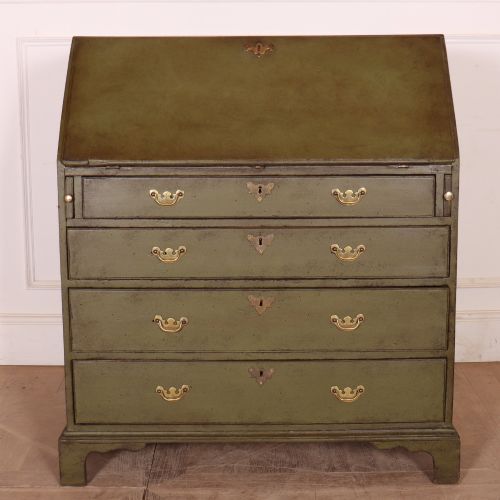
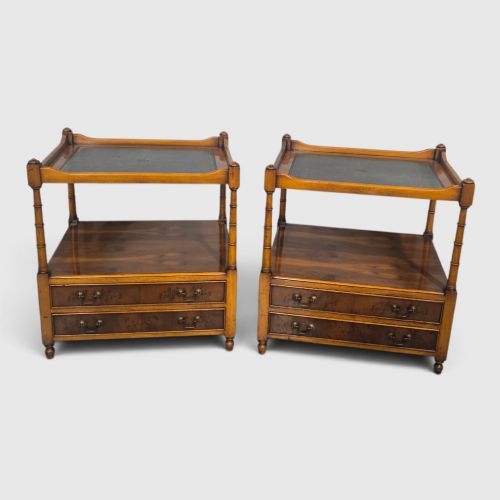
When you search for georgian style drawers, you encounter a variety of forms including chests of drawers, bow front chests, tallboys, and chest on chest designs. These pieces span periods from the Regency era and the nineteenth century through to early twentieth-century revivals dated around nineteen-ten and nineteen-twenty.
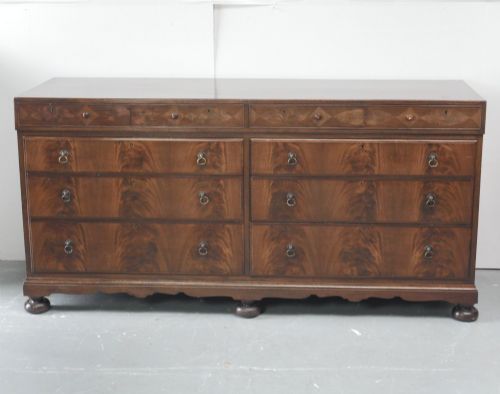
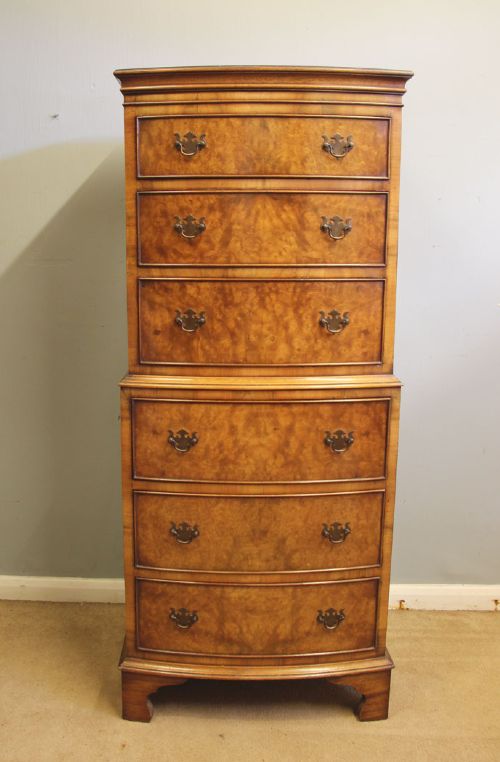
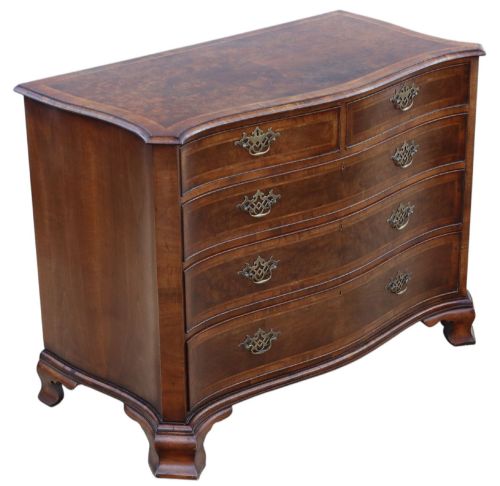
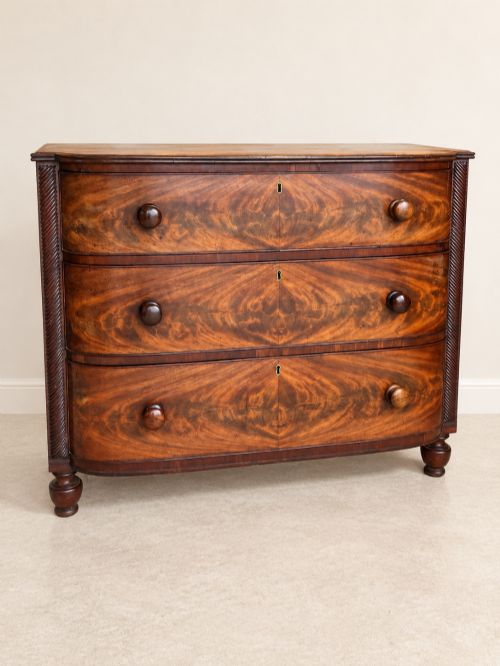
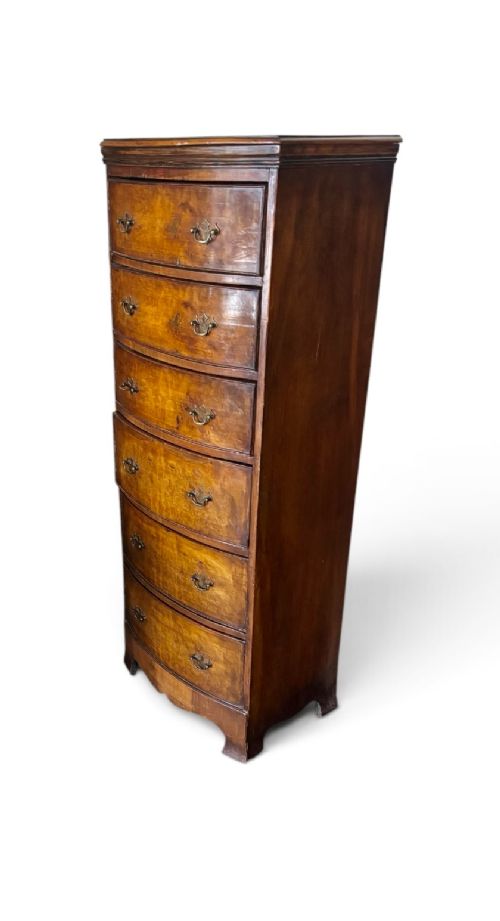
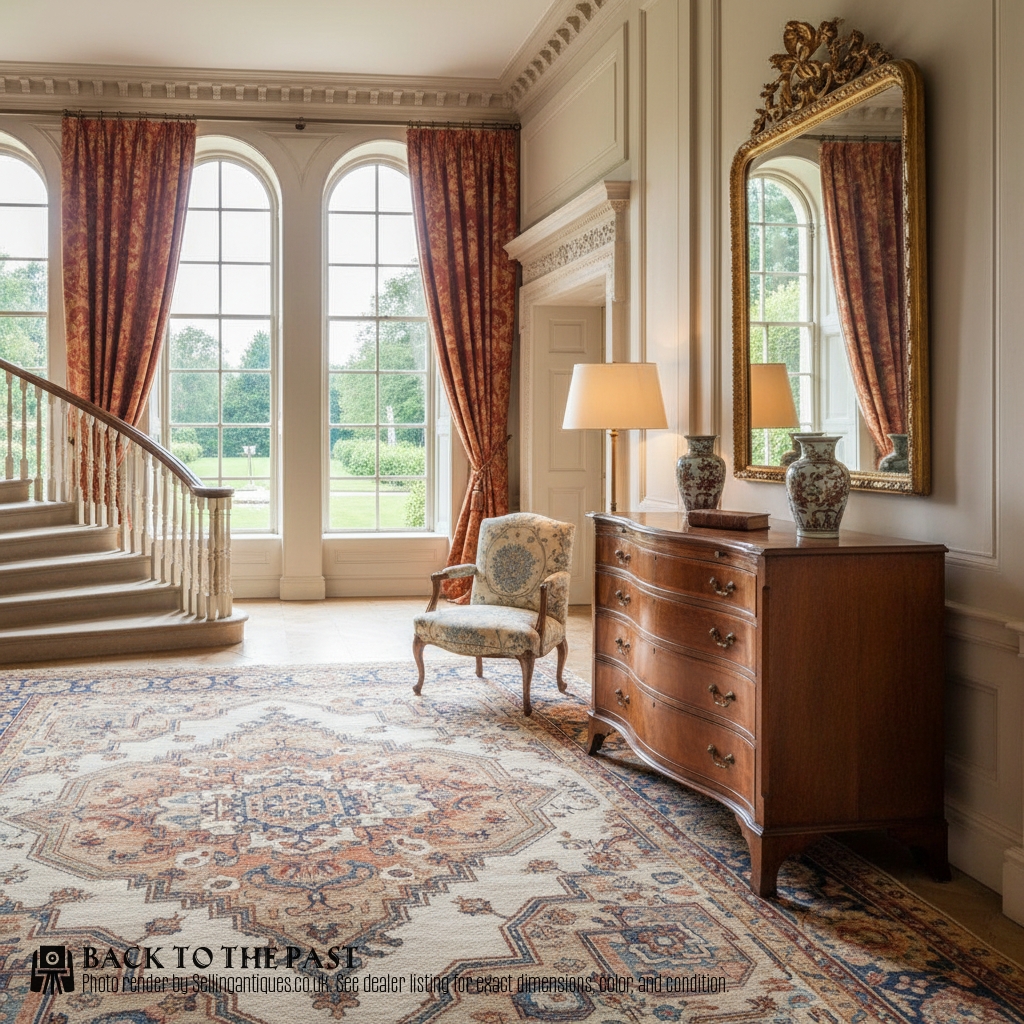
The most common formats on this page are sturdy mahogany and burr walnut chests featuring configurations like three over three drawers. You also find compact diminutive models, narrow bedside cabinets, and serpentine fronts shaped with curved lines.
Makers across different decades adopted classical eighteenth-century proportions, translating them into versatile bedroom and living space furniture. The resulting selection bridges authentic nineteenth-century craftsmanship with later revival interpretations.
Materials and construction
Cabinet makers utilised dense hardwoods such as mahogany and walnut, frequently applying flame mahogany veneer, crossbanding, and figured walnut to exterior surfaces. Secondary timbers like pine appear within drawer carcases and internal framing.
Decorative details rely on contrasting grains, brass hardware including military style handles, and occasional inlay work. Surface finishing enhances the natural figuring of the timber while providing protection through wax or polish.
Retail Price Guide 2026
Typical UK retail prices for georgian style drawers, calculated from the Sellingantiques database of over a million retail prices indexed since 2003. This retail price guide relies exclusively on Sellingantiques data; no external sources or auction records are used, so the figures do not describe the wider market.
Some compact models squeeze generous storage into surprisingly diminutive frames, proving that grand Georgian proportions scale down with charm.
Distinguishing quality factors
Superior examples separate themselves through the careful selection of timber veneers, such as highly figured burr walnut and matched flame mahogany. The grain alignment across drawer fronts demonstrates the skill invested by the maker.
Refined proportions, such as neat dimensions on small or diminutive chests, dictate desirability alongside crisp execution of serpentine and bow front contours. Hardware integration and the neatness of crossbanding further define the upper tier.
The Georgian Style Drawers Glossary
- Bow front
- A convex curved cabinet front that projects outwards in a smooth arc. This shape gained popularity during the late eighteenth century and remained a staple of revival pieces.
- Serpentine
- A front configuration featuring a central convex curve flanked by two concave curves. It requires precise woodworking to execute smoothly across multiple drawer fronts.
- Crossbanding
- A decorative border of veneer laid around the perimeter of a drawer front or top with the grain running perpendicular to the main panel. It creates a neat visual frame.
- Chest on chest
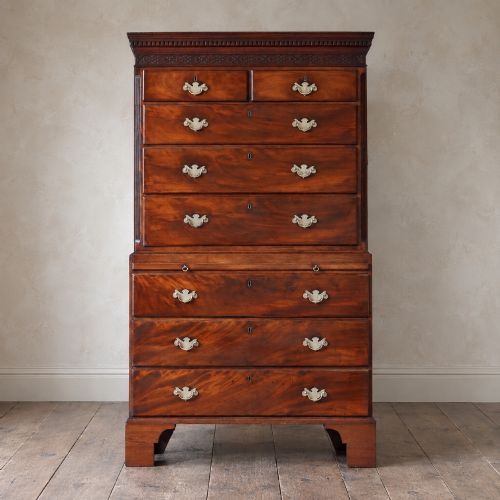
- A tall storage unit comprising a smaller chest stacked directly on top of a wider base chest, offering substantial vertical capacity. It is also known as a tallboy.
- Flame mahogany veneer
- Timber sliced from the fork of a mahogany tree where the grain pattern resembles flickering flames. It provides a highly decorative surface.
Frequently Asked Questions
How do I spot a tallboy?
A tallboy consists of a double-height chest of drawers, often built as a chest on chest structure.
These taller units provide significant vertical storage without taking up excessive floor space in smaller rooms.
Where should I place a diminutive chest?
Diminutive chests offer compact proportions that suit tighter spaces like landings, corridors, or small guest bedrooms.
Their reduced scale allows them to function effectively as bedside cabinets or accent storage pieces.
What timber finishes are common?
Mahogany and walnut dominate these pieces, often highlighted with flame veneer or burr walnut figuring.
Secondary woods like pine support the internal structure, while brass hardware completes the traditional appearance.