


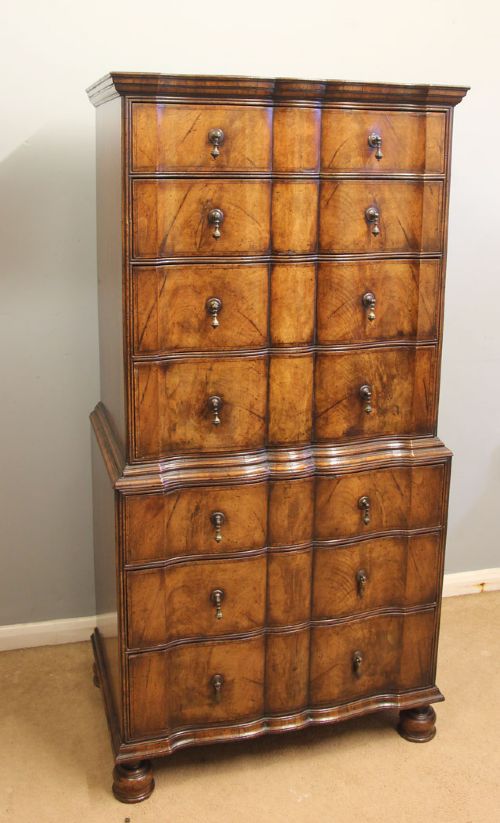
Vintage Serpentine Tallboy
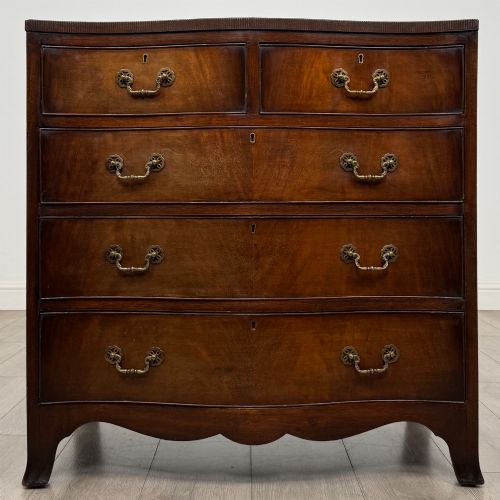
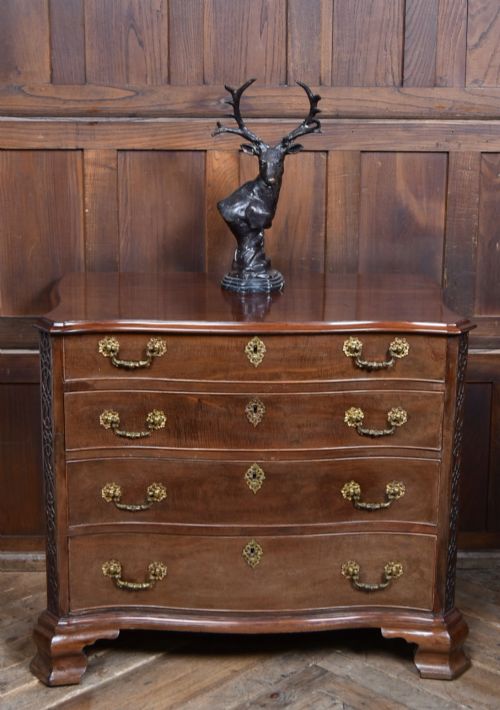
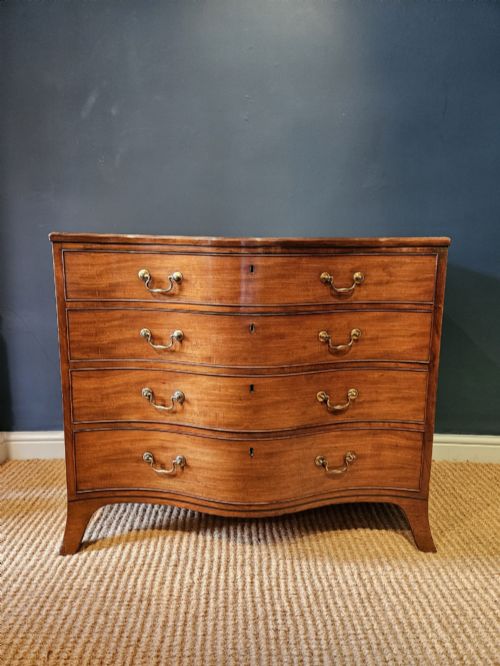
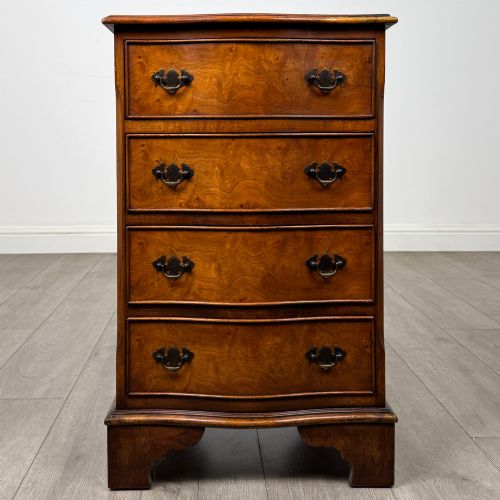
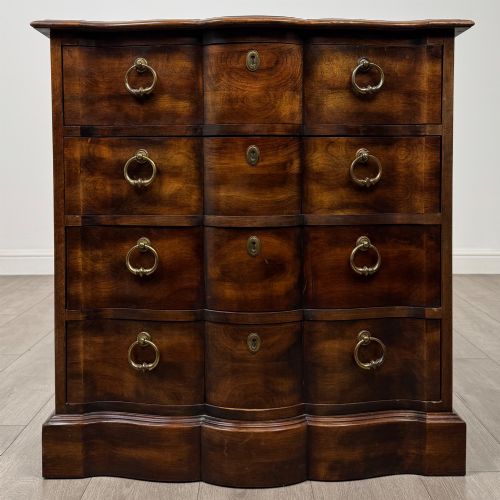
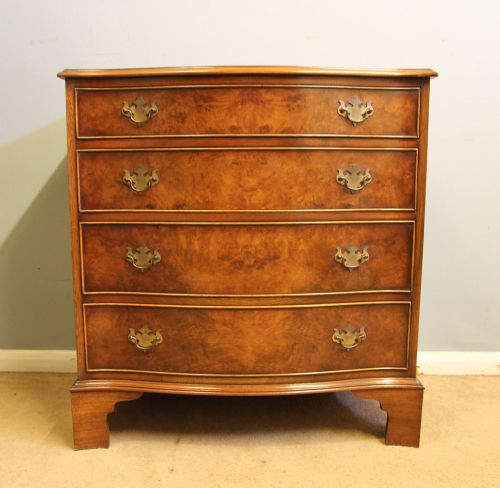
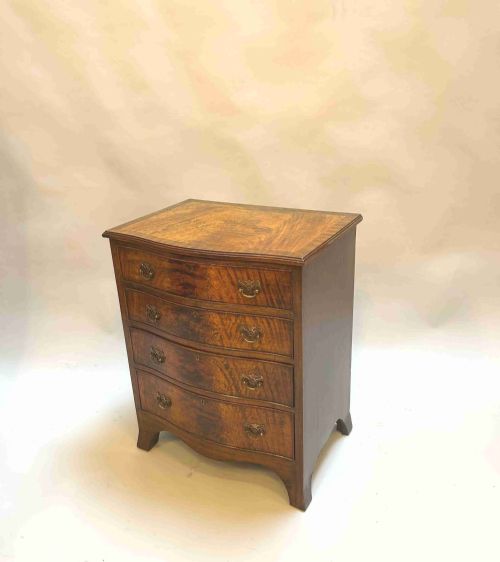
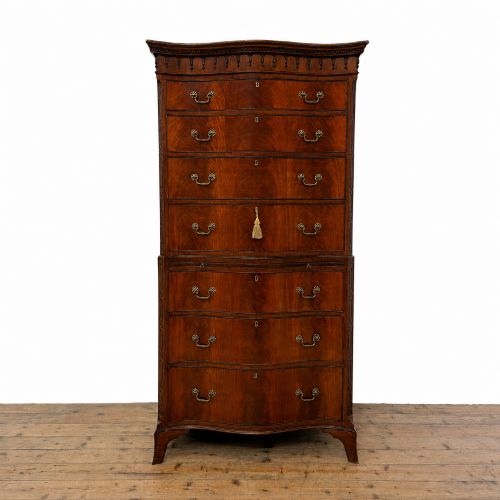
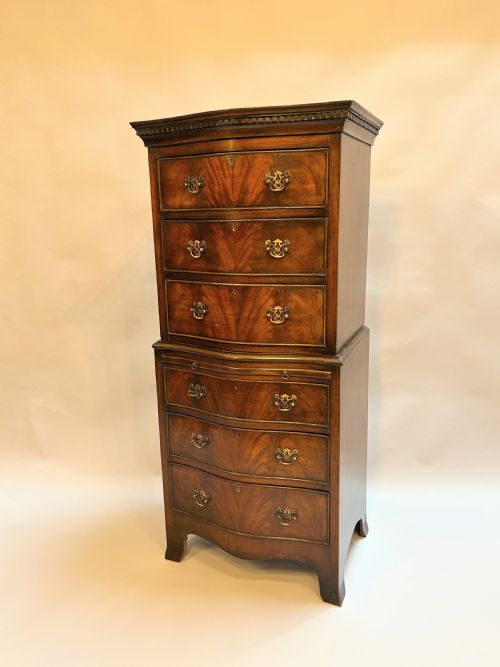
A vintage serpentine tallboy brings a sweeping, undulating line to the bedroom, offering substantial vertical storage through classically proportioned drawers.
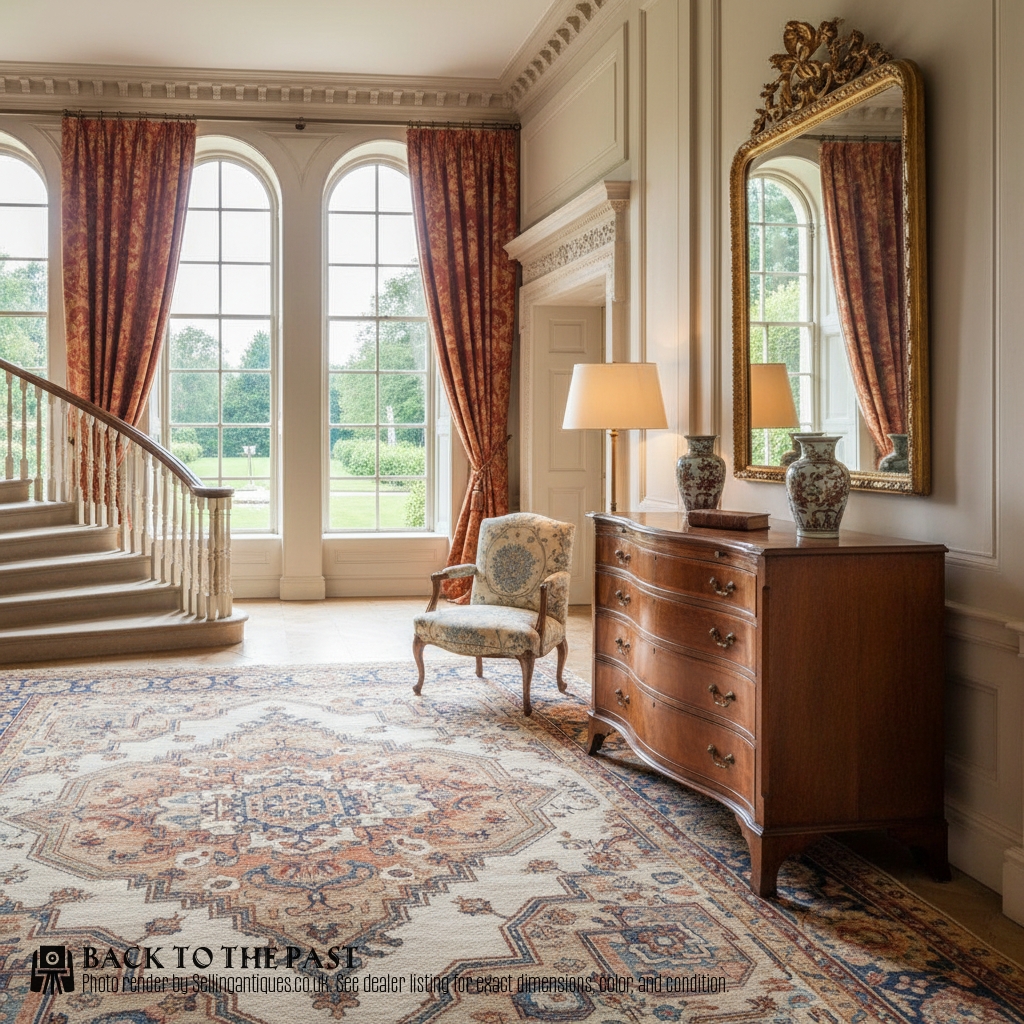
Vintage Serpentine Tallboy
A vintage serpentine tallboy combines the tall, stacked storage of a chest on chest with the distinctive, gently curving front that defines the serpentine style. These pieces emerge across several periods, including the Georgian era, the 18th century, and various 20th-century revivals spanning the Edwardian decades, the 1920s, and the 1930s.
Buyers will encounter multiple forms on this page, ranging from traditional tallboys and linen presses to chests on stands and smaller chests of drawers. Mahogany and burr walnut dominate the selection, often accompanied by flame mahogany veneer, oak, hardwood, and boxwood inlay.
Stylistic influences vary widely, drawing on George III, Regency, Queen Anne, and French Provincial traditions. The revival periods particularly embraced the Georgian aesthetic, producing sophisticated interpretations with curved drawer fronts and brass hardware.
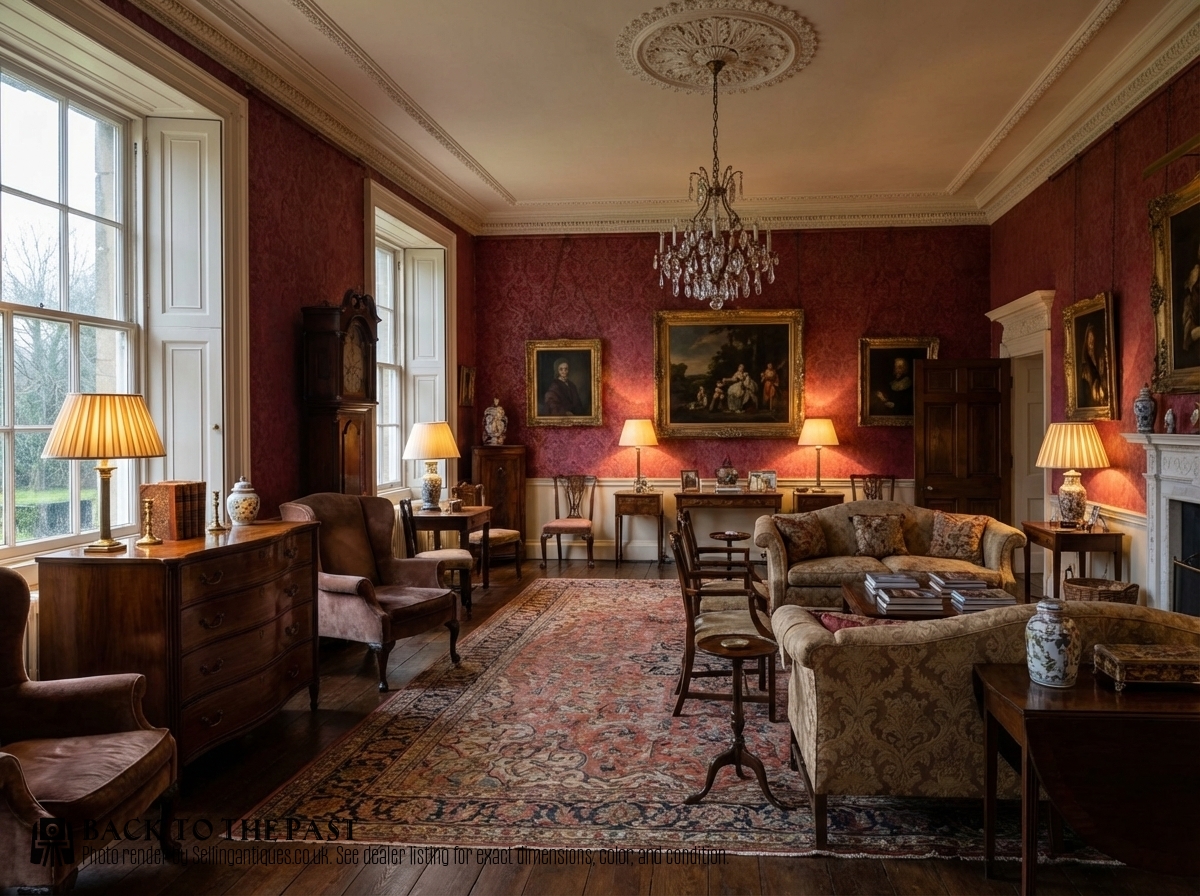
Materials and Construction Methods
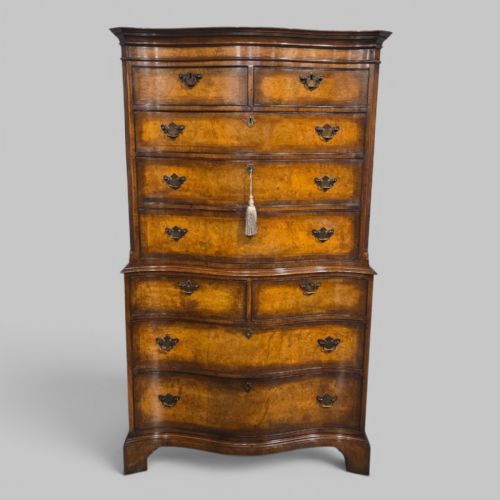
Cabinetmakers constructed these pieces using solid timbers like mahogany, walnut, and oak, frequently applying figured veneers such as burr walnut and flame mahogany to the drawer fronts for visual depth. Boxwood inlay appears on specific pieces to create delicate contrasting borders along the edges and top surfaces.
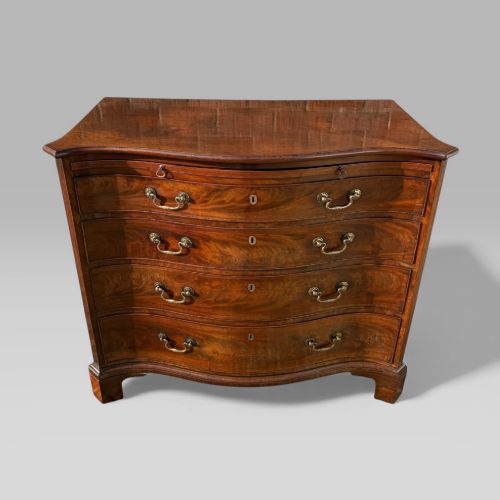
Shaping the serpentine front required expert woodworking technique, as timber had to be carefully cut and curved to form the signature convex centre flanked by concave sides. Brass handles and escutcheons were fitted to the drawer faces, while specialised additions like writing slides and carved details completed the construction.
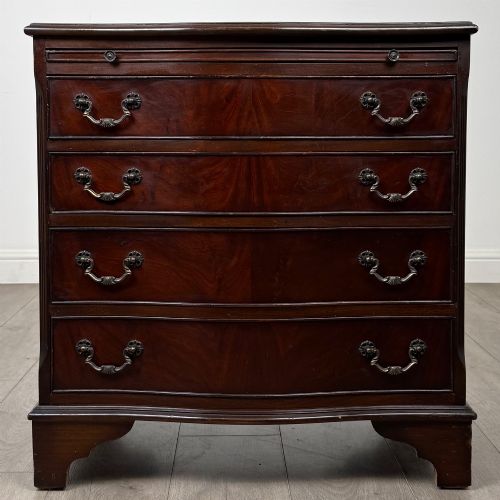
Some serpentine chests conceal pull-out writing slides, proving that 18th-century cabinetmakers knew desk work could happen anywhere.
Distinction in Craftsmanship and Materials
Quality rests primarily in the selection of wood veneers and the precision of the curved drawer fronts. Pieces featuring highly figured burr walnut or rich flame mahogany demonstrate superior material choice compared to plainer timber surfaces.
The integration of decorative elements such as boxwood inlay, carved details, and period-appropriate brass handles separates standard production from finer cabinetmaking. Additionally, the crispness of the serpentine sweep and the smoothness of the drawer action indicate the level of skill invested by the maker.
Waring and Gillows
The Vintage Serpentine Tallboy Glossary
- Serpentine front
- A furniture front characterised by a convex central section flanked by two concave curves. This design requires advanced woodworking skill to execute properly.
- Tallboy
- A tall chest of drawers, often constructed in two sections as a chest on chest or incorporating a linen press configuration. It maximises storage while occupying a compact floor footprint.
- Burr walnut
- Timber taken from a walnut tree growth, exhibiting a swirling, highly figured grain pattern. Cabinetmakers prize it for creating decorative veneer panels.
- Flame mahogany
- Mahogany veneer cut to reveal a distinctive flickering, flame-like grain pattern. It appears frequently on formal case furniture from various periods.
- Boxwood inlay
- Narrow strips of pale boxwood embedded into a darker wood surface to form decorative lines and borders. It provides a sharp contrast on mahogany and walnut pieces.
Vintage Serpentine Tallboy: Frequently Asked Questions
What is a serpentine tallboy?
A serpentine tallboy is a tall chest of drawers featuring a front that curves outward in the middle and inward at the sides. These pieces combine vertical storage capacity with an elegant silhouette.
They often appear as two stacked sections, providing deep storage drawers while taking up minimal floor space in a room.
How do I date a vintage tallboy?
Dating relies on examining the secondary timbers, construction methods, handle styles, and overall stylistic markers. Pieces from the 18th century display different internal framing compared to 20th-century revivals.
Revival pieces from the 1920s and 1930s often emulate Georgian or Queen Anne designs while utilising contemporary machinery and veneers.
Where should I place a tallboy?
A tallboy suits bedrooms, dressing rooms, or large hallways where vertical storage is required without sacrificing too much floor area. Their decorative wood grains and curved fronts make them focal points in traditional or mixed interiors.
Ensure the room has sufficient ceiling clearance and that surrounding furniture complements the dark tones of mahogany or walnut.
What is the difference between a tallboy and a chest on chest?
While the terms are often used interchangeably, a traditional chest on chest consists of one large chest stacked directly on top of another. A tallboy can also refer to a chest combined with a linen press or wardrobe section.
Both forms offer multiple tiers of drawers designed to hold folded clothing and linens.