
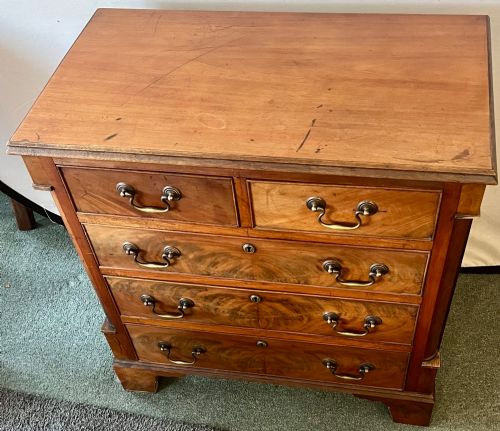
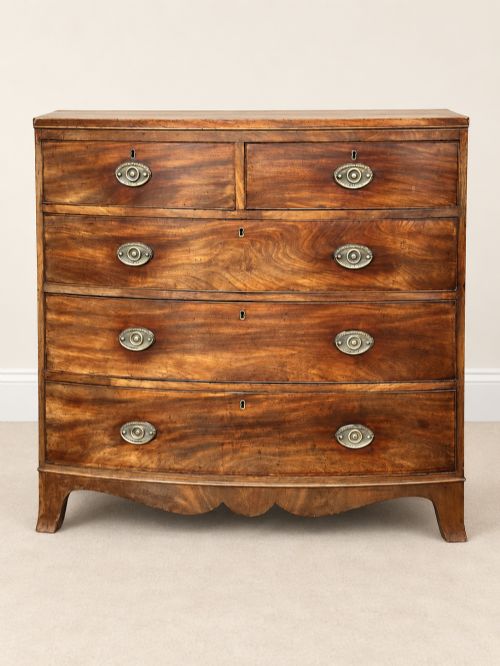
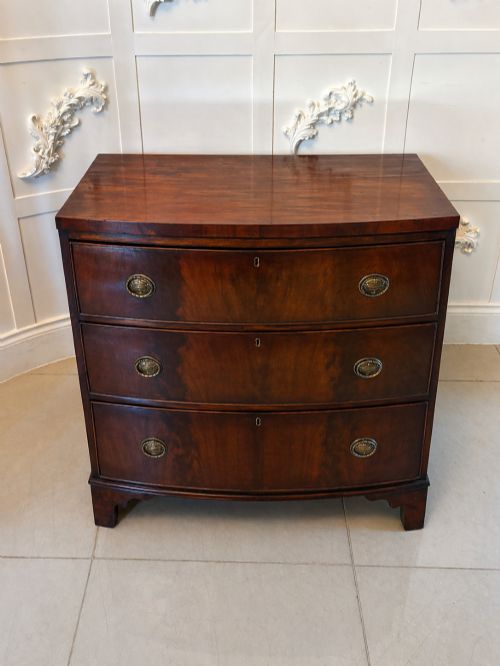
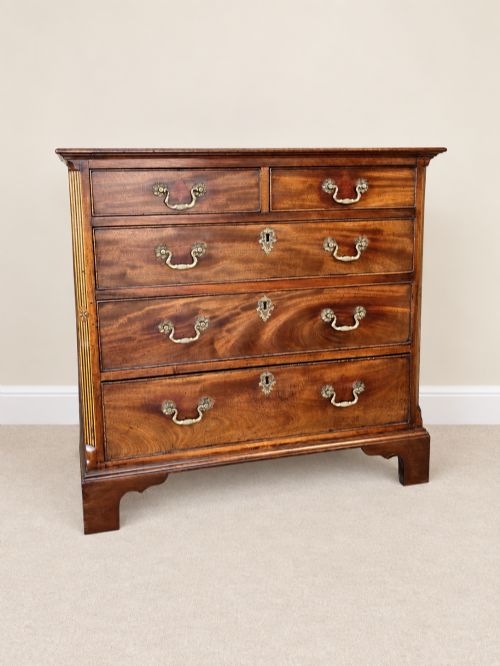


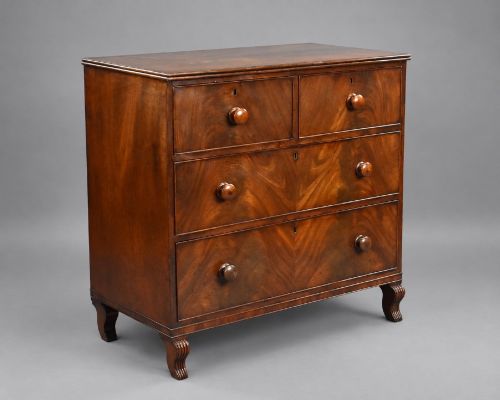
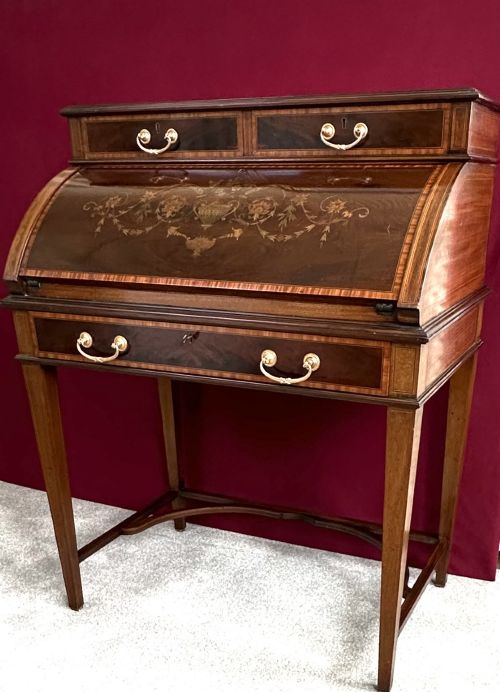
Mahogany Wooden Bureau
A mahogany wooden bureau brings serious cabinet-making pedigree to a study, offering fitted compartments and a drop-down writing flap.
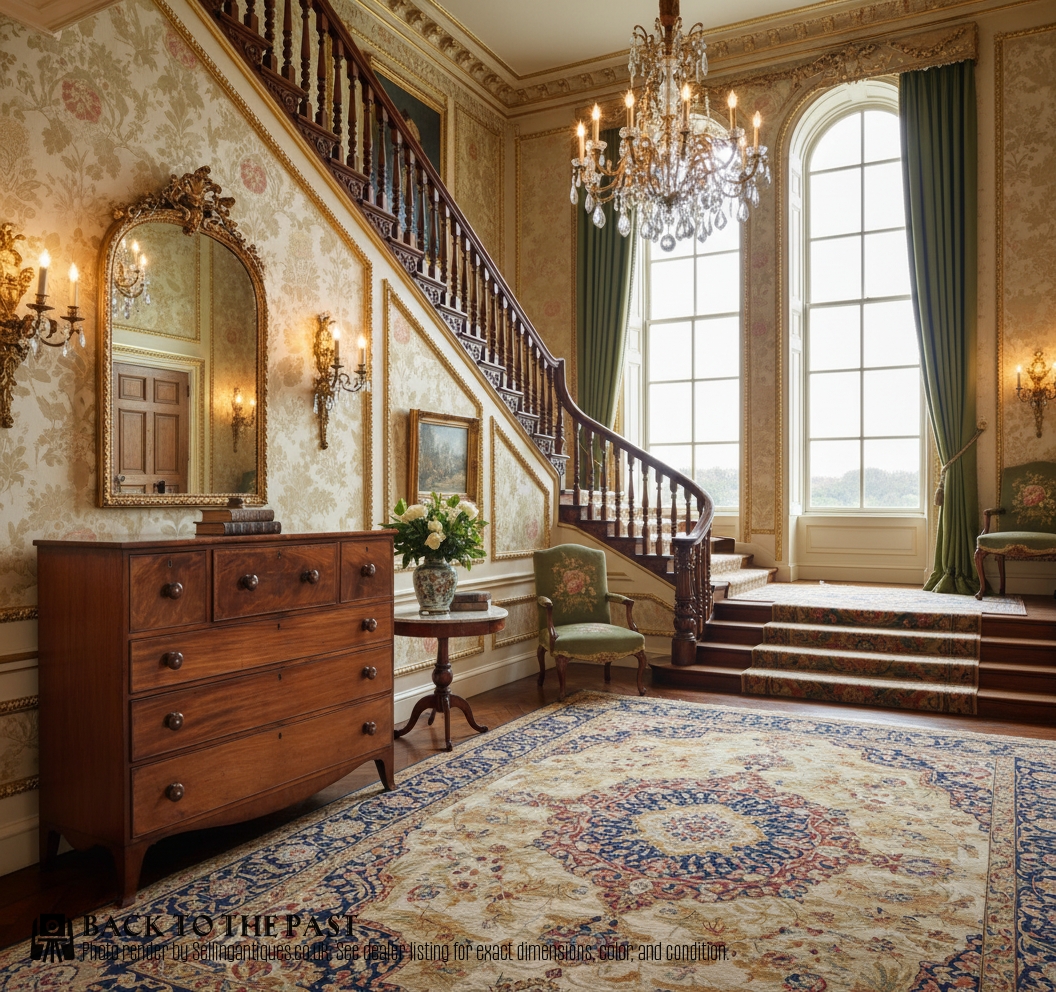
Mahogany Wooden Bureau
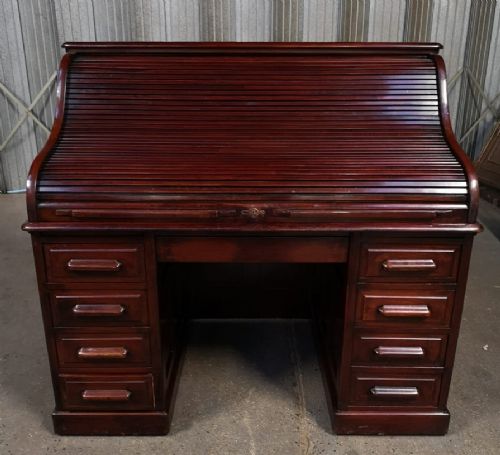
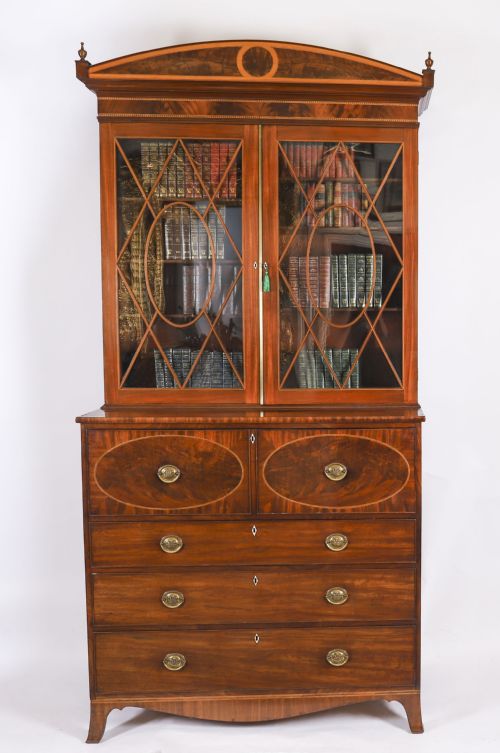
When you search for a mahogany wooden bureau, you encounter pieces spanning the Georgian, Regency, Victorian, and Edwardian periods, alongside styles such as George III and William IV. These writing pieces include fall-front writing cabinets, cylinder desks, secretaire bookcases, and bureau bookcases designed to conceal compartments behind sloping flaps or rolling shutters.
The versions most frequently met on this page combine timber carcases with fitted internal pigeonholes and small drawers, often accompanied by banks of graduated exterior drawers. Their origins trace through 18th-century workshops and 19th-century cabinet-makers, showing variations in proportion from tall secretaire bookcases down to compact dwarf cabinets.
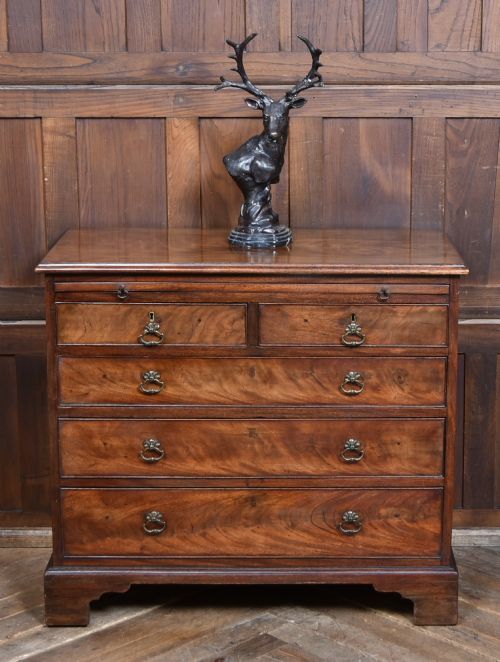
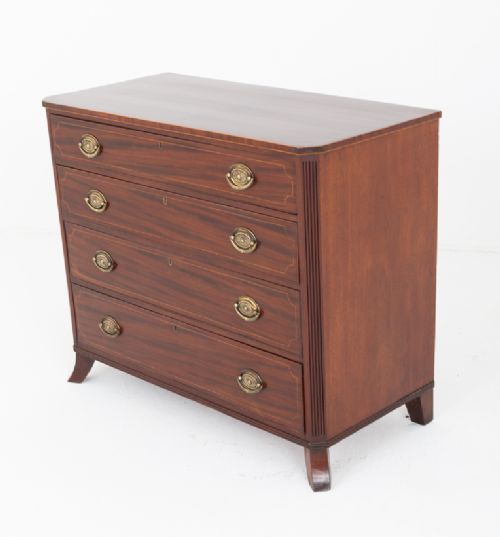
Beyond the standard fall-front writing desk, the selection encompasses chests fitted with brushing slides and specialised cylinder desks, utilising oak and other secondary timbers for internal drawer linings. Each form reflects the domestic writing habits and storage requirements of its respective era, maintaining functional writing surfaces enclosed within formal cabinetry.
Materials and construction
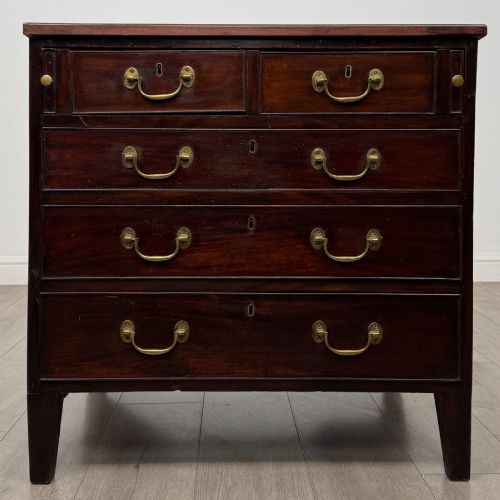
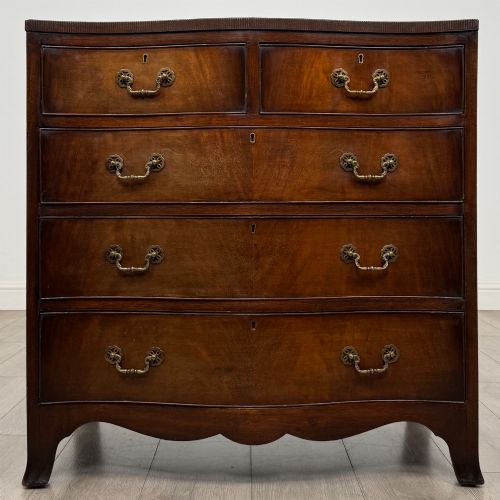
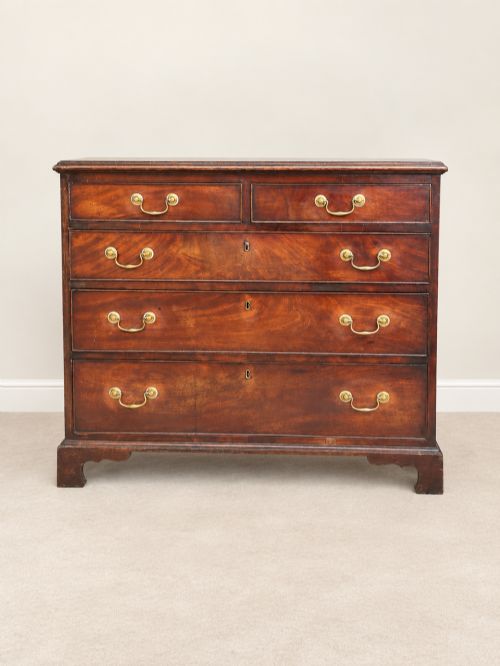
Cabinet-makers utilised solid mahogany and flame mahogany veneer applied to primary structures, frequently incorporating oak as a secondary timber for drawer linings and internal dividers. Brass hardware, including drop handles, escutcheons, and hinges, secures the operational elements of each desk and chest.
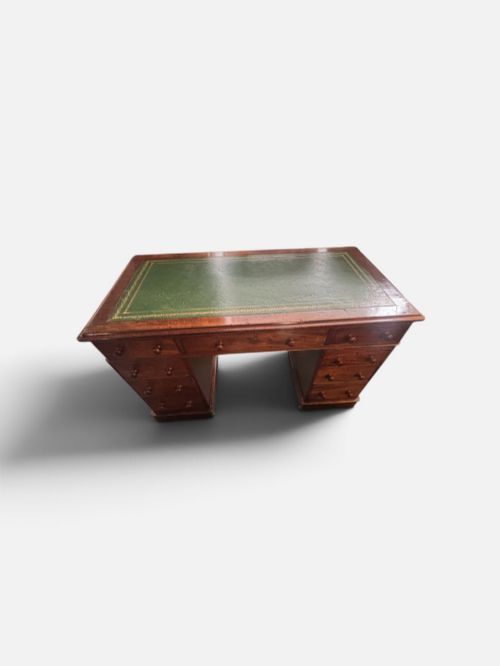
Surfaces display distinct figuring through the application of flame mahogany veneers, while structural integrity relies on traditional joinery methods within the carcase and drawer construction. Selected examples integrate bone inlays, glass panels within bookcase doors, and leather writing inserts into the fold-down or pull-out writing surfaces.
Several bureau designs incorporate hidden internal compartments behind sliding pigeonhole partitions, intended for concealing private letters from inquisitive household staff.
Distinctions in craftsmanship
Quality separates pieces through the selection of timber veneers, where symmetrical flame mahogany figuring across a fall-front flap or drawer facade denotes superior material choice. The integration of secondary timbers like oak for drawer linings and hand-cut dovetail joints further distinguishes standard workshop output from finer productions.
Refinement appears in the complexity of internal fitments, such as secret compartments, satinwood-banded pigeonholes, and well-executed brass handles. Structural cohesion in the movement of tambour shutters, cylinder tops, and drop-down writing surfaces dictates the standing of individual desks.
James Mein of Kelso·Gillows
The Mahogany Wooden Bureau Glossary
- Bureau
- A writing cabinet featuring a sloping fall-front flap that opens to reveal a fitted interior of small drawers and pigeonholes.
- Flame mahogany veneer
- A decorative wood slice cut from the branch junction where the grain twists, producing a distinctive flickering pattern across drawer fronts.
- Secretaire bookcase
- A tall cabinet combining a upper bookcase section with a lower drawer unit containing a fitted pull-out writing drawer or fall-front desk.
- Brushing slide
- A pull-out wooden shelf positioned above the top drawers, originally intended for dusting garments or utilised as a temporary writing ledge.
- Cylinder desk
- A writing table enclosed by a rolling quarter-circle wooden shutter that conceals the writing surface and internal compartments when closed.
Mahogany Wooden Bureau: Frequently Asked Questions
How do I identify a Georgian bureau?
Georgian examples typically display clean architectural proportions, solid brass handle hardware, and internal configurations featuring small drawers arranged around a central cupboard door. The construction often employs oak drawer linings alongside dark mahogany primary timbers.
Secondary indicators include bracket feet or ogee bracket bases, hand-cut dovetail joints on the drawer construction, and straightforward fall-front writing flaps without excessive applied mouldings.
What is a cylinder desk?
A cylinder desk utilises a curved quarter-circle wooden shutter that rolls backward into the body of the desk to expose the writing surface and internal pigeonholes. This mechanism replaced the traditional sloping fall-front flap found on standard writing cabinets.
These pieces often stand on pedestal bases or drawer units, combining the enclosed storage of a bureau with the flat working surface of a library table.
Where were these desks placed?
These writing cabinets served as functional furniture in private studies, libraries, and principal reception rooms where household accounts and correspondence were managed. Their enclosed compartments allowed private documents to be locked away securely behind the fall-front or cylinder shutter.
In larger houses, taller secretaire bookcases doubled as display furniture for libraries while maintaining a dedicated writing space at table height.
How do I care for mahogany surfaces?
Maintenance involves dusting with a soft, dry cloth and avoiding placement near direct heat sources or strong sunlight that can dry out the timber veneers. Periodic applications of appropriate furniture wax help maintain the finish of the polished wood.
Leather writing inserts benefit from specialised balms to prevent cracking, while brass handles should be cleaned gently without abrasive agents that damage the surrounding wood.