

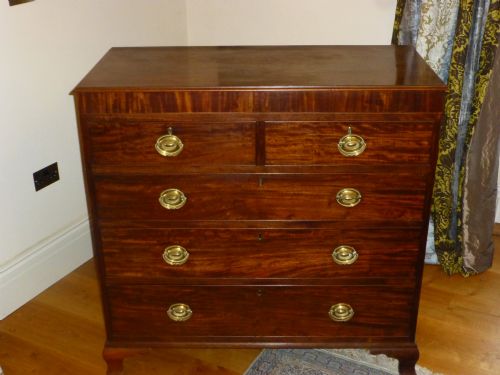
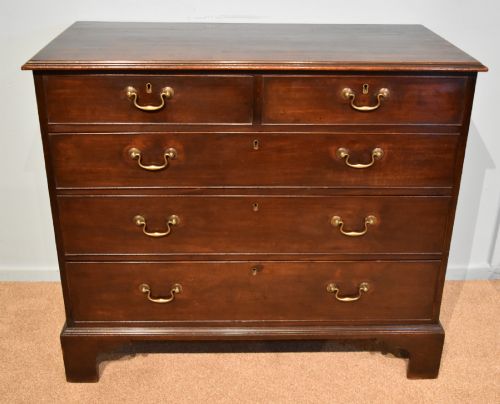
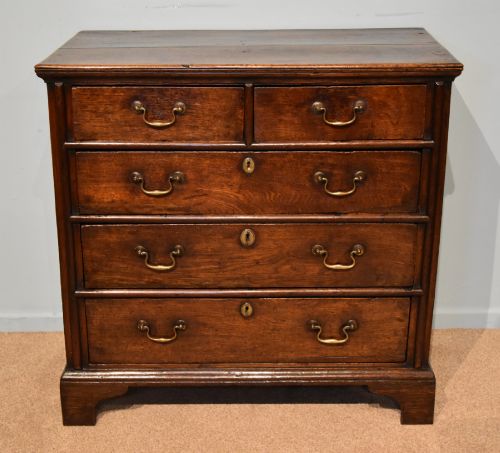
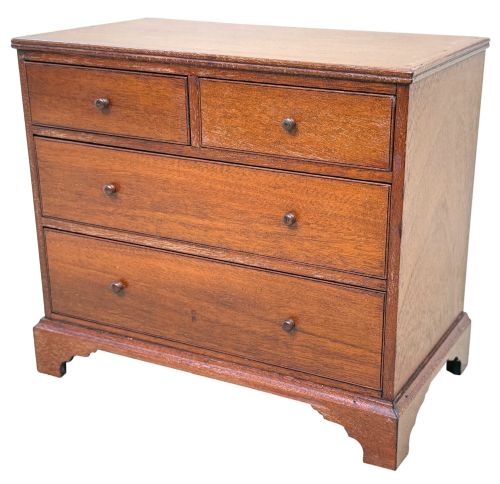
Chest on Bracket Feet
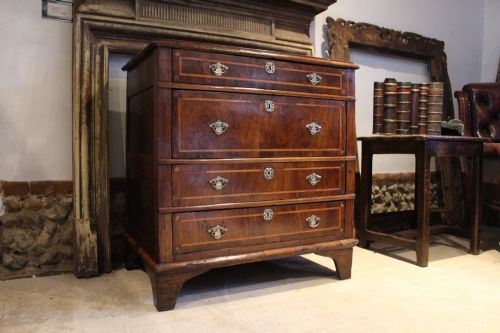
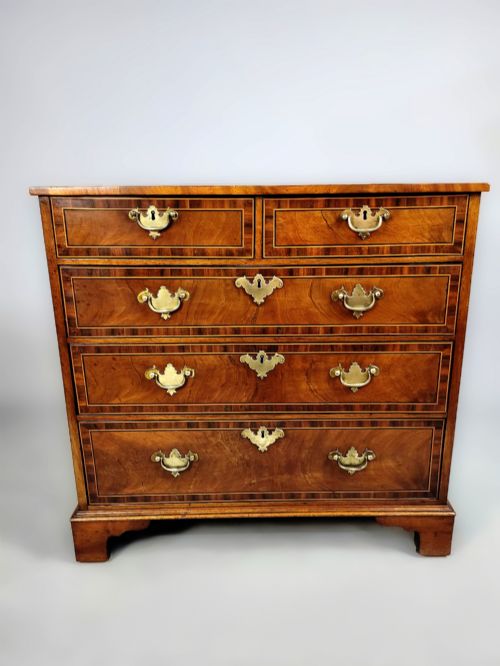
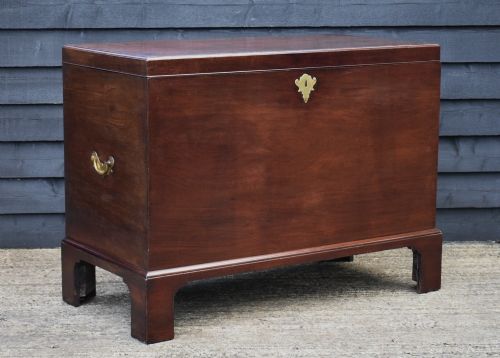
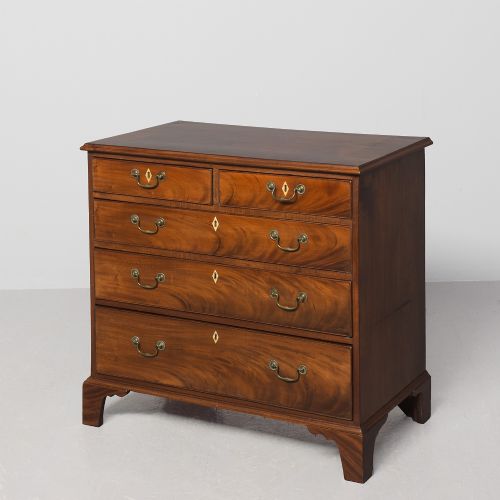
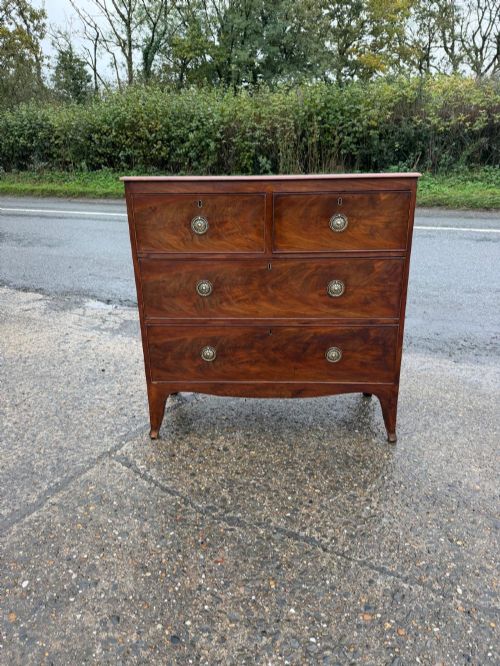
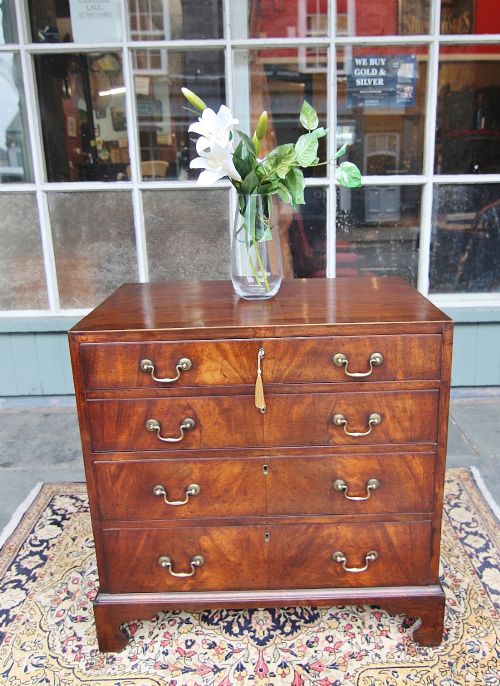
A chest on bracket feet provides practical storage through timber drawer configurations raised off the floor on neat supports.
Chest on Bracket Feet
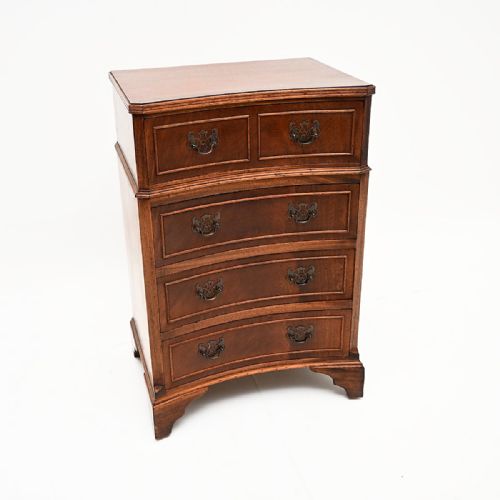
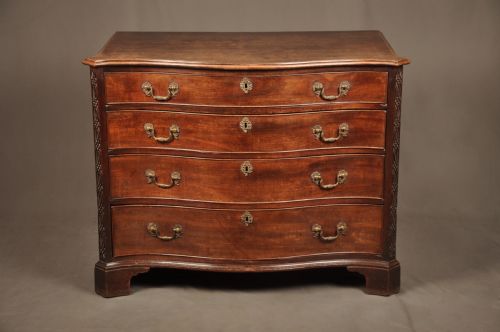
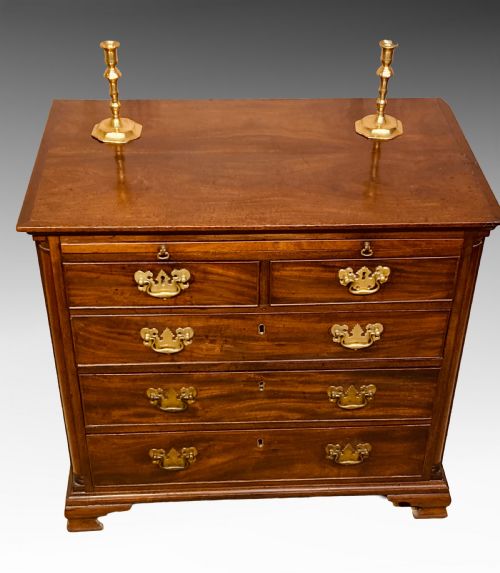
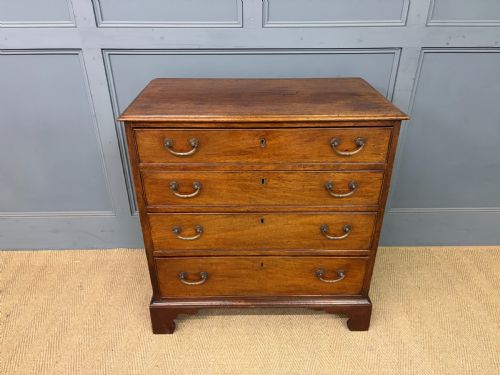
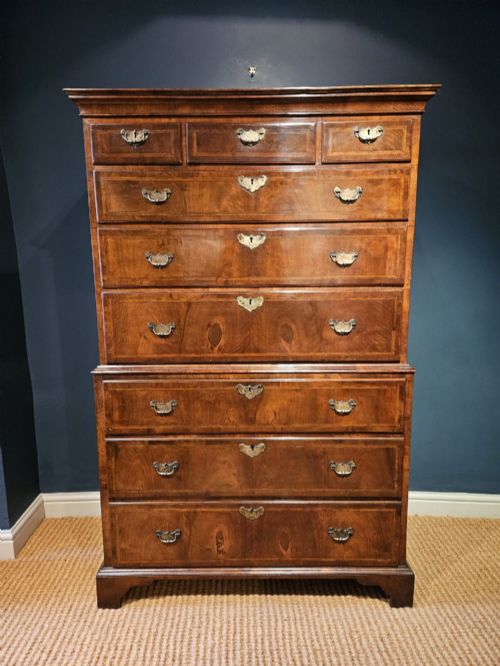
A chest on bracket feet encompasses standard chests of drawers, bachelor variants, tallboys, and miniature pieces originating primarily from the eighteenth and nineteenth centuries. The Georgian period dominates the selection, though Edwardian, Victorian, and early twentieth-century revivals appear across the listings.
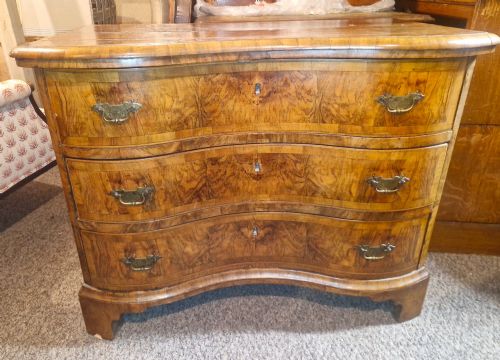
Mahogany, oak, and walnut form the core timber choices for these drawer units, shaped into straight fronts, serpentine contours, or stacking chest-on-chest arrangements. Buyers encounter variations ranging from compact bedside formats to large multiple-drawer storage pieces.
The bracket foot itself supports the cabinetry, grounding the piece while elevating the body of the chest above floor level. Regional country iterations sit alongside refined urban examples from the Georgian era through to later revival periods.
Qualities and distinction
The refinement of the timber figures, such as highly figured walnut or flame mahogany, separates standard utility pieces from high-status examples. Superior construction shows in pristine internal oak linings, crisp bracket foot profiles, and undisturbed original brass hardware.
Proportion and decorative flourishes like herringbone crossbanding or serpentine drawer fronts dictate the sophistication of the piece. Subtle variations in the carpentry distinguish provincial country workshop output from metropolitan cabinet work.
Chest on Bracket Feet Retail Price Guide 2026
Typical asking prices for chest on bracket feet among the pieces listed under this phrase on Sellingantiques today, from the lower quarter to the upper quarter. They describe what is for sale here now, not the wider market.
Some miniature chests of drawers were constructed as apprentice pieces to demonstrate a cabinetmaker's full range of scaling skills.
Maple & Co
The Chest on Bracket Feet Glossary
- Bracket foot
- A corner foot shaped like a bracket, supporting the base of a chest with mitred joints.
- Bachelor's chest
- A small folding-top chest of drawers designed for personal use during the eighteenth century.
- Chest on chest
- A tall storage unit formed by stacking a smaller chest directly on top of a larger base chest.
- Serpentine front
- A convex central drawer section flanked by concave curves, creating a fluid undulating facade.
- Crossbanding
- A decorative border of veneer laid with the grain running perpendicular to the surrounding surface.
Chest on Bracket Feet: Frequently Asked Questions
How do I date a chest?
Dating relies on timber choice, secondary wood linings, construction techniques, and stylistic cues like bracket foot profiles. Eighteenth-century pieces frequently employ oak carcase linings alongside dense mahogany or walnut.
Later Victorian and twentieth-century revival pieces exhibit different internal construction methods and standardised hardware fittings that mark their chronological origin.
Where should I place a chest?
These chests suit bedrooms, hallways, or living spaces where surface area and drawer storage are both required. Their compact footprint allows them to sit against walls without dominating smaller rooms.
Ensure placement avoids direct sunlight and dramatic humidity changes to protect vulnerable cabinet timbers and applied veneers.
What is a bachelor's chest?
A bachelor's chest is a compact form featuring a fold-over top or a brushing slide intended for writing and personal grooming. They date predominantly from the Georgian era.
These versatile pieces combine writing functionality with standard drawer storage in a reduced physical scale.
Are bracket feet original?
Original bracket feet display matching timber grain, consistent wear patterns, and integrated structural joinery with the base carcase. Replacements often show differences in timber colour or modern adhesive usage.
Examining the internal blocking behind the feet helps determine whether the supports remain as constructed by the original cabinetmaker.