





Chippendale Slant Desk
A chippendale slant desk is a functional writing piece built during the eighteenth century and later revived, offering fitted interiors and secure storage.
Chippendale Slant Desk
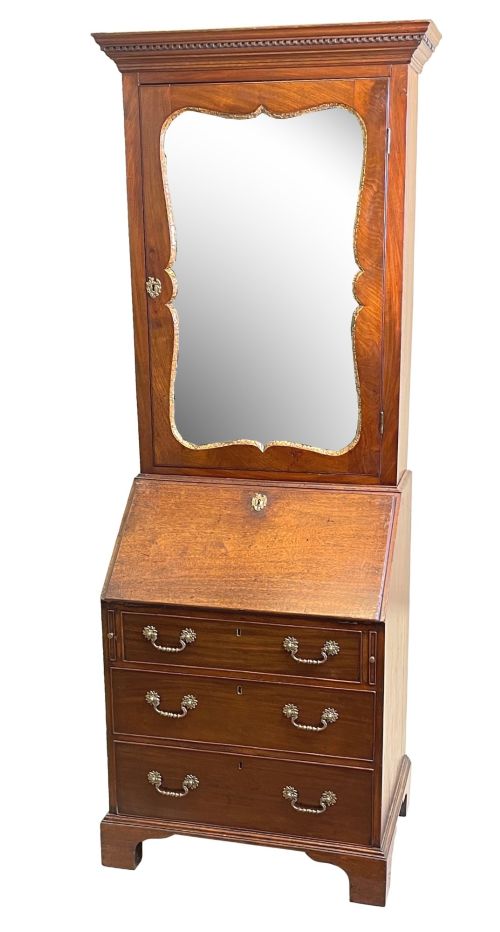
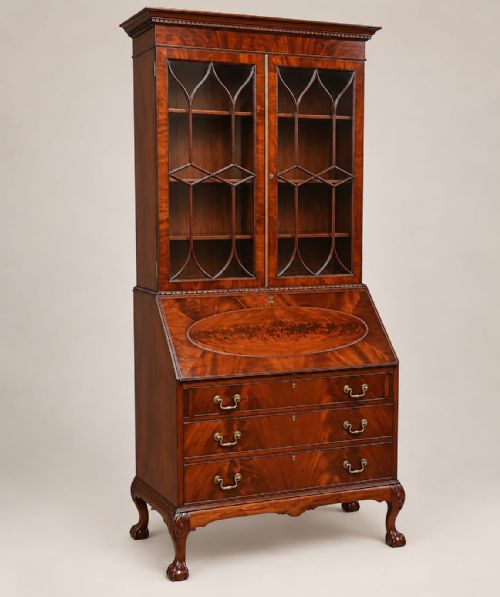
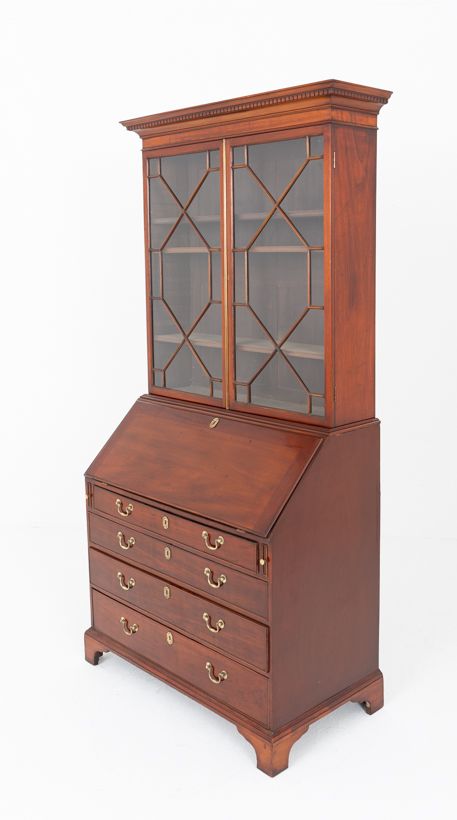
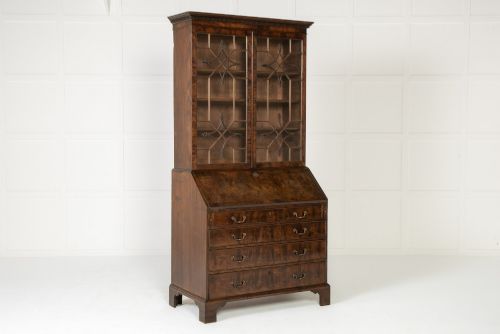
A chippendale slant desk brings together the practical writing slope and the architectural presence of the Georgian period. Pieces range from compact desks on stands to substantial bureau bookcases fitted with mirror panels or upper cabinetry.
Mahogany dominates the selection, accompanied by secondary timbers such as oak, fruitwood, cedarwood, and padauk wood. Buyers encounter eighteenth-century originals alongside later revivals from the early twentieth century.
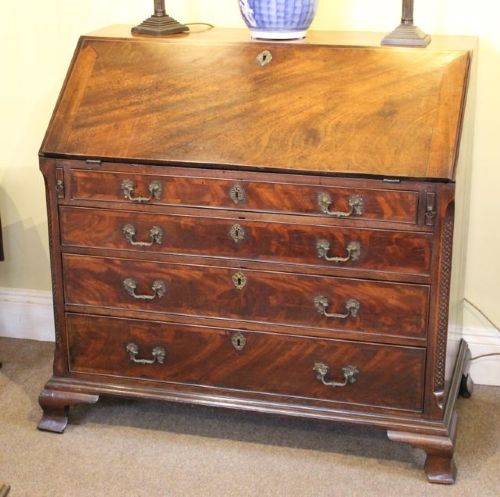
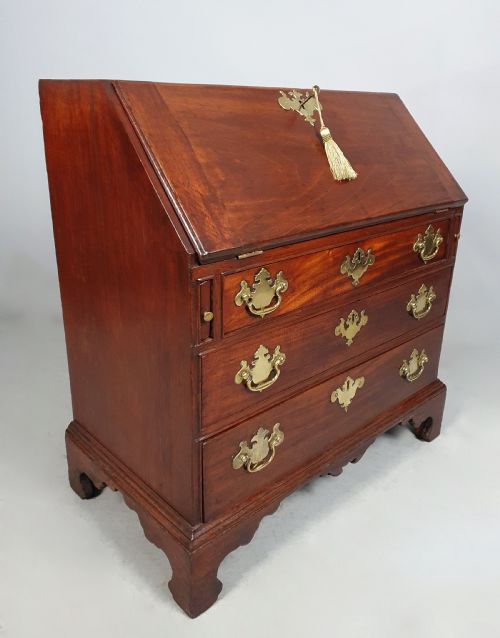
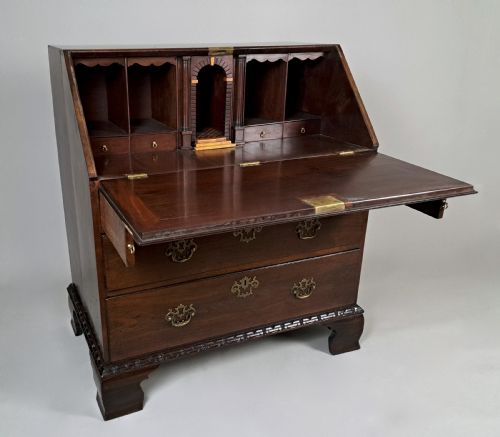
The form encompasses simple fall-front writing desks as well as elaborate bureau bookcases with fitted pigeonholes and secret compartments. These pieces served as the administrative centre of the historic household.
Materials and Construction
Cabinetmakers utilised solid timbers and selected veneers, frequently employing mahogany for primary visible surfaces while relying on oak or cedarwood for internal drawer construction and secondary framing.
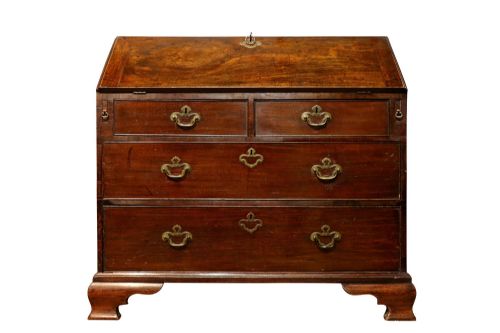
Surface decoration relies upon the natural figure of the timber, enhanced through polished finishes rather than heavy pigmentation. Brass hardware, including drop handles and escutcheons, secures the drawers and fall-fronts.
Chippendale Slant Desk Retail Price Guide 2026
Typical asking prices for chippendale slant desk among the pieces listed under this phrase on Sellingantiques today, from the lower quarter to the upper quarter. They describe what is for sale here now, not the wider market.
Assessing Quality
Quality reveals itself in the selection of timber figure and the precision of the internal cabinetwork. The complexity of the interior compartments, incorporating secret drawers and carved document slides, distinguishes superior examples.
Construction methods, such as hand-cut dovetailing on drawers and the integrity of the fall-front hinges, separate standard production from exceptional cabinetmaking.
Giles Grendy
The Chippendale Slant Desk Glossary
- Bureau
- A writing desk with a sloping hinged lid that covers a fitted interior of pigeonholes and small drawers. It often sits upon a chest of drawers or a dedicated stand.
- Fall-front
- A writing flap hinged at the bottom edge that pulls down to create a horizontal writing surface. When closed, it conceals the inner compartments.
- Padauk wood
- A dense tropical timber valued for its rich reddish-brown colour and stability. Cabinetmakers utilised it for high-status eighteenth-century furniture.
- Pigeonhole
- A small open compartment within the interior of a desk designed for sorting letters and documents. These often surround a central locked cupboard or prospect door.
Chippendale Slant Desk: Frequently Asked Questions
What is a chippendale slant desk?
A chippendale slant desk is a writing cabinet featuring a sloping lid that opens to reveal a tiered interior of small drawers and pigeonholes. These pieces date from the eighteenth century or appear as twentieth-century revivals.
They provide a dedicated writing surface while concealing paperwork behind a locked fall-front panel.
How do I date a bureau bookcase?
Dating relies upon timber selection, construction techniques, and stylistic markers such as bracket feet or ogee bracket feet. Eighteenth-century examples display hand-cut joinery and period brasses.
Twentieth-century revival pieces utilise machine-cut elements and different internal timber linings.
Where were these desks placed?
In historic homes, these desks occupied private studies, libraries, or principal parlours where estate management and correspondence took place. Their secure compartments held financial records and personal letters.
Today, they function effectively in home offices and living rooms as writing surfaces and display cabinets.
What woods were used?
Mahogany is the predominant timber found across these pieces, complemented by oak, fruitwood, cedarwood, and padauk wood. Cabinetmakers matched these woods to the status and origin of the commission.
Secondary timbers like oak commonly appear in drawer linings and internal framing.