



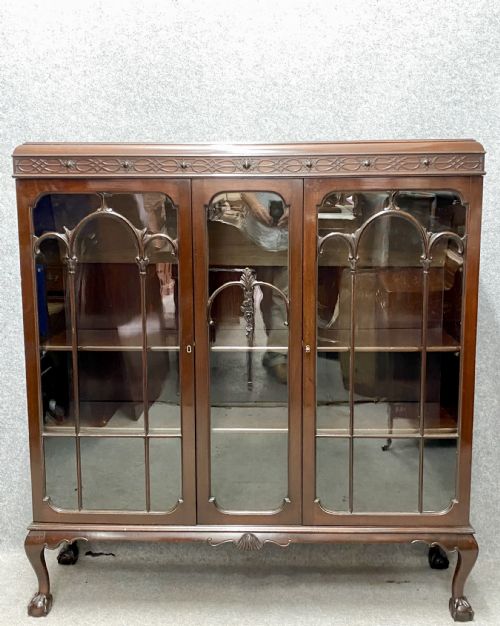
Chippendale Revival Vitrine
These pieces of chippendale revival vitrine furniture bring refined Georgian elegance into a room to display porcelain and silver behind fine glass panels.

Chippendale Revival Vitrine
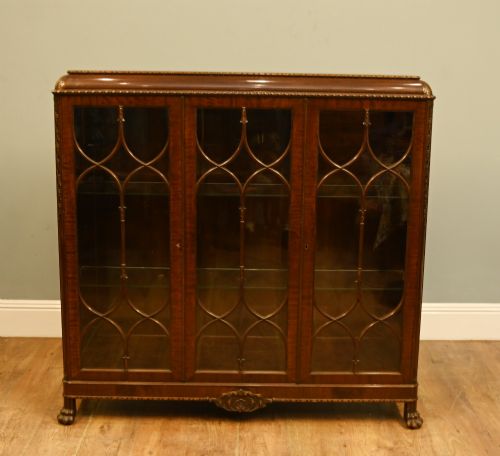
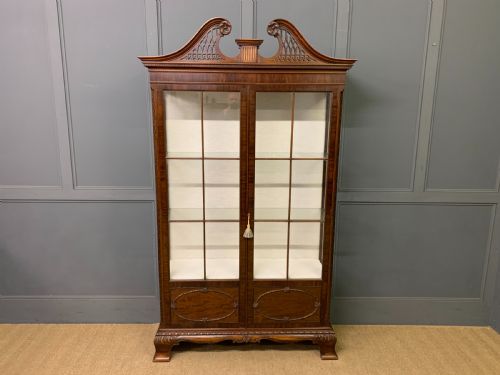
When you search for a chippendale revival vitrine, you look at display cabinets, display tables, bookcases, and side cabinets produced during the Victorian, Edwardian, and late nineteenth-century periods. These pieces adapt eighteenth-century design principles to suit late-Victorian and Edwardian interiors, functioning primarily as glazed storage for treasured objects.
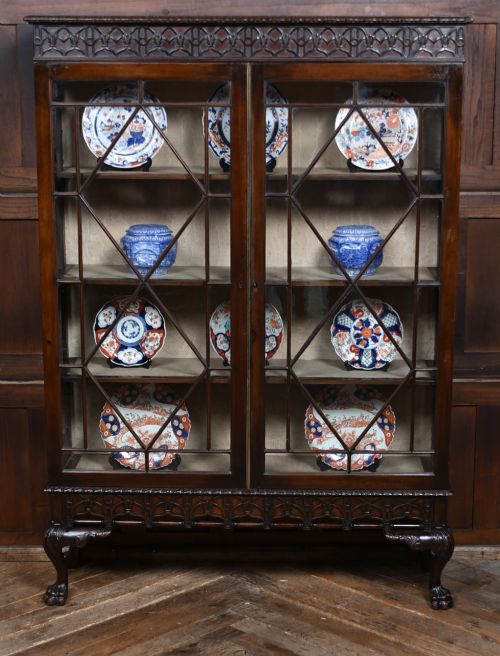
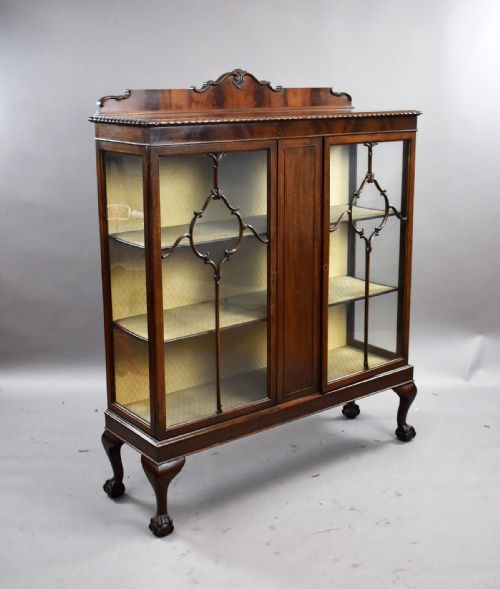
You are most likely to meet mahogany display cabinets featuring glazed doors, sometimes built on stands or incorporating lower drawers. Examples range from simple astragal glazed frontages to intricate Chinoiserie interpretations and specialised silver or corner cabinets.
Makers of the period applied historicist revival styles with immense technical competence, producing tall pier cabinets and low bijouterie tables. Each piece serves to elevate the display of ornaments whilst anchoring a room with dark polished timber.
How They Were Made
Cabinet makers constructed these pieces primarily from solid and veneered mahogany, framing the display areas with intricate glass panes secured by timber astragals. Brass hardware provides functional detailing on doors and drawers, while internal linings often incorporate velvet or fabric to cushion displayed items.
Mirrored backs appear in specific pier and display cabinets to reflect light through the stored porcelain. Carving is executed directly into the mahogany framework, echoing the rococo and Chinese-influenced motifs associated with eighteenth-century taste.
Some display cabinets contain secret drawers tucked beneath the glazing, waiting for someone to find forgotten keys.
What Varies in Quality
The distinction between standard commercial production and finer cabinet work lies in the depth and crispness of the carved mahogany ornamentation. Finer examples display meticulous joinery in the glazing bars and carefully selected timber grains on the cabinet facades.
Internal elements such as velvet linings, brass fittings, and the clarity of the mirror glass differentiate basic display furniture from pieces commissioned through prominent workshops or retail furnishers.
Edwards & Roberts·Warings
The Chippendale Revival Vitrine Glossary
- Astragal
- A small moulding used to hold the individual panes of glass within a glazed door. These delicate timber bars define the characteristic geometric patterns seen on cabinet fronts.
- Bijouterie cabinet
- A glazed display table or cabinet specifically designed for small precious objects, medals, and jewels. They typically feature tabletop glass lids or shallow glazed drawers.
- Chinoiserie
- A decorative style reflecting European interpretations of Chinese artistic traditions. It appears on revival pieces through characteristic fretwork and pagoda-inspired motifs.
- Pier cabinet
- A tall, narrow display cabinet designed to fit the wall space between windows. These pieces maximise vertical display area without blocking natural light sources.
- Vitrine
- A glass-fronted display cabinet used for exhibiting fine porcelain and curiosities. The term originates from the French word for glass.
Chippendale Revival Vitrine: Frequently Asked Questions
What is a chippendale revival vitrine?
A chippendale revival vitrine is a glazed display cabinet built in the late nineteenth or early twentieth century using eighteenth-century stylistic vocabulary. These pieces use mahogany frames and glass panels to exhibit collections of porcelain, silver, and curiosities.
Cabinet makers of the Victorian and Edwardian eras produced these pieces to satisfy a renewed appetite for Georgian elegance. They combine traditional joinery with the display requirements of nineteenth-century collectors.
How do I date a display cabinet?
Dating relies on examining the timber construction, the style of the mahogany, and the specific characteristics of the glass and hardware. Late nineteenth-century pieces often display denser timber selection and heavier carved detailing compared to later Edwardian examples.
Makers' stamps, brass locks, and internal fabric linings also offer clues to the exact decade of manufacture. Comparing the decorative motifs against documented revival styles helps confirm the period.
Where should I place a vitrine?
Vitrines suit principal reception rooms, dining rooms, and studies where they can safely house delicate collections behind glass. Placing them away from direct sunlight protects both the mahogany timber and any internal fabric linings from fading.
Ensure the floor is level so the glazed doors hang true and close properly. Positioning the cabinet near a natural light source enhances the visibility of objects displayed inside.
How do I care for mahogany cabinets?
Care for the mahogany exterior by dusting regularly with a soft cloth and applying appropriate wax polish sparingly to maintain the finish. Avoid using silicone-based sprays that can penetrate the timber grain and damage the polished surface over time.
Keep internal velvet or fabric clean using gentle suction attachments on a vacuum. Ensure the room humidity remains stable to prevent timber movement that could affect the glass panes.