


Chippendale Revival Stand
A chippendale revival stand brings late nineteenth-century cabinet-making into a room, offering functional display space rooted in eighteenth-century design traditions.
Chippendale Revival Stand
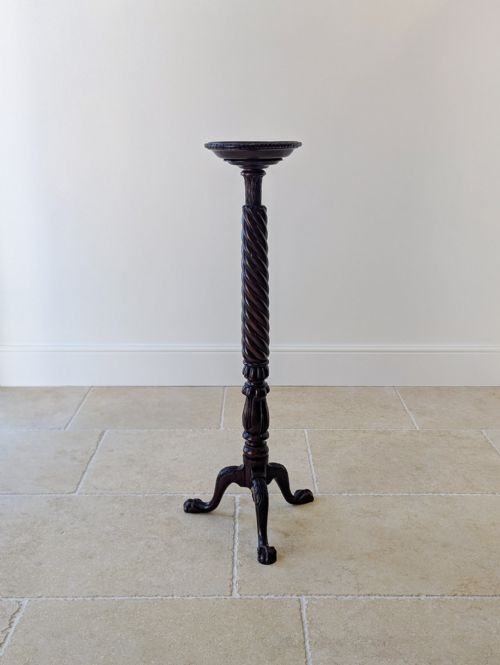
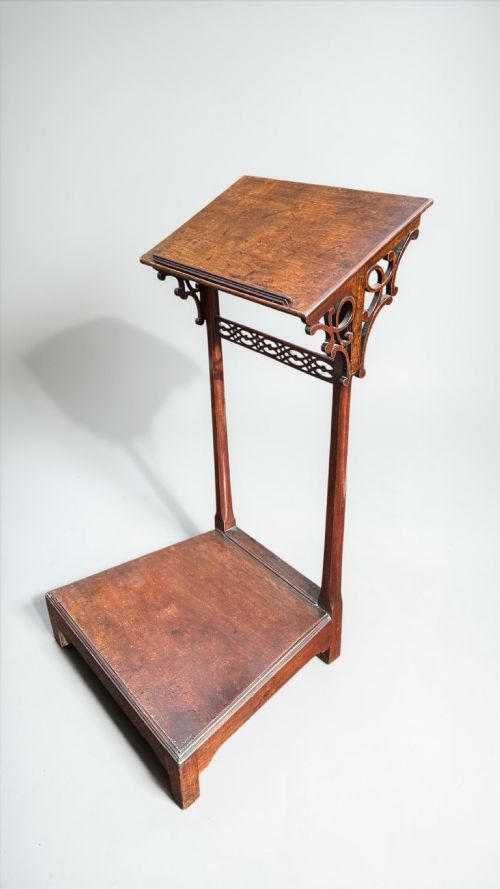
A chippendale revival stand encompasses small tables, torchères, and plant pedestals produced primarily during the Victorian and Edwardian eras, mirroring earlier Georgian aesthetics.
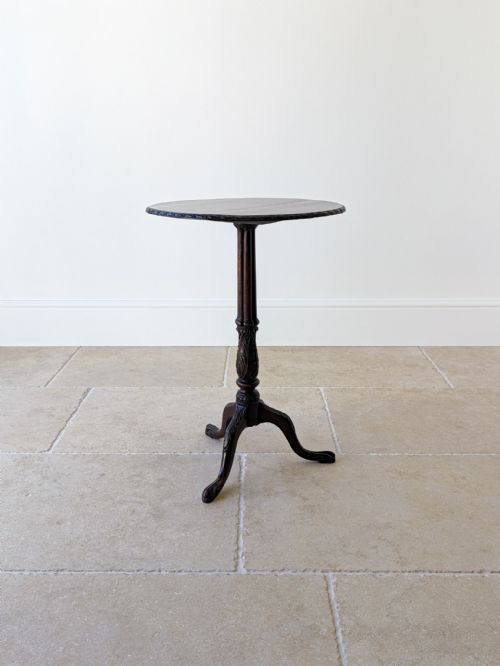
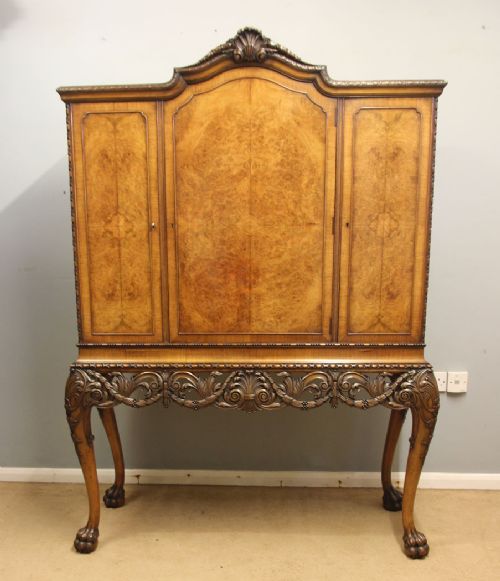
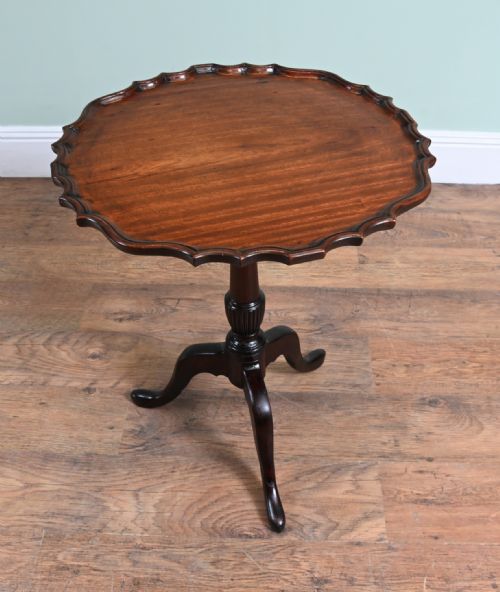
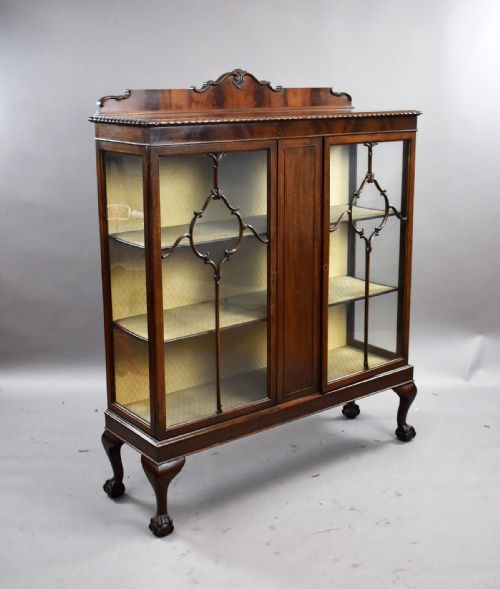
Buyers most frequently encounter mahogany tripod wine tables and display cabinets on stands, reflecting the popular revival output of the late nineteenth and early twentieth centuries.
The category draws together varied forms including occasional tables and tea tables, all sharing the characteristic carved details associated with the revival movement.
Materials and Construction
Makers predominantly utilised solid mahogany and burr walnut veneer, building structural stability while displaying rich timber grain.
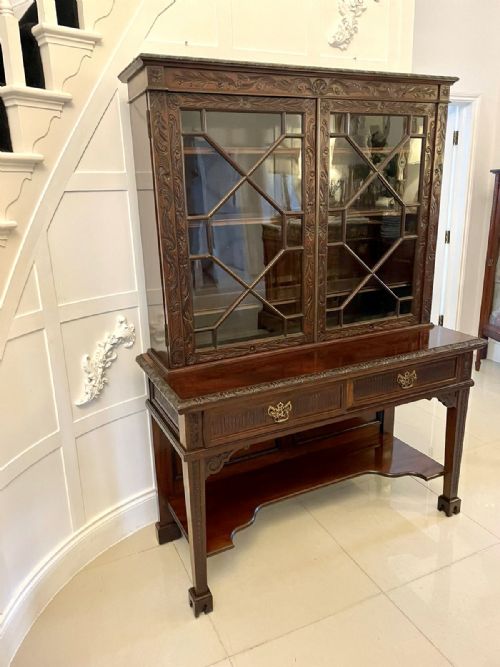
Glass panels, brass hardware, and velvet or fabric linings appear on cabinet and display variants to protect and present contents.
Joinery techniques combined traditional framing with carved embellishments, incorporating tripod bases, pie-crust edges, and astragal glazing.
Listings feature pieces spanning from the Victorian era through the Edwardian period, constructed predominantly in mahogany with occasional burr walnut veneer.
Judging Quality and Execution
The finesse of the timber carving separates standard production items from superior pieces, where hand-chiseled details show crisp definition rather than soft moulding.
Structural integrity in joints, particularly on tripod wine tables and stands, determines how well a piece handles daily weight and placement.
The choice of figured mahogany and well-matched walnut veneers signals workshop investment in materials, lifting the visual weight of smaller tables and cabinets.
James Winter And Sons·Edwards And Roberts·Warings
The Chippendale Revival Stand Glossary
- Tripod wine table
- A small occasional table supported by a central pillar and three spreading legs. These tables often feature tilt-tops for convenient storage when not in use.
- Torchère
- A tall, slender stand designed to hold a candle or lamp. They frequently display intricate pillar carving and a small circular top.
- Pie-crust edge
- A raised, decoratively carved tabletop rim resembling pastry work. This technique requires skilled hand-shaping of solid timber.
- Astragal glazed
- Fitted with narrow wooden bars holding individual glass panes within a cabinet door. The arrangement creates distinct geometric patterns across the front.
- Cabinet on stand
- A main enclosed storage body raised on an open frame with legs. This form elevates display items to eye level.
Chippendale Revival Stand: Frequently Asked Questions
What is a chippendale revival stand used for?
These stands served various domestic purposes in nineteenth and twentieth-century homes, from holding tea services and wine bottles to displaying porcelain and small ornaments.
Today, they function as practical accent furniture in living spaces and hallways, providing elevated surfaces for lamps, plants, and collections without occupying excessive floor area.
How do I date a chippendale revival stand?
Dating relies on examining timber characteristics, construction methods, and hardware styles alongside period stylistic clues. Victorian and Edwardian revival pieces often use machine-prepared timbers combined with hand-finished carving.
Comparing the specific proportions and secondary woods helps distinguish late nineteenth-century interpretations from actual eighteenth-century originals and mid-twentieth-century reproductions.
Where should I place a wine table?
Tripod wine tables suit placement beside armchairs, sofas, or in unused corners where a compact surface is needed for drinks or books. Their narrow footprint makes them versatile across different room layouts.
Because many feature tilt-top mechanisms, they can also stand flush against a wall as a decorative display element when not actively in use.
How do I care for mahogany furniture?
Mahogany surfaces benefit from regular dusting with a soft, dry cloth to prevent particulate accumulation. Avoiding direct sunlight and maintaining stable room humidity protects the timber and veneer from splitting.
Occasional application of appropriate wax polish maintains the lustre of the wood without building up heavy residue on carved details.