
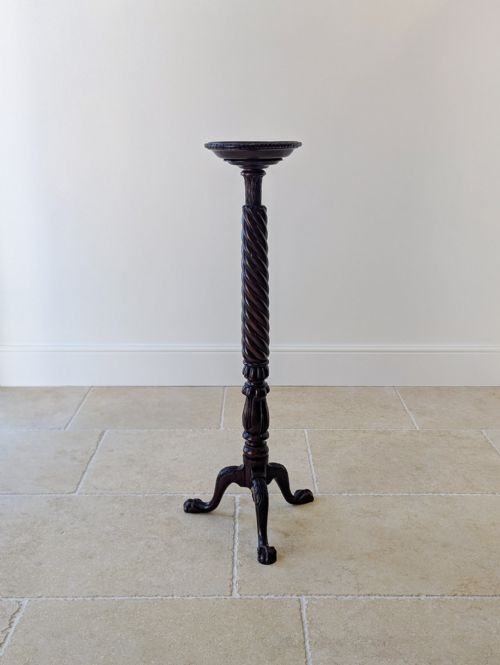


Twisted Column Plant Stand
A twisted column plant stand elevates botanical displays with vertical drama, drawing the eye upwards through architectural form.
Twisted Column Plant Stand
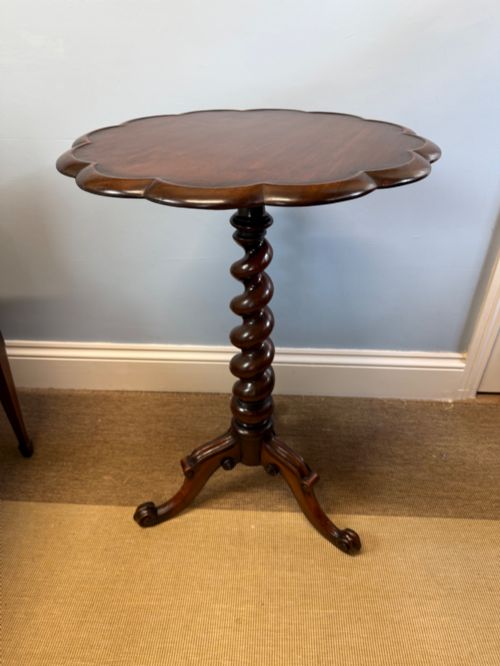
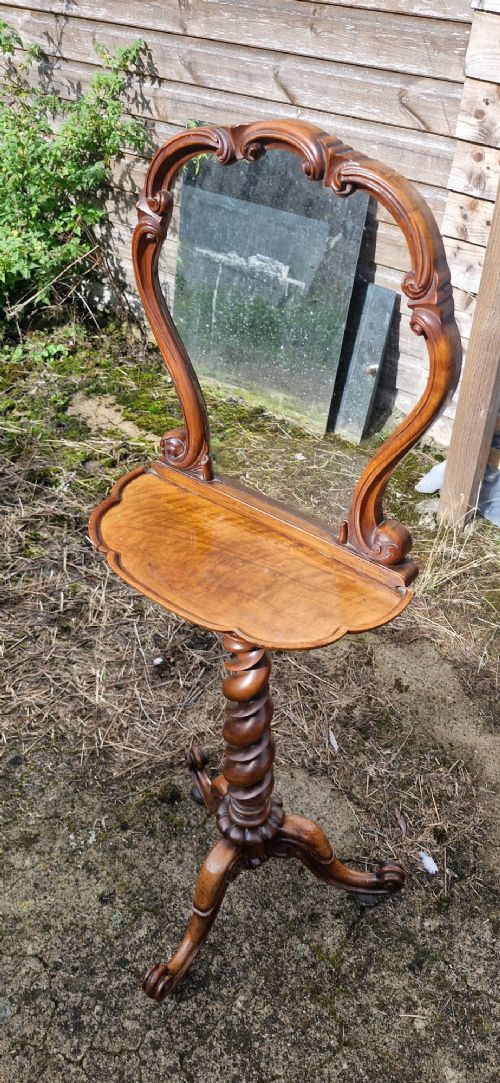
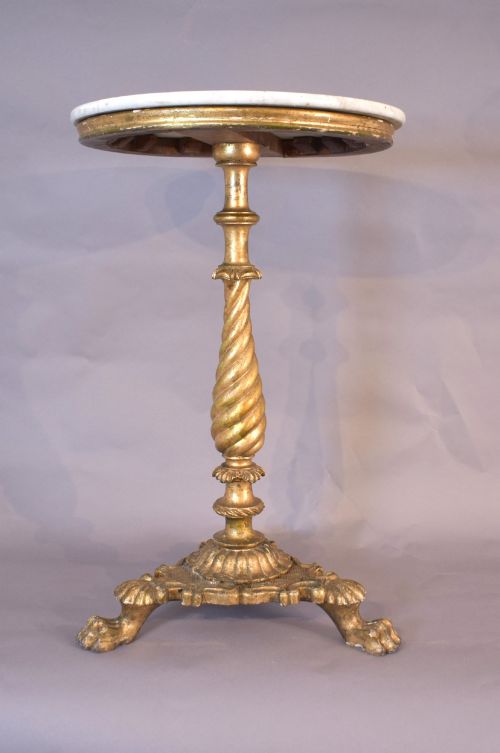
A twisted column plant stand serves as a raised platform for flora, sculpture, or lighting, bringing height and sculptural interest to a room. These pieces appear in forms such as torchères, pedestals, and jardinière stands, designed to support ornamental displays.
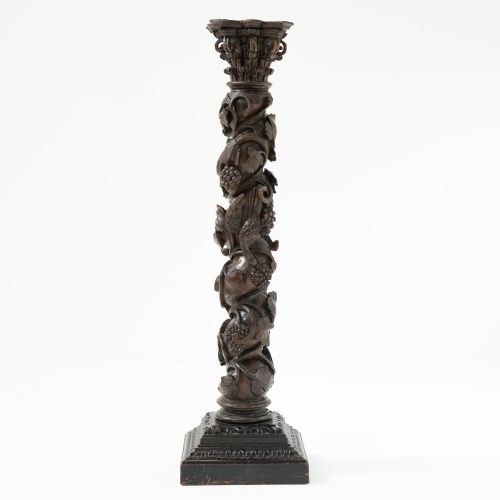
The selection ranges from seventeenth-century carved oak Solomonic columns to Victorian mahogany torchères and twentieth-century barley twist plant stands. Walnut, oak, and mahogany provide the primary timber structures, often accompanied by marble and brass elements.
Victorian and Edwardian iterations dominate the current offerings, alongside earlier Georgian and seventeenth-century examples. Makers utilised stylistic revivals, incorporating Jacobean, Chippendale, and Neoclassical motifs into the column and base designs.
How they were made
Cabinet makers shaped dense timbers like mahogany, oak, and walnut using lathe-turning and hand-carving techniques to create spiral, rope twist, and barley twist shafts. Ebonised wood and beech also appear, sometimes paired with brass mounts or tripod bases for stability.
Stone columns utilise verde antico, green serpentine, and variegated marble, shaped into monolithic shafts with classical capitals and plinths. Ceramic components such as art pottery faience feature in specific jardinière pairings.
Listings span four centuries, featuring seventeenth-century oak, eighteenth-century mahogany, and twentieth-century ebonised wood.
What varies in quality
The definition of the twist and the crispness of the carving distinguish finer examples from simpler utilitarian pieces. Deeply undercut spirals and precisely executed fluting demand considerable skill from the woodturner.
Material selection dictates the upper tier, where figured mahogany, rich walnut, and solid marbles such as verde antico replace softer woods and standard finishes. The integration of brass details and stable tripod bases elevates the construction.
The Twisted Column Plant Stand Glossary
- Solomonic column
- A twisted shaft resembling a spiral vine, originating in classical architecture and revived in seventeenth-century furniture. This form provides the characteristic helical movement seen in many plant stands.
- Torchère
- A tall, slender stand designed to support a lamp, candle, or small decorative object. These stands often feature tripod legs and elevated circular tops.
- Barley twist
- A woodworking turnery pattern resembling a spiralling barley sugar stick. It creates a dynamic diagonal rhythm along the vertical post of a stand.
- Jardinière
- An ornamental pot or stand intended for holding plants or flowers. They appear in ceramic, wood, and metal across the nineteenth century.
- Plinth
- A heavy base or lower block supporting a column or pedestal. It grounds the vertical structure and provides stability on the floor.
Twisted Column Plant Stand: Frequently Asked Questions
What is a torchère stand?
A torchère is a tall, slender piece of furniture designed to elevate lighting or decorative items above floor level. They developed historically to hold candles or oil lamps before electrical lighting became common.
Today, these stands function primarily to display plants, busts, or decorative vases, utilising small circular tops and stable bases.
How do I date a twisted wooden stand?
Dating relies on timber choice, tool marks, and stylistic revivals present in the turning and base construction. Seventeenth-century examples often use solid oak with hand-carved Solomonic twists, while Victorian pieces favour mahogany with machine-assisted lathe work.
Checking the underside, joints, and secondary woods helps clarify the period of manufacture. Revival styles from the nineteenth century frequently copy earlier seventeenth and eighteenth-century forms.
Where should I place a marble column?
Marble columns require a structurally sound, level floor area due to their heavy weight and rigid stone construction. They suit corners, hallways, or reception rooms where they frame architectural openings or display sculptures safely.
Keeping them away from high-traffic zones prevents accidental knocks against the fragile edges of the marble top or base.
Can these stands support heavy pots?
Most solid timber and marble stands easily bear considerable weight if the base construction remains stable and balanced. Tripod bases distribute weight effectively across three points, provided the legs are secure.
Heavier marble or ceramic jardinières require sturdy nineteenth-century hardwood frames rather than slender decorative torchères to remain safe.