

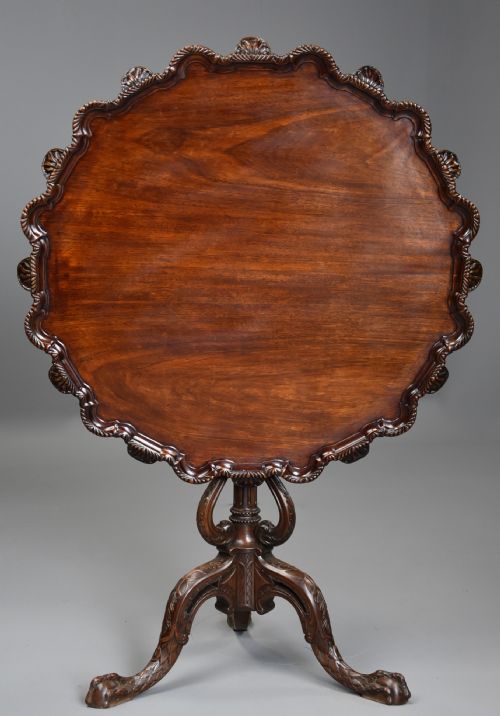


Chippendale Piecrust Table
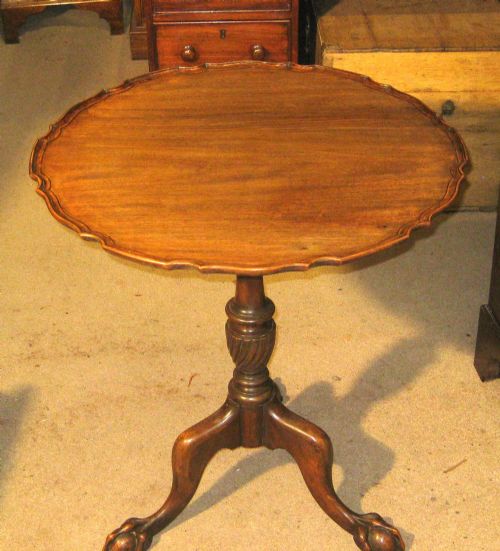
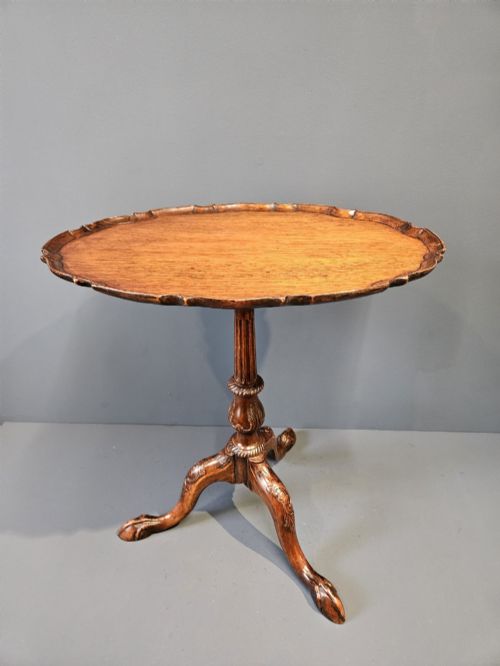
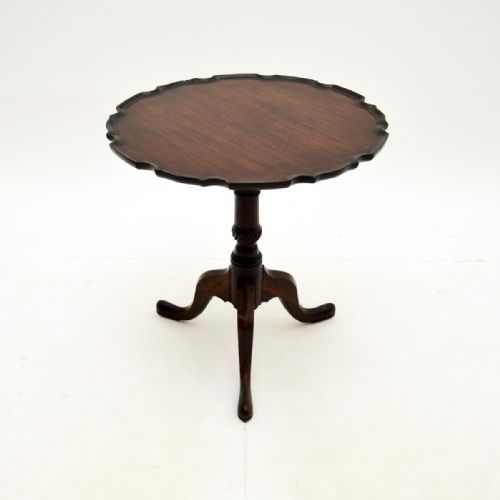
A chippendale piecrust table brings sculptural mahogany curves and raised moulded edges to a room as a functional tea or wine surface.
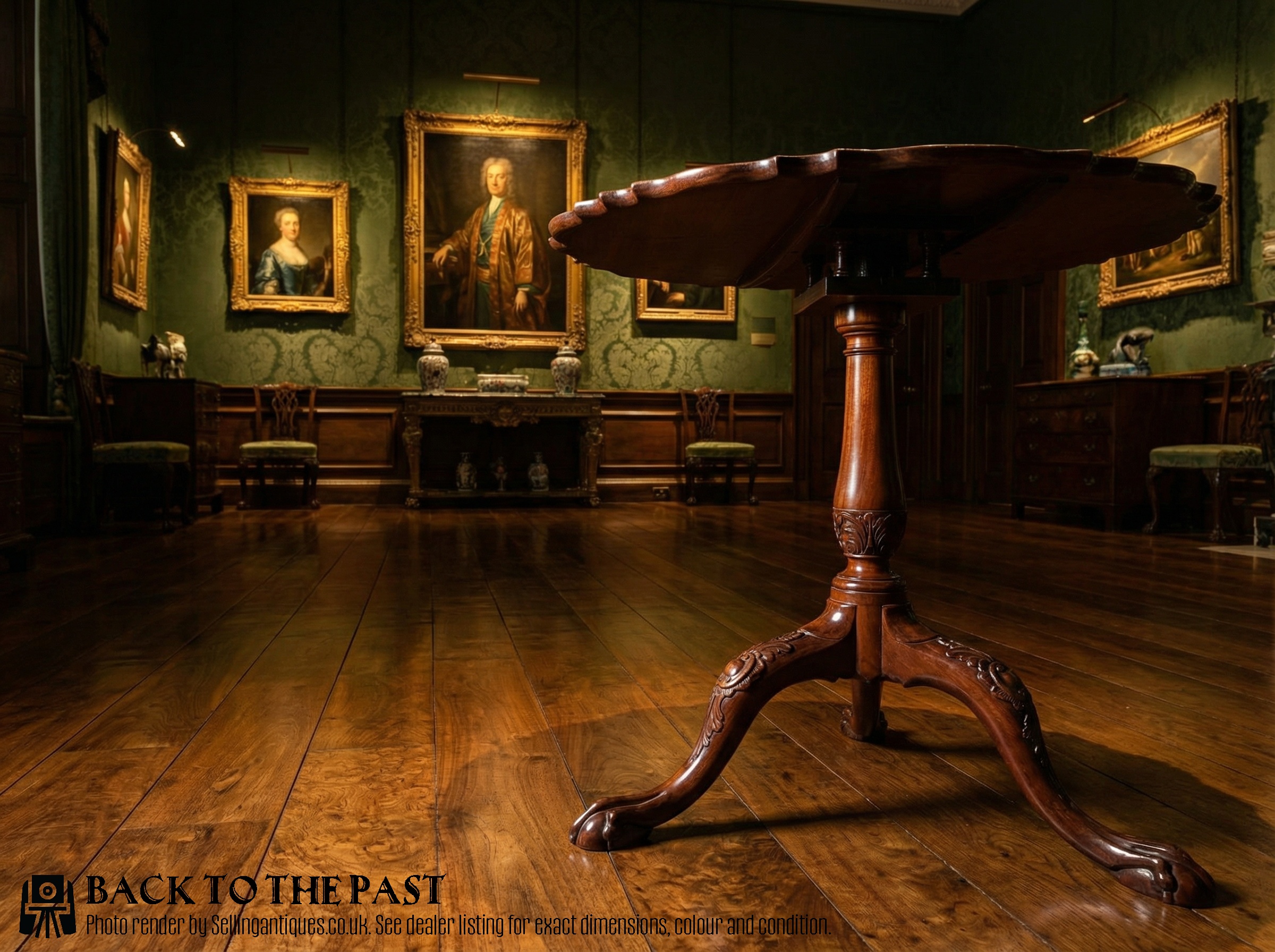
Chippendale Piecrust Table
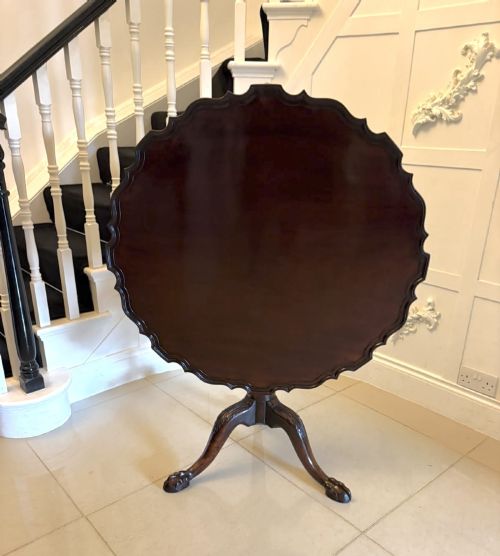
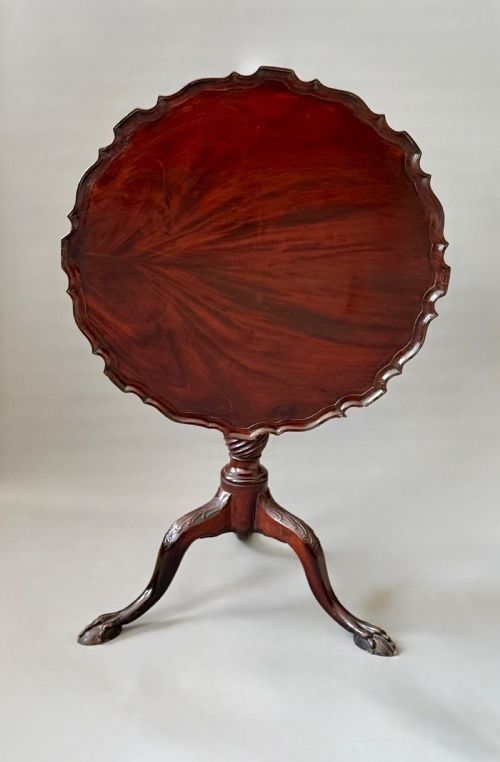
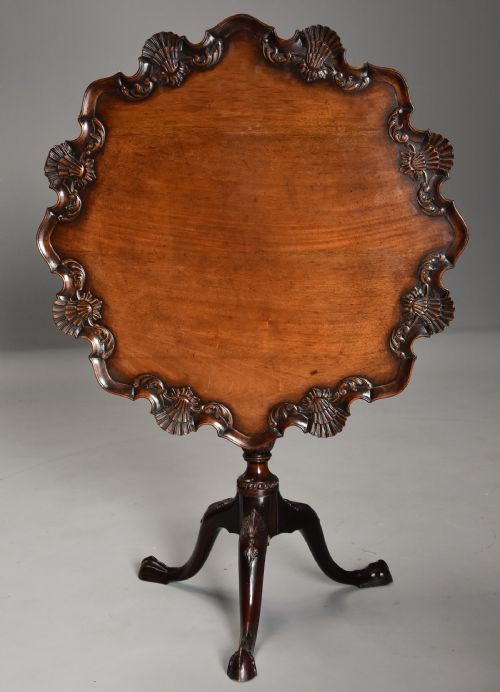
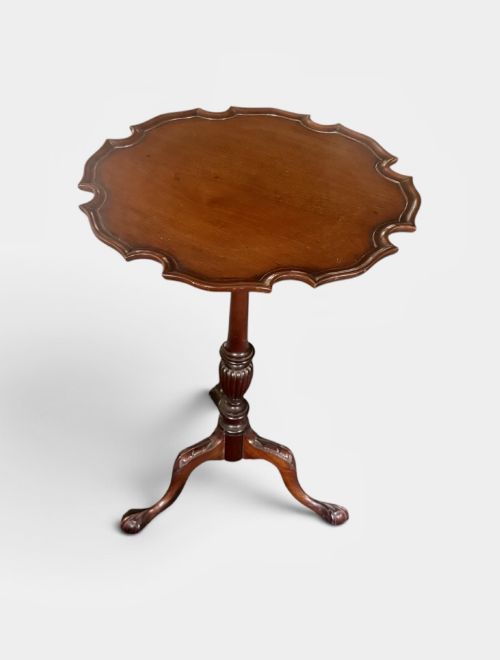
A chippendale piecrust table usually takes the form of a tripod base supporting a circular top with a raised, scalloped rim resembling pastry work. These pieces emerge in the eighteenth century during the Georgian period, often associated with the Chippendale style or later Edwardian and twentieth-century revivals.
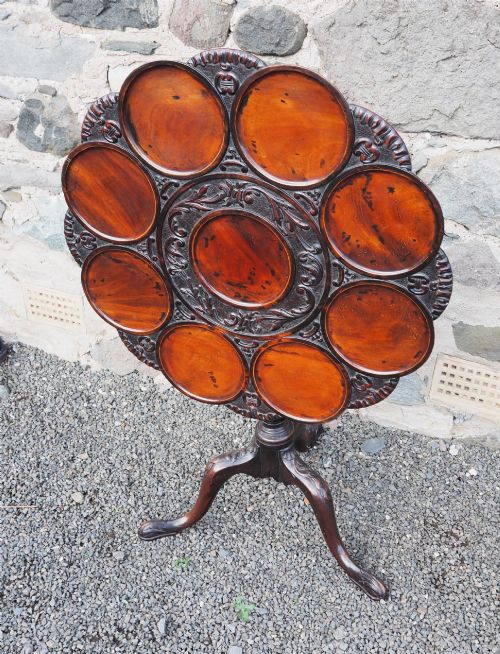
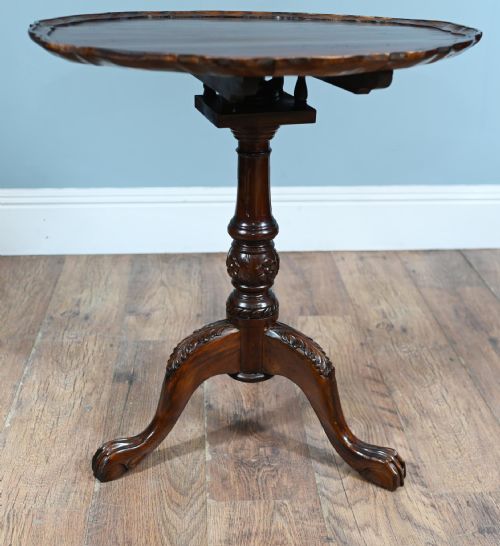
The version most commonly met on this page is the tripod wine or occasional table, frequently featuring a tilt-top mechanism that allows the surface to rest vertically against the stem when not in active use. Alongside genuine eighteenth-century examples, the selection includes pieces produced across the nineteenth and twentieth centuries in the Chippendale revival taste.
Materials and construction
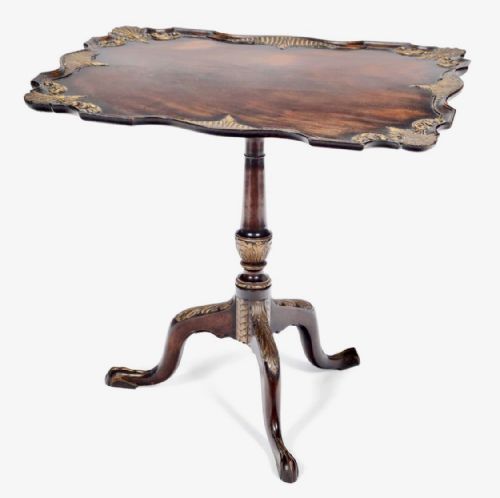
Makers primarily utilised mahogany, ranging from solid timber to flame mahogany veneer, alongside occasional examples in figured walnut, solid walnut, and oak. Selected pieces incorporate brass hardware or parcel gilt highlights to accentuate carved details on the stem and legs.
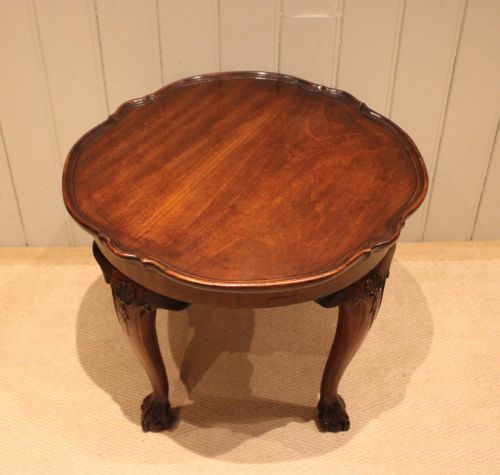
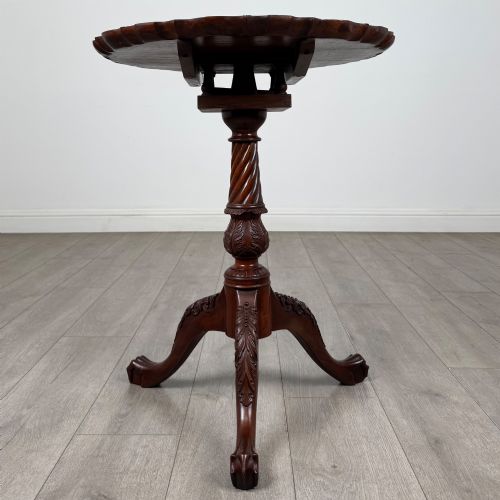
The characteristic rim is carved directly from a thick solid plank of timber rather than applied separately, demanding precise hand-tooling to achieve the undulating profile. Tripod supports commonly terminate in pad, claw-and-ball, or carved pad feet, sometimes connected by a birdcage mechanism beneath the top for rotation and tilting.
Object types include occasional tables, side tables, wine tables, coffee tables, tripod tables, centre tables, tiered tables, kettlestands, and dumb waiters.
Distinguishing quality
Quality rests principally on the crispness and depth of the carving along the raised rim and the knees of the cabriole legs. Superior examples display fluent, hand-chiselled detailing that retains sharp lines, whereas lesser pieces show softer, shallower moulding.
Proportion and stability dictate the standing of a piece, particularly in how the central column meets the tripod legs and the tilt-top locks into the catch. Original timber surfaces possessing a rich, undisturbed patina command greater appreciation than heavily refinished or replaced tops.
S and H Jewell London
The Chippendale Piecrust Table Glossary
- Piecrust edge
- A raised, scalloped rim carved around the perimeter of a circular tabletop. This decorative border mimics the fluted pastry of a pie.
- Tilt-top mechanism
- A hinge arrangement beneath the surface enabling the tabletop to pivot into a vertical position. This allows the furniture to stand flat against a wall when unoccupied.
- Birdcage
- A box-like wooden frame situated between the tabletop and the central pillar. It permits the surface to rotate horizontally and tilt.
- Tripod table
- A small freestanding table supported by a central pillar resting on three legs. The design provides stability on uneven eighteenth-century floors.
- Kettlestand
- A compact occasional table designed to hold a tea kettle and related vessels. These diminutive stands often share the tripod format of larger tea tables.
Chippendale Piecrust Table: Frequently Asked Questions
What is a birdcage mechanism?
A birdcage is a small wooden assembly fitted beneath the tabletop that connects the surface to the central pillar. It permits the table to rotate fully on its axis and tilt backward.
This functional device allows the furniture to be stored compactly against a wall when not in use for serving tea or wine.
How do I date a mahogany table?
Dating relies on examining the timber density, construction joints, hand-tool marks beneath the top, and the style of the carving on the knees and feet. Eighteenth-century pieces exhibit dense, heavy mahogany with genuine period wear and patination.
Later revival pieces from the Edwardian era or the twentieth century often display machine-sawn components, lighter secondary woods, or crisp, clean joinery that lacks age-related movement.
Where were these tables placed?
These pieces served primarily as tea, wine, or occasional tables in Georgian reception rooms and parlours. Their portable nature allowed servants to move them easily near seating areas.
Today, buyers utilise them beside armchairs as lamp tables or display surfaces where a compact footprint is required.
Are tilt-top tables stable?
A well-balanced tripod base provides firm contact on three points, preventing the rocking common on four-legged furniture. The central catch secures the tabletop flat when lowered.
Older mechanisms can develop play over time, so checking the tightness of the pivot pin ensures the surface remains level and secure.