
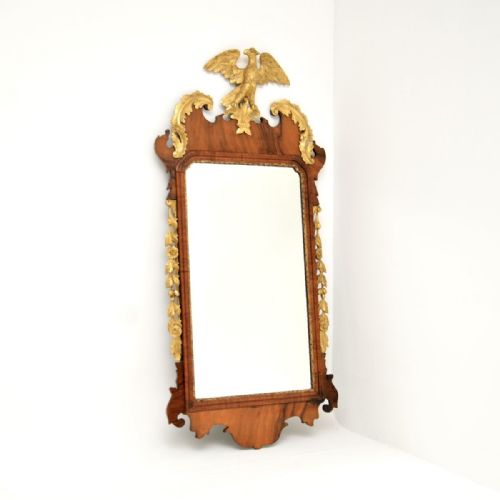


Chippendale Period Mirror
A chippendale period mirror brings remarkable depth and carved detail to a room, combining eighteenth-century proportion with naturalistic rococo movement.
Chippendale Period Mirror
A chippendale period mirror encompasses wall-hanging pier glasses, dressing pieces, and larger overmantel examples dating from the eighteenth century. Buyers seeking a chippendale period mirror typically encounter works shaped by Georgian taste, featuring carved wooden or gilded frames.
The surviving selection centres on mahogany fretwork designs alongside richly decorated giltwood and parcel gilt formats. These pieces reflect the aesthetic of the mid eighteenth century, spanning upright rectangular formats and sweeping oval shapes.
Geometric fretwork frames sit alongside asymmetrical rococo compositions that incorporate natural motifs. Wall mirrors and toilet mirrors dominate the selections, demonstrating the versatility of cabinet makers working within the Georgian period.
Evaluating the work
Quality rests upon the crispness of the carving and the depth of relief within the gesso or wood. Sharp edges on fretwork panels and finely modelled scrollwork distinguish superior examples from simpler production.
The handling of gilding and the retention of original surface patination dictate visual success. Finely burnished gold leaf catching the light differs significantly from flat, unvaried surface treatments.
Proportion and harmony between the frame dimensions and the mirror plate indicate the maker's confidence. Balanced crestings and well-integrated side scrolls complete a successful composition.
Watch closely for carved birds perched atop frames, bringing whimsical wildlife into eighteenth-century parlours.
The Chippendale Period Mirror Glossary
- Giltwood
- Wood carved and prepared with gesso before the application of gold leaf. This finish creates a reflective, luminous surface suited to eighteenth-century interiors.
- Fretwork
- Thin wood panels pierced with decorative patterns using a fretsaw. This technique creates lightweight frames with intricate geometric or scrolling silhouettes.
- Parcel Gilt
- A decorative treatment where only specific carved highlights receive gold leaf whilst the underlying timber remains visible. This method emphasises particular details of the carving.
- Pier Glass
- A large mirror designed to hang on the wall between windows, often placed above a pier table. These tall plates maximise natural light within a room.
- Gesso
- A plaster mixture applied to wood frames as a smooth base for gilding. It allows carvers to achieve sharp, detailed relief before applying gold leaf.
Chippendale Period Mirror: Frequently Asked Questions
Where should I hang a chippendale period mirror?
These mirrors suit principal reception rooms, hallways, or above mantelpieces where their carved frames catch natural light.
Ensure wall fixings safely support the weight of solid wood and gesso frames, placing them at eye level for correct balance.
How do I care for antique giltwood?
Dust surfaces gently with a soft, dry brush to prevent damage to delicate gesso and gold leaf layers.
Avoid liquid cleaners and direct sunlight, which can destabilise historical finishes and cause timber movement.
Are these mirrors original to the eighteenth century?
Many examples date directly to the mid to late eighteenth century during the Georgian period.
Examination of construction methods, timber ageing, and backboards helps determine the period of manufacture.
What is parcel gilding?
Parcel gilding combines exposed wood grain with selective applications of gold leaf on raised carved areas.
This technique provides visual contrast between the natural timber and the brilliant gilded ornament.