





Chippendale Mahogany Settee
A chippendale mahogany settee brings substantial woodwork and traditional seating into a room, spanning periods from the eighteenth century to revival eras.
Chippendale Mahogany Settee
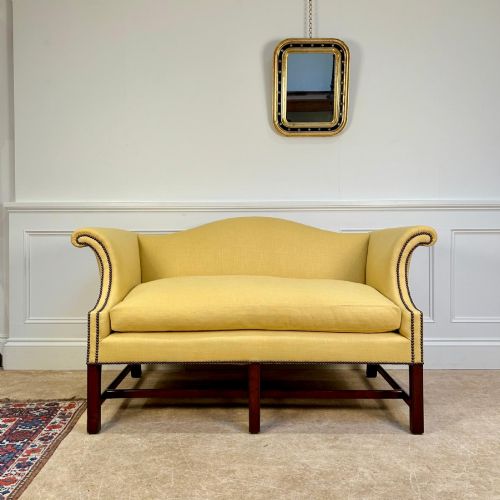
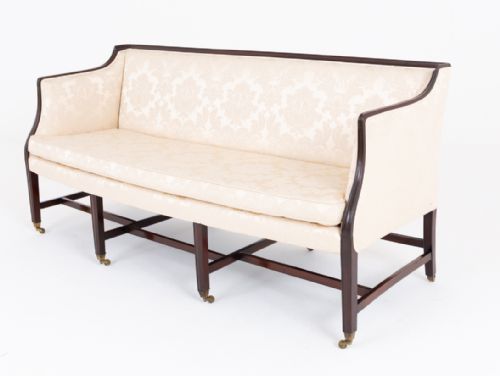
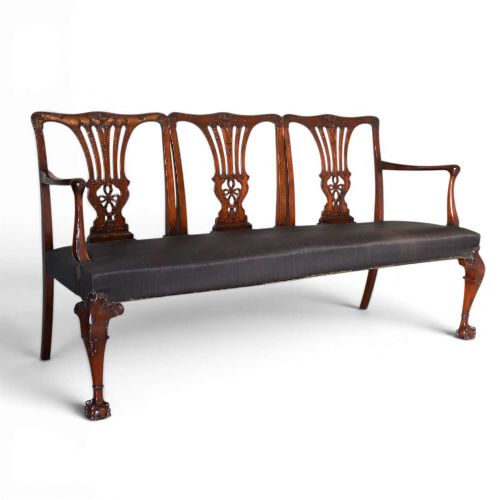
A chippendale mahogany settee combines structural wood framing with upholstered seating surfaces, taking forms such as camel backs, chair back designs, and triple-back layouts. Buyers encounter eighteenth-century originals alongside nineteenth and twentieth-century revival pieces produced in Edwardian and Victorian workshops.
The objects serve as principal seating furniture, appearing as two-seater or three-seater configurations, window seats, and library sofas. Many examples follow Georgian proportions or incorporate specific regional interpretations.
The category encompasses both straightforward timber frames and more elaborate carved iterations, reflecting changing tastes across the periods represented in the archive.
Materials and construction methods
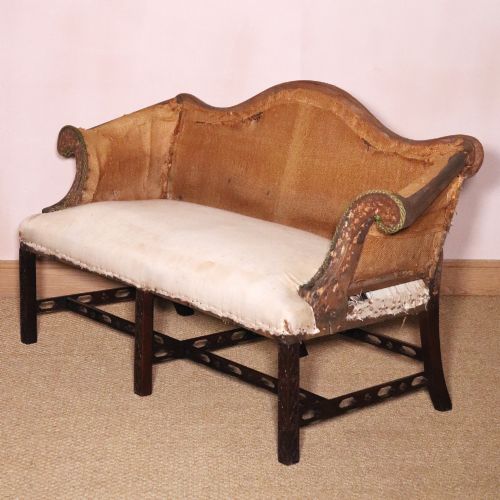
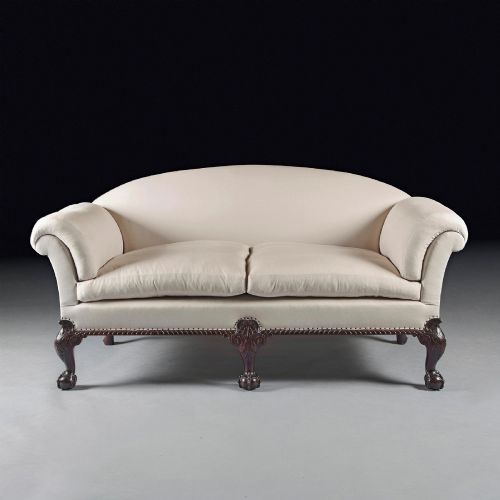
Makers utilised solid timber frameworks, predominantly mahogany, shaped to form the structural skeleton, legs, and exposed back rails. Carving techniques applied to the wood yield decorative elements such as ball and claw feet, hawk claws, and detailed back splats.
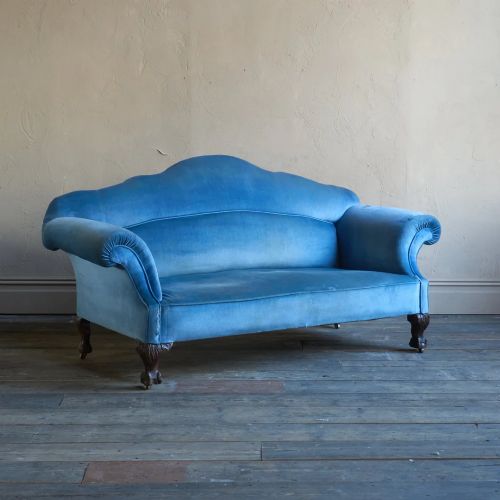
Upholstery materials including fabric, velvet, damask, and leather cover the sprung or padded seats and backs, while certain examples incorporate cane work panels. Brass elements occasionally appear on foot fittings or castors.
Joinery methods secure the timber components together, supporting the weight of the upholstered sections and the heavy carved wooden frames characteristic of the style.
Chippendale Mahogany Settee Retail Price Guide 2026
Typical asking prices for chippendale mahogany settee among the pieces listed under this phrase on Sellingantiques today, from the lower quarter to the upper quarter. They describe what is for sale here now, not the wider market.
Some settees double as window seats designed specifically for watching the street without leaving the drawing room.
Assessing quality in construction and detail
Quality rests upon the crispness and depth of the hand-carved woodwork, distinguishing finely rendered claw feet and pierced splats from simpler, flatter interpretations. The choice of timber grain and the integrity of the joinery determine the overall solidity of the frame.
Upholstery finish and the execution of complex silhouettes, such as serpentine fronts or triple camel backs, demonstrate the maker's skill level. Earlier eighteenth-century pieces differ fundamentally in material patination from later Edwardian and Victorian revivals.
Howard and Sons·Butlers of Dublin·J. S. Kinsey
The Chippendale Mahogany Settee Glossary
- Camel back
- A sofa or settee back featuring a continuous undulating curved top rail resembling a camel's hump. This profile appears frequently on eighteenth-century and revival seating.
- Chippendale revival
- A period of nineteenth and twentieth-century furniture production replicating the design vocabulary of Thomas Chippendale. These pieces emulate Georgian proportions and carving styles.
- Bergere
- An enclosed upholstered armchair or settee style featuring wooden frames and cane panelling. It occurs in Edwardian suites alongside matching seating.
- Chair back
- A settee design where the upper wooden framework resembles a series of joined chair backs with carved splats. Double and triple-back variants are common.
- Serpentine
- A furniture front or edge shaped with a central concave curve flanked by two convex curves. This contour adds movement to the wooden frame.
Chippendale Mahogany Settee: Frequently Asked Questions
How do I identify a genuine eighteenth-century piece?
Examination of the timber patination, tool marks, and construction joints helps distinguish eighteenth-century originals from later revival items.
Revival pieces often display different wood ageing characteristics and secondary woods that reflect nineteenth or twentieth-century manufacturing methods.
What is a chair back settee?
A chair back settee uses a continuous top rail and multiple vertical splats designed to look like several chairs joined together in a single row.
These pieces typically feature exposed mahogany woodwork along the backrest and rest on cabriole or straight legs.
Where were these settees placed historically?
These items functioned as primary seating in principal reception rooms, parlours, libraries, and large bedrooms.
Larger three-seater versions and matching lounge suites accommodated multiple occupants before the widespread adoption of modern modular sofas.
How should I care for the mahogany frame?
Maintenance involves dusting the wooden surfaces regularly with a soft cloth and avoiding placement near direct heat sources or strong sunlight.
Conditioning the timber periodically preserves the natural finish without damaging the carved details.