


Chippendale Mahogany Box
These pieces known as a chippendale mahogany box combine cabinet timber and classical carving to hold tea, medical supplies, or valuables.
Chippendale Mahogany Box
A chippendale mahogany box brings together Georgian cabinet-making and functional storage, appearing here primarily as tea caddies, medical chests, and toilette mirrors from the eighteenth century onward. Buyers searching for a chippendale mahogany box encounter pieces designed for the dining table, sideboard, or dressing room, constructed to secure valuable provisions or personal items.
The selection ranges from period George III examples to later revival pieces, including Edwardian interpretations and Victorian decorative boxes. Most frequently, these items take the form of tea caddies featuring compartmented interiors, alongside occasional larger storage chests and specialised containers.
Forms vary from plain rectilinear caddies to sophisticated containers with tilt tops, secret drawers, and quilted or inlaid surfaces. Each object demonstrates the durable utility demanded by households across the Georgian and subsequent eras, utilising dense tropical timber to ensure structural longevity.
Materials and construction methods
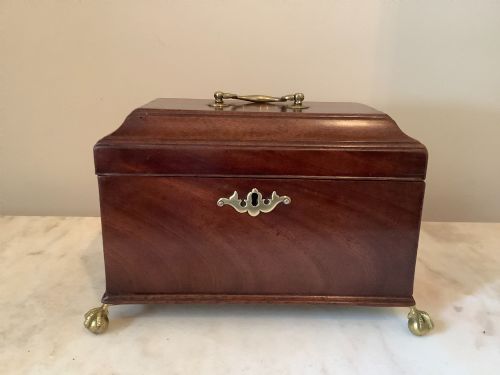
Makers constructed a chippendale mahogany box using dense imported mahogany, frequently accented with secondary stringing and veneers of boxwood or satinwood. Metal fittings such as brass hinges, carrying handles, and escutcheons provided both structural reinforcement and decorative contrast against the dark timber.
Internal compartments often incorporated glass, velvet, or fabric linings to protect delicate contents such as tea leaves, glass bottles, or personal valuables. Joinery relied on precise dovetail construction at the corners to withstand the frequent handling inherent in domestic storage and daily use.
The listings here span from mid-eighteenth-century Georgian examples up to Edwardian revival pieces, utilising mahogany alongside brass, glass, and velvet.
Evaluating quality and execution
Quality in a chippendale mahogany box rests upon the crispness of carved detailing, the selection of figured timber grain, and the precision of the internal joinery. Finer examples display meticulously fitted secret drawers, undamaged brass hardware, and original interior linings rather than later replacements.
Lesser items exhibit simpler planes without carved moulding or reliance on plain stock timber, reflecting standard utilitarian production rather than bespoke cabinet work. The integration of secondary woods and the tightness of the corner joints distinguish workshop production levels across the surviving periods.
The Chippendale Mahogany Box Glossary
- Mahogany
- A durable tropical hardwood imported for high-grade furniture and box construction during the eighteenth and nineteenth centuries. Its deep red-brown colour and stable grain allowed for fine carving and tight joints.
- Tea Caddy
- A small storage box designed to hold loose tea leaves securely under lock and key. These containers frequently featured internal foil lining or multiple lidded compartments.
- Escutcheon
- A protective metal plate surrounding a keyhole, usually cast in brass. It prevented the wood from splitting around the lock during daily use.
- Secret Drawer
- A concealed compartment built into a piece of furniture or box behind removable panels or false bottoms. Makers utilised these spaces to hide valuables or private documents.
- Dovetail
- A joint formed by interlocking wedge-shaped fingers, standard in quality box construction. This method provided exceptional tensile strength at the corners without requiring visible fasteners.
Chippendale Mahogany Box: Frequently Asked Questions
What were these boxes used for?
These containers served specific domestic functions such as storing dry tea leaves, medical equipment, or personal valuables securely. Their lockable lids protected expensive household provisions from domestic staff or moisture.
Over subsequent generations, many evolved into decorative display items or stationary storage on desks and sideboards while retaining their original fitted compartments.
How do I tell an 18th century box from a later revival?
Period eighteenth-century pieces exhibit hand-cut dovetailing, aged patination on the mahogany, and construction methods appropriate to Georgian workshops. Internal hardware like iron or brass locks often shows distinct hand-filing marks.
Later Edwardian revival pieces tend to feature standardised machine-cut joints, brighter synthetic interior fabrics, and timber surfaces finished with modern preparation techniques rather than traditional wax.
Are all these boxes made of solid mahogany?
While the primary exterior surfaces utilise solid mahogany or mahogany veneers applied to secondary woods, internal dividers and secondary linings frequently incorporate pine, oak, or exotic stringing woods like boxwood. Cabinetmakers selected secondary woods for internal partitions based on structural flexibility and cost.
High-grade examples maintained solid timber construction throughout the main carcase to prevent warping and support intricate edge mouldings.
How should I care for a mahogany box?
Maintain stable indoor humidity levels and keep the timber away from direct sunlight or strong heat sources to prevent veneer lifting and wood splitting. Apply occasional traditional beeswax and polish with a soft cloth to preserve the surface sheen.
Avoid using modern liquid polishes containing silicone, which can penetrate porous historical finishes and degrade the underlying wood grain.