
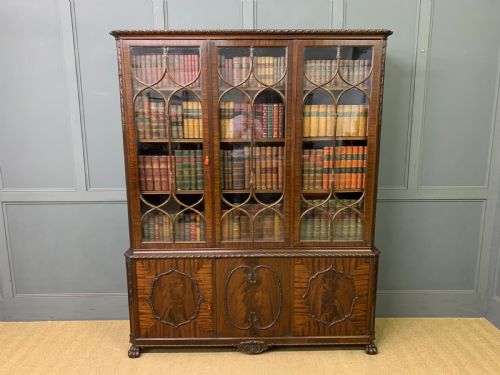
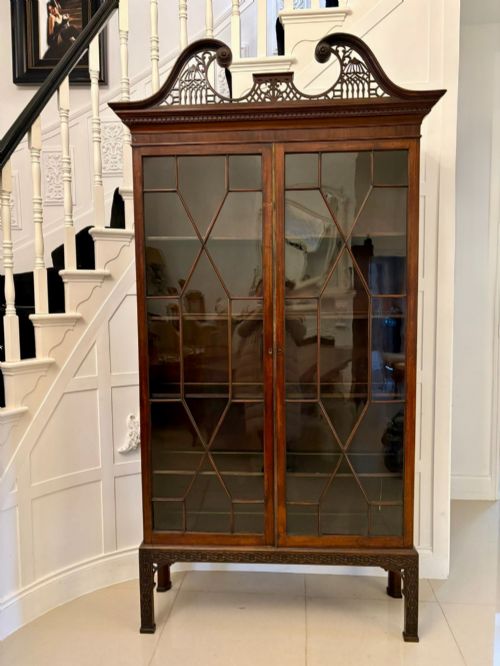
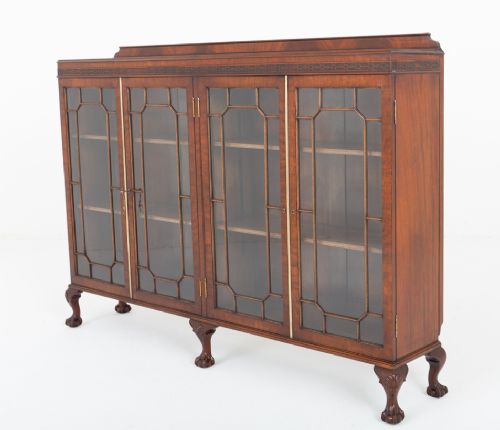
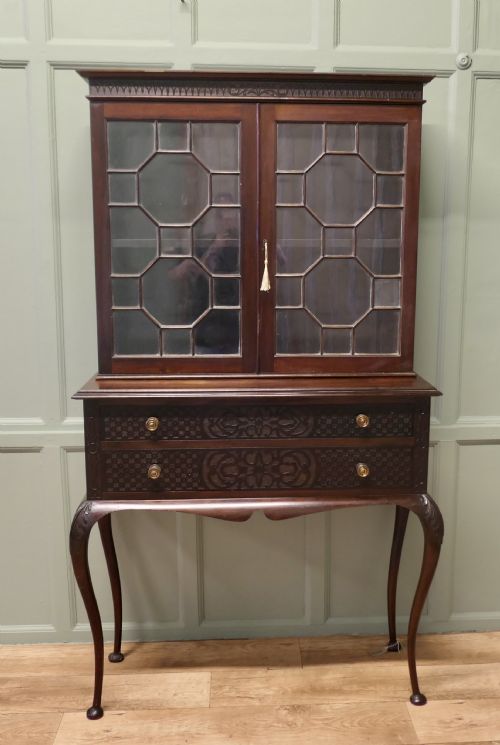

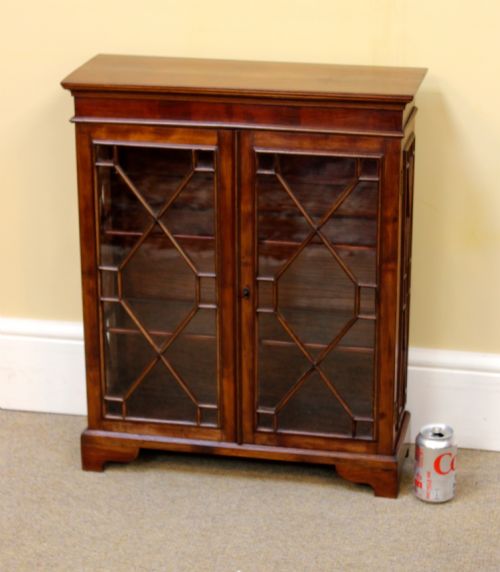
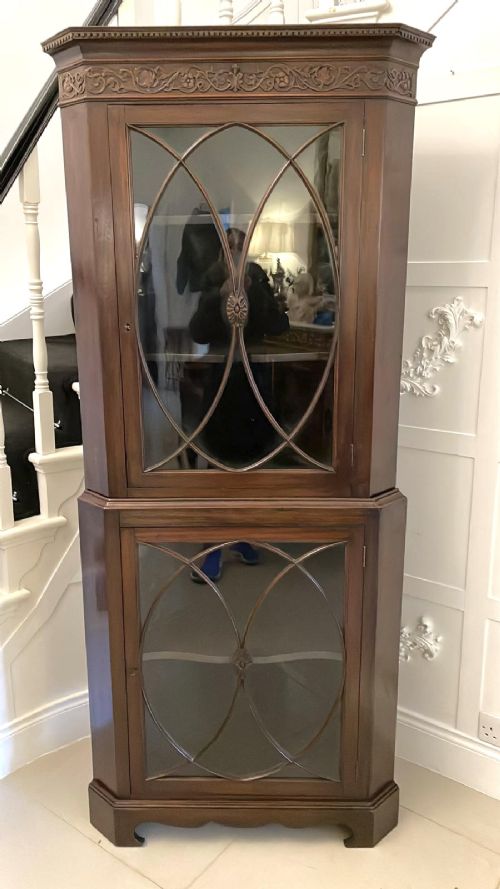
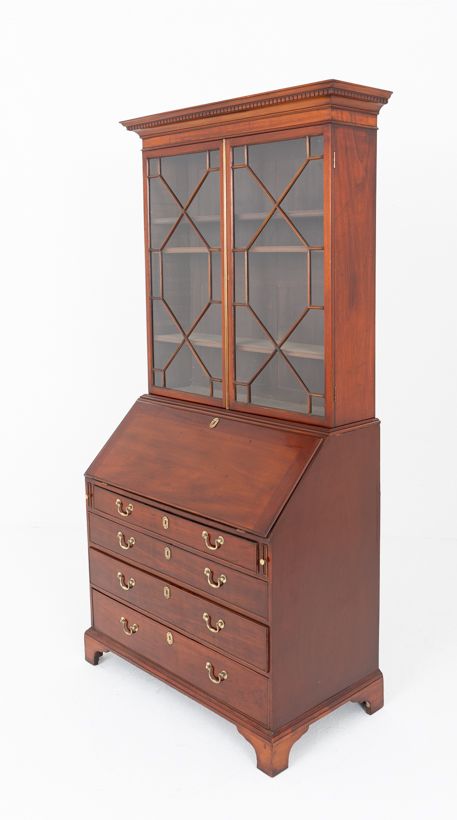
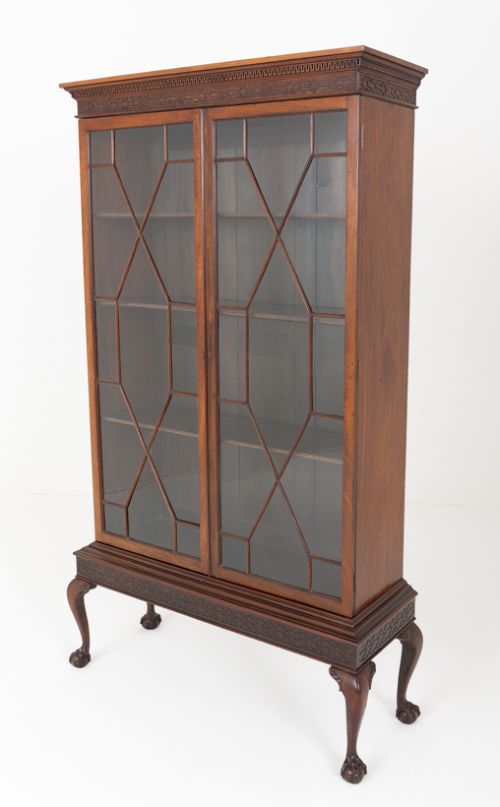
Chippendale Glazed Cabinet
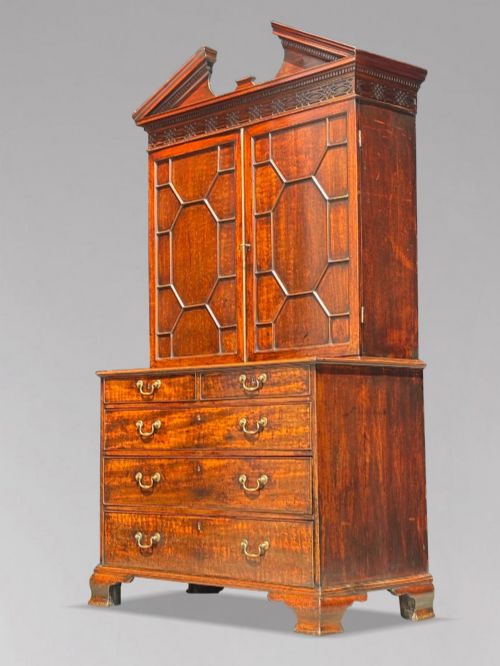
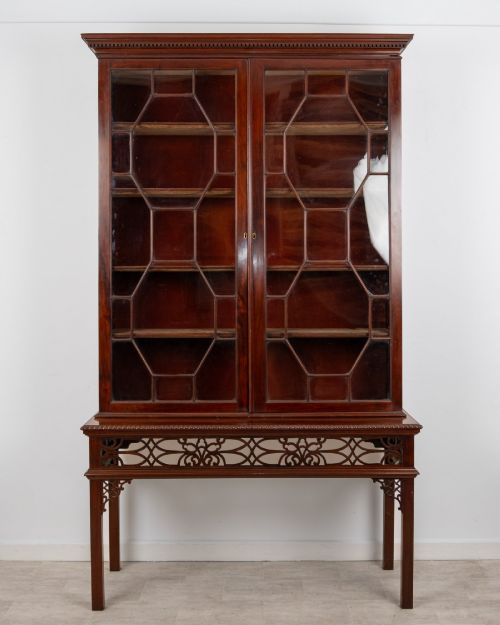
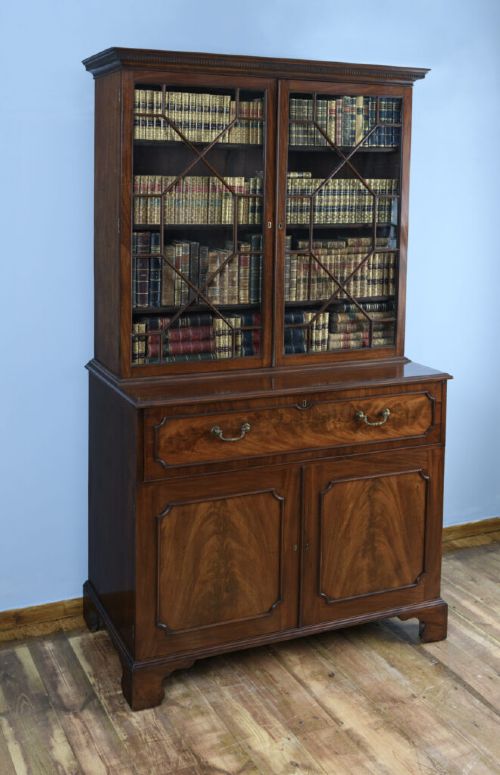
A chippendale glazed cabinet brings stately timber framing and clear glass together to display and store treasured volumes or porcelain.

Chippendale Glazed Cabinet
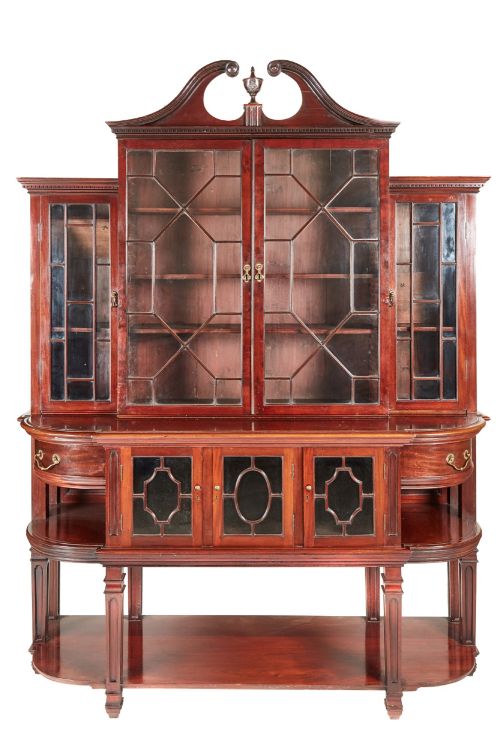
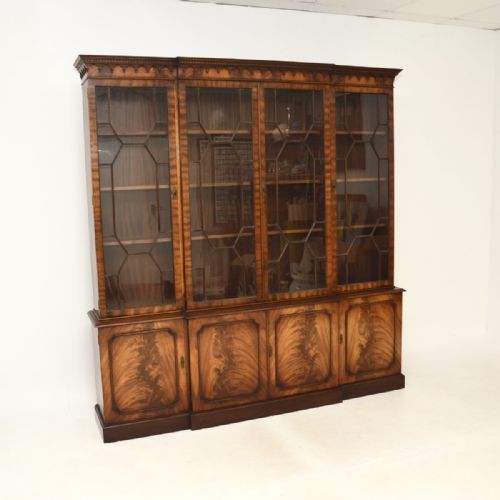
When you search for a chippendale glazed cabinet, you encounter forms ranging from tall breakfront bookcases and bureau bookcases to compact corner cabinets and display pieces. The selections span Georgian originals alongside later revival pieces from the Victorian, Edwardian, and early twentieth-century periods.
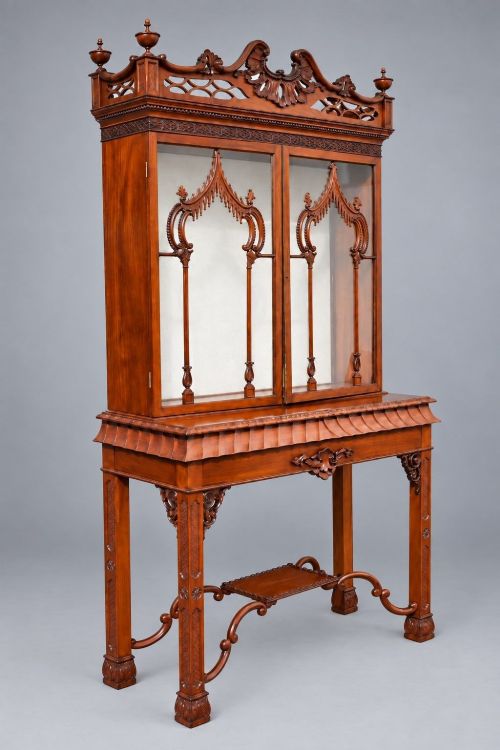
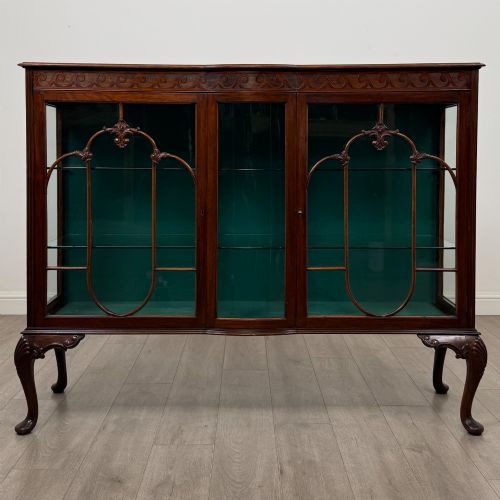
You are most likely to meet mahogany display cabinets and bookcases built in the Chippendale and Chippendale Revival styles. These include Chinese Chippendale variants, cabinet-on-stand forms, and smaller demi-lune or bijouterie pieces fitted with glass panels.
The objects serve primarily to organise books or exhibit collections behind timber-framed glazing bars. Interior fittings often incorporate shelving, drawers, and drop-front writing sections known as secretaires.
Materials and Construction
Cabinet makers relied predominantly on solid and veneered mahogany, frequently pairing the rich timber with glass panes held by astragal glazing bars. Secondary details incorporated brass hardware, mirror glass, marquetry inlay, and velvet linings.
Structural embellishments relied on carving techniques applied to wood frames, seen in decorative mouldings and stands. Glazing configurations varied from simple four-door layouts to intricate geometric and astragal patterns.
Listings feature mahogany as the dominant timber, accompanied by oak, satinwood, brass, and velvet.
Quality and Execution
The standard of a cabinet rests on the crispness of the timber carving and the precision of the joinery in the glazing bars. Finer examples display carefully selected mahogany grain and balanced proportions across large breakfront or bureau formats.
Revival pieces differ in the depth of hand-carved ornamentation compared to simpler production methods. Original eighteenth-century pieces demonstrate period construction traits that set them apart from later nineteenth and twentieth-century interpretations.
Thomas Chippendale·James Winter and Sons·Edwards and Roberts
The Chippendale Glazed Cabinet Glossary
- Astragal
- Timber moulding bars that divide glass panes within a door or window frame. These form delicate geometric patterns across the front of the cabinet.
- Breakfront
- A large cabinet design where the central section projects forward from the flanking wings. This architectural arrangement adds depth and visual weight to bookcases.
- Secretaire
- A desk unit featuring a drop-front drawer that conceals small pigeonholes and writing surfaces. It integrates concealed workspace within the structure of a bookcase.
- Demi-lune
- A half-moon shape used for the footprint of wall-mounted or freestanding side cabinets. This curved profile softens the linear geometry of a room.
- Bijouterie
- A glass-topped display table or cabinet designed for small valuables and ornaments. These pieces elevate collections within a glazed compartment.
Chippendale Glazed Cabinet: Frequently Asked Questions
How do I spot a Georgian original?
Examine the timber ageing, construction joints, and backboards for hand-tooled marks consistent with eighteenth-century workshop practices. Original pieces exhibit natural wear patterns and timber shrinkage accumulated over centuries.
Compare the proportion and carving style against documented examples from the period. Revival pieces from later centuries often use machine-cut elements and standardised hardware.
What is a bureau bookcase?
A bureau bookcase combines a sloping or drop-front desk workspace with enclosed shelving above. The lower section provides concealed drawers and pigeonholes for correspondence.
This multifunctional form was popular in the Georgian era for domestic studies and parlours. The upper glazed doors kept reference volumes free from dust.
Where should I place a display cabinet?
Position the cabinet away from direct sunlight to protect timber finishes and interior fabric linings from fading. Ensure the floor is level so the large frame and heavy glass doors hang true.
Allow adequate clearance for doors to open fully without striking surrounding furniture. Corner cabinets make efficient use of unutilised wall intersections in smaller rooms.
How do I care for mahogany timber?
Dust the polished surfaces regularly with a soft, dry cloth to prevent particulate buildup. Avoid silicone-based polishes that can degrade historical finishes over time.
Maintain stable room humidity to prevent the timber from warping or cracking. Periodically check internal brass fittings and glass fixings to ensure they remain secure.