



Chippendale Library Bookcase
These substantial mahogany storage pieces combine classical proportions with glazed doors, offering a commanding presence for serious book collections.

Chippendale Library Bookcase
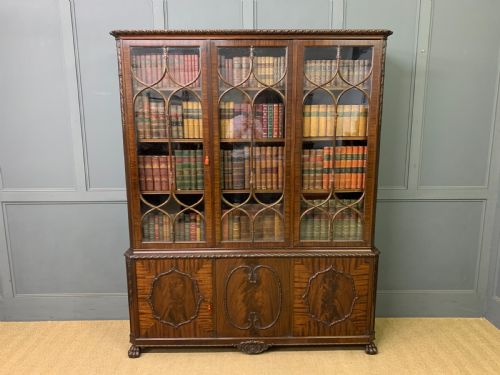
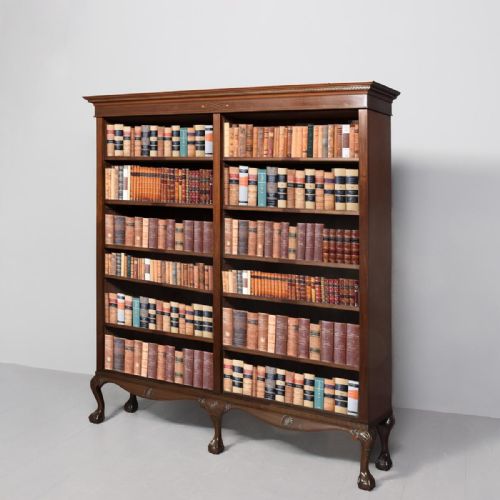
A chippendale library bookcase is a large storage unit designed to house and display substantial volumes, appearing in both period eighteenth-century workshop examples and later revival iterations. The form typically presents a glazed upper section for books above a lower cupboard base, often configured as a breakfront or secretaire unit.
Materials and construction
Mahogany serves as the primary timber across these pieces, frequently paired with glass panes secured by delicate astragal bars. Workshops utilised pine for secondary framing and internal carcass work, applying wood inlay and brass hardware for decorative accent.
Cabinetmakers constructed these large units in modular sections to facilitate transport and placement within grand rooms. Glazing techniques evolved from small individual panes held by wooden bars to larger clear glass formats in later revival pieces.
Chippendale Library Bookcase Retail Price Guide 2026
Typical asking prices for chippendale library bookcase among the pieces listed under this phrase on Sellingantiques today, from the lower quarter to the upper quarter. They describe what is for sale here now, not the wider market.
Some revolving bookcases let readers consult an entire library from a single seated position.
Standards of craftsmanship
The sophistication of the timber figure and the crispness of carved details distinguish finer examples from standard production. Eighteenth-century pieces demonstrate meticulous hand-joinery and select mahogany stocks, whereas revival pieces rely on the accuracy of period emulation.
Proportion and the integration of upper and lower sections dictate visual success. Pieces featuring well-balanced breakfront profiles and refined astragal glazing show superior design intent compared to simpler utilitarian variants.
Hille
The Chippendale Library Bookcase Glossary
- Breakfront
- A cabinet design where the central section projects forward from the flanking wings. This configuration creates architectural depth and commands significant wall space in a room.
- Astragal glazed
- A method of dividing glass doors into smaller panes using narrow wooden mouldings. These bars provide structural support while adding geometric visual interest to the bookcase front.
- Secretaire
- A cabinet incorporating a pull-down writing drawer with an fitted interior of small compartments and pigeonholes. This feature combines the function of a desk with library storage.
- Chippendale revival
- Furniture manufactured in nineteenth and twentieth-century decades replicating eighteenth-century aesthetics. These pieces adopt the characteristic carved motifs and proportions of the original master cabinetmaker.
Chippendale Library Bookcase: Frequently Asked Questions
How do I date a Chippendale library bookcase?
Dating relies on examining timber characteristics, construction methods, and secondary woods like pine. Eighteenth-century examples display hand-cut joinery and period patination, whereas nineteenth and twentieth-century revival pieces show machine assistance and different interior fittings.
Hardware, screw types, and glass manufacture also assist in establishing the era of production. Revival periods often replicate earlier styles precisely, requiring close inspection of the internal carcass construction to confirm age.
How do I care for mahogany library furniture?
Mahogany furniture requires stable environmental conditions away from direct sunlight and extreme humidity changes. Maintaining consistent indoor temperatures prevents the timber and historical finishes from drying out or cracking.
Routine dusting with a soft, dry cloth protects the polished surface. Avoid silicone-based polishes and apply traditional wax sparingly only when the wood appears dry.
Are these bookcases modular?
Large library bookcases are constructed in multiple sections to allow for transport and installation. The upper glazed cabinet typically separates from the lower base cabinet or sideboard unit.
This sectional design was essential for moving heavy furniture into grand houses and remains practical for modern placement. Care must be taken during relocation to support the glazed doors and delicate astragal bars.