



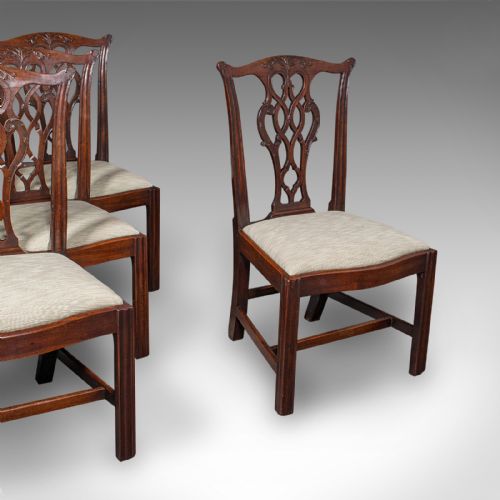

Chippendale Fretwork Back Chair
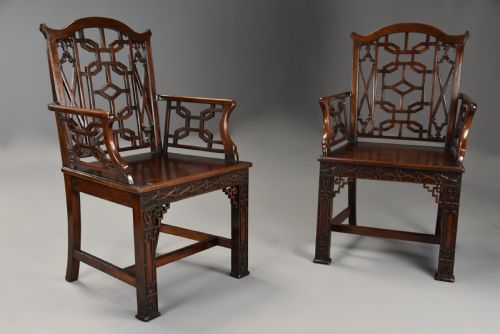
These chippendale fretwork back chair examples bring intricate pierced splats and solid timber frames into your room.
Chippendale Fretwork Back Chair
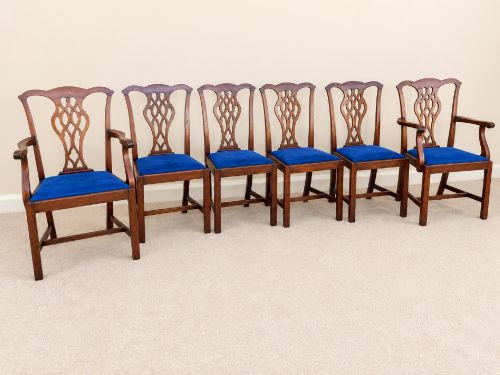
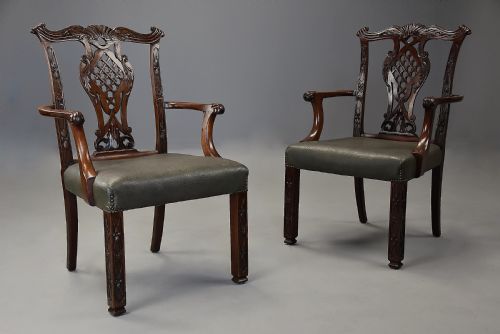
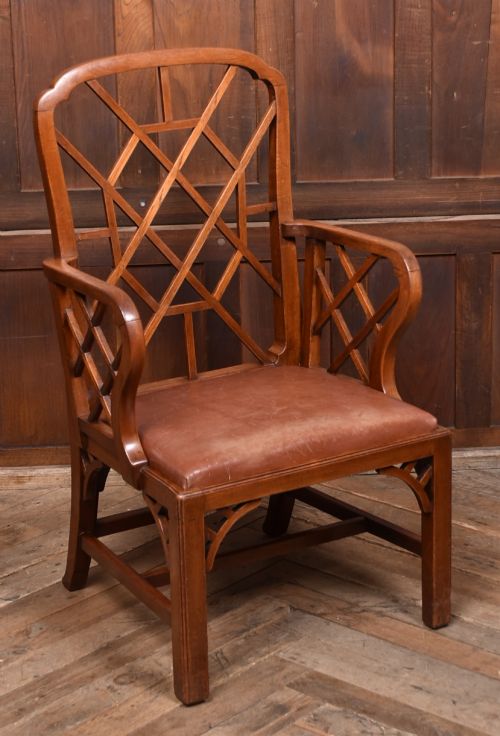
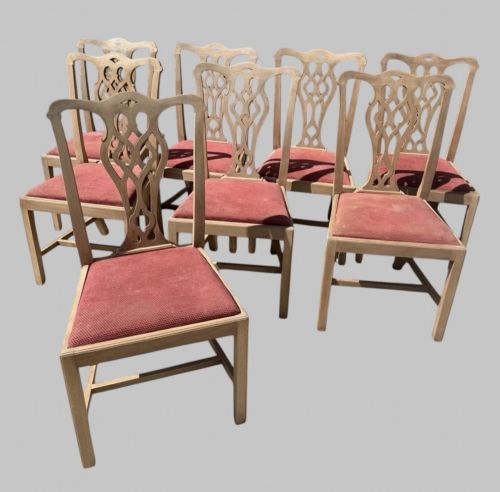
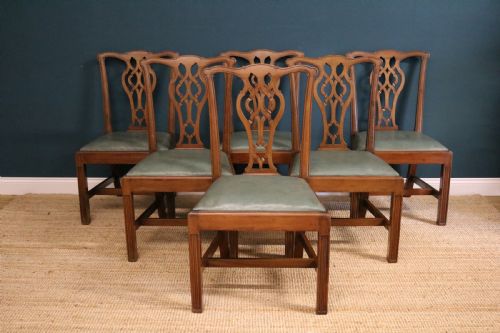
A chippendale fretwork back chair unites structural timber frames with intricate pierced splats that trace the distinct ornamental vocabulary of eighteenth-century cabinet making. You will encounter dining chairs, open armchairs, and side variants across this selection.
The majority of pieces recorded here span the Georgian era through to later revival periods, including nineteenth-century interpretations and Edwardian suites. These later revivals demonstrate how cabinet makers continued to adapt open fretwork designs for domestic dining spaces.
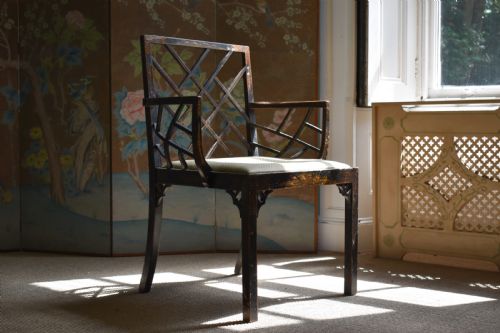
Formations vary from single armchairs to substantial dining sets, occasionally incorporating Chinese Chippendale motifs or pagoda crest rails. Each piece relies upon a disciplined geometric or ribbon-cut splat to anchor its visual weight.
Materials and Construction
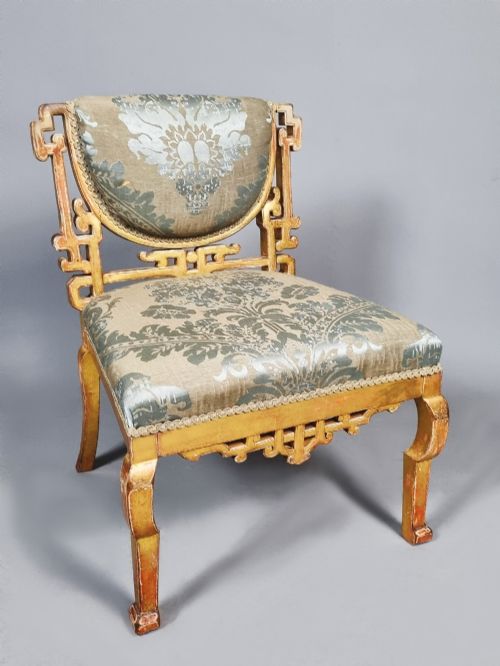
Mahogany serves as the primary timber across these pieces, selected for its density and capacity to hold crisp fretwork without splintering. Certain examples utilise bleached mahogany or incorporate giltwood highlights.
Makers shaped the intricate back splats through precise hand piercing and fret-cutting, assembling the frames with traditional joinery. Upholstered drop-in or fixed seats frequently feature coverings in leather, velvet, damask, or woven fabric.
Structural reinforcement often appears via moulded seat rails and stretcher systems, particularly on Chinese Chippendale forms where legs require bracing against lateral stress.
Chippendale Fretwork Back Chair Retail Price Guide 2026
Typical asking prices for chippendale fretwork back chair among the pieces listed under this phrase on Sellingantiques today, from the lower quarter to the upper quarter. They describe what is for sale here now, not the wider market.
Some chairs sport pagoda crests so ambitious they practically require a passport.
Determining Quality
Depth of carving and sharpness in the pierced fretwork define the upper tier of these chairs. Master workshops achieved crisp geometry in the ribbon and lattice patterns without relying on applied mouldings.
Timber selection dictates overall resilience, with dense grain and uniform colour marking superior mahogany construction. Frame stability relies upon tight joinery at the crest rail and seat junction, avoiding unnecessary external bracing.
Waugh and Son·Thomas Chippendale
The Chippendale Fretwork Back Chair Glossary
- Fretwork
- Openwork ornamentation carved or pierced from a flat board in geometric or interlaced patterns. It forms the defining visual element of the chair back splat.
- Splat
- The vertical central strip of wood within a chair back connecting the crest rail to the seat. In these pieces, the splat is intricately pierced and shaped.
- Cockpen
- A specific lattice chair back design influenced by Chinese fretwork styles and popular during the eighteenth and nineteenth centuries. The pattern resembles a grid or square geometric mesh.
- Giltwood
- Timber treated with gold leaf or metallic gesso finish. This technique highlights carved details on select decorative armchairs.
- Chinoiserie
- European interpretation of Chinese artistic motifs and construction styles. It appears in pagoda crests and lattice arm designs.
Chippendale Fretwork Back Chair: Frequently Asked Questions
How do I spot a revival piece?
Revival pieces often display machine precision in the fretwork or utilise timber preparation methods consistent with nineteenth and twentieth-century workshops. Examining the interior frame construction helps clarify the date of assembly.
Secondary woods and modern upholstery webbing also indicate later production dates compared to eighteenth-century originals.
Are these chairs suitable for daily dining?
These solid mahogany chairs provide sturdy seating for dining tables when joints remain secure and sound. Regular inspection of the block corners ensures structural integrity over time.
Careful handling of the pierced back splats prevents accidental impact damage during daily use around the dining table.
What is Chinese Chippendale style?
Chinese Chippendale incorporates straight square legs, lattice work, and pagoda-inspired crest rails into traditional chair forms. This style reflects the eighteenth-century enthusiasm for Asian decorative arts.
Chairs of this type often feature intricate fretwork panels set directly into the arm supports and back frames.
How should I maintain mahogany furniture?
Maintain mahogany timber by applying microcrystalline wax sparingly and avoiding direct placement near heat sources or strong sunlight. Dusting with a soft cloth preserves the original polish.
Check upholstered drop-in seats periodically to ensure internal padding and fabric remain free from environmental moisture.