
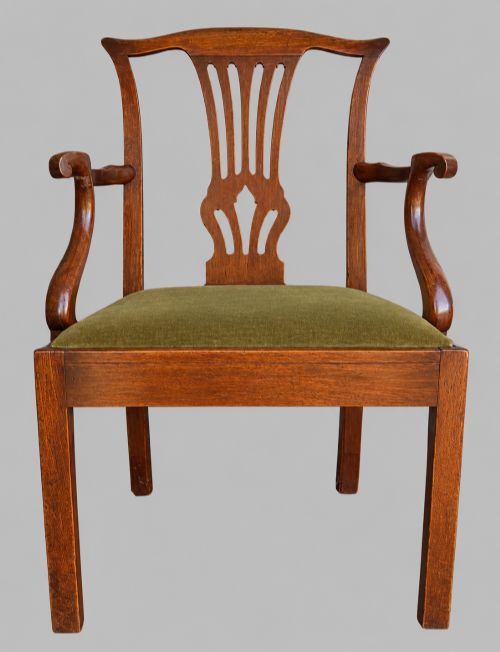
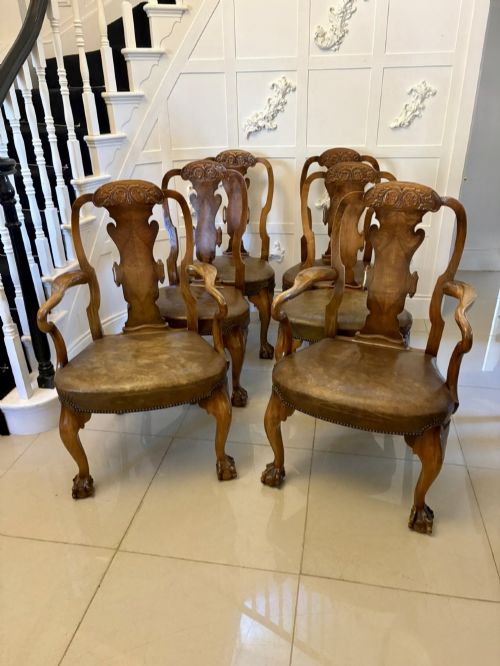
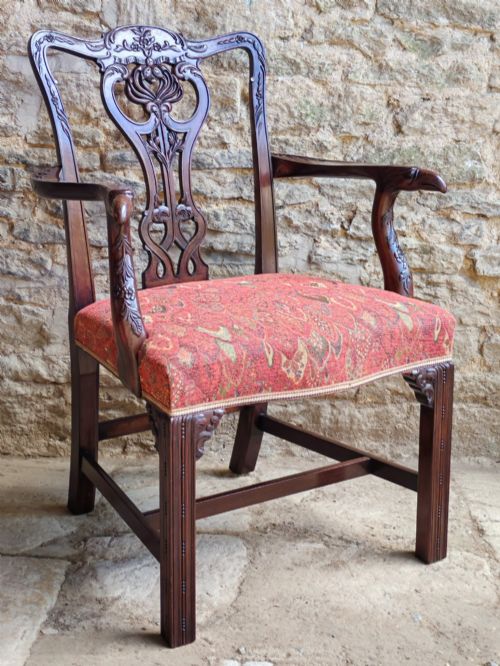
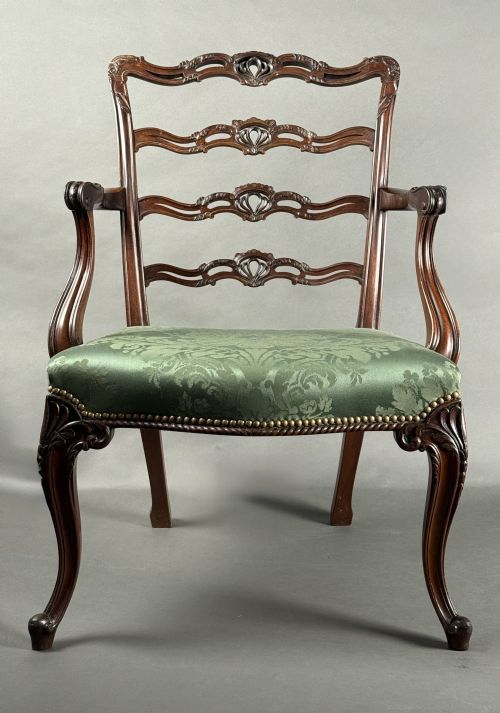
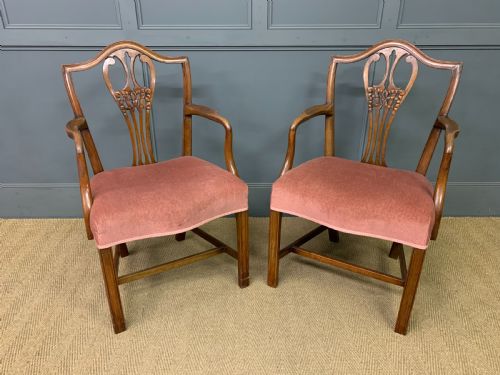
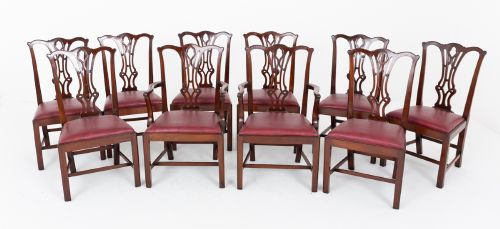
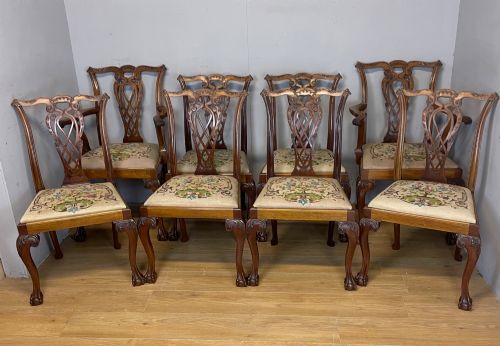
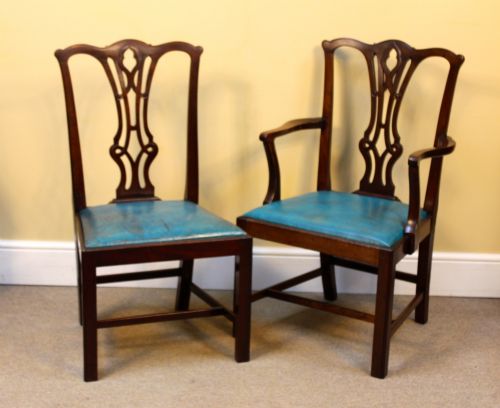
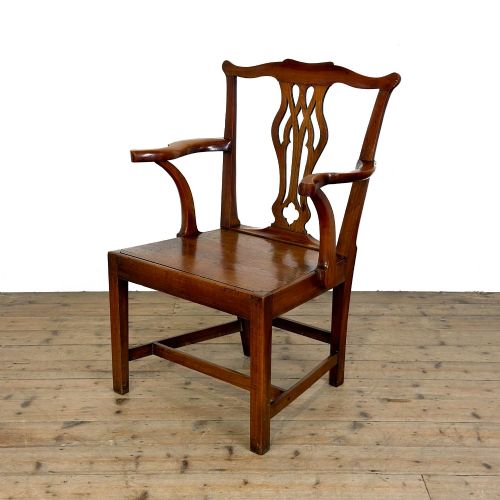
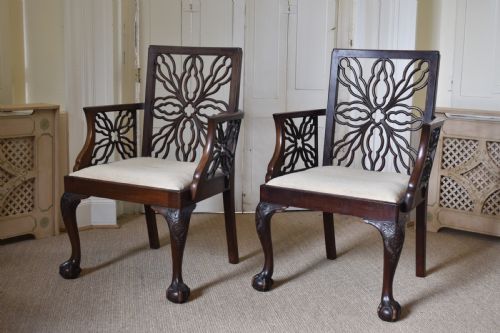
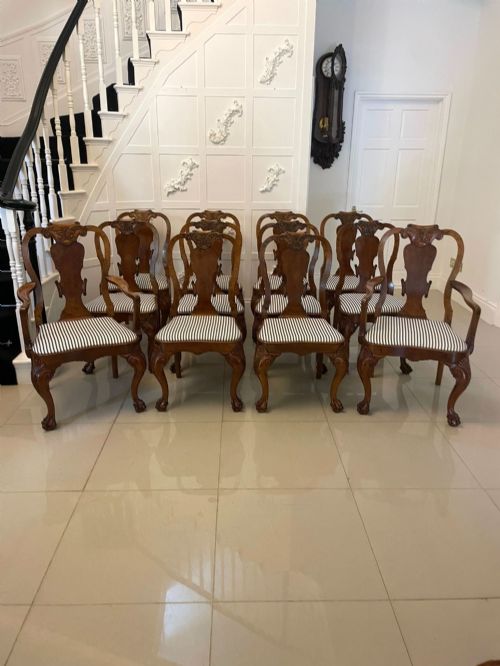
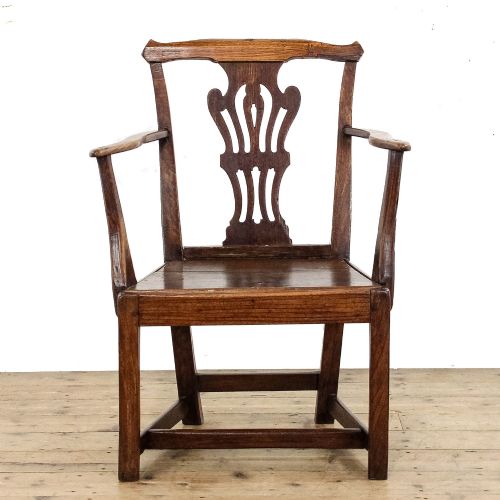
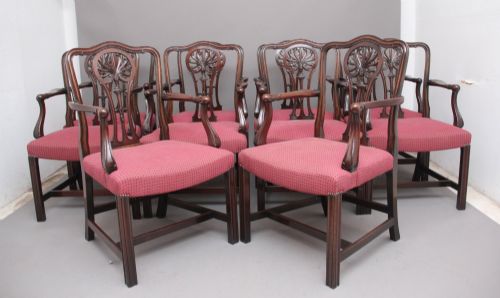
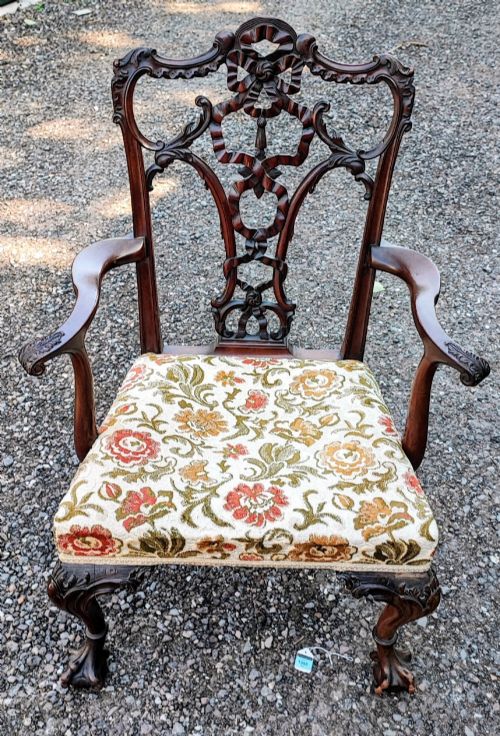
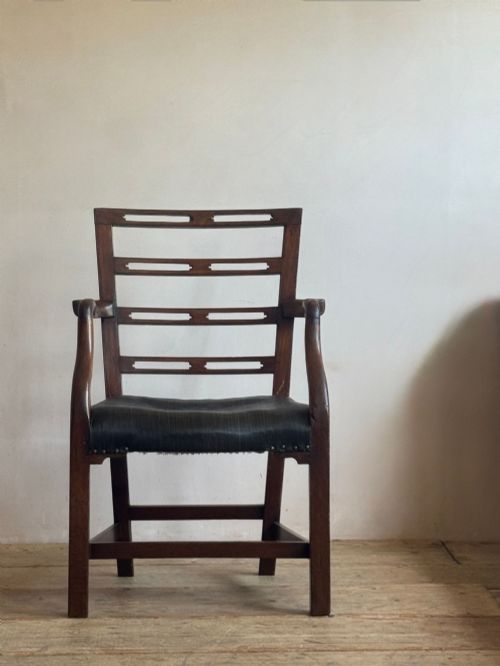
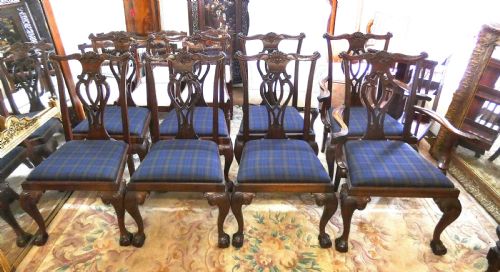
Chippendale Dining Armchair
A chippendale dining armchair combines solid mahogany frames with intricate carved details, offering formal seating with substantial presence at the dining table.
Chippendale Dining Armchair
A chippendale dining armchair is a formal seating piece designed for the head of a dining table or as part of a matched dining set. These chairs appear in genuine 18th-century Georgian forms and later 19th-century revival interpretations.
The standard version met on this page is constructed from mahogany, though examples in fruitwood and walnut also exist. They serve primarily as carver chairs alongside sets of single dining chairs.
Originating from the design principles of Thomas Chippendale, these pieces display regional variations across English, Irish, and Scottish workshops spanning the Georgian period and subsequent revival eras.
How they were made
Cabinetmakers built these frames predominantly using solid mahogany, relying on traditional mortise and tenon joinery to ensure structural rigidity for daily use. Fruitwood and walnut appear as alternative woods in specific regional or period interpretations.
Carving formed the primary decorative technique, executed directly into the timber on splats, top rails, and knee joints. Upholstery materials like leather, fabric, and velvet were integrated into drop-in seats or webbed frames using brass tacks.
What varies in quality
Depth and crispness of the wood carving dictate the distinction between standard production and top-tier execution. Sharp, undercut details on the back splat and arms reflect superior workshop output.
The selection of timber grain and the integrity of the joinery determine structural longevity. Dense, well-figured mahogany and tightly fitted joints separate finer cabinet work from simpler output.
Howard and Sons·Warings·Alfred Allen of Birmingham
The Chippendale Dining Armchair Glossary
- Carver
- An armchair designed to match a set of single dining chairs, typically placed at the table ends. These pieces feature scrolling arms to accommodate formal dress.
- Splat
- The vertical wooden strip down the centre of the chair back. In these designs, the splat is pierced and intricately carved.
- Ball and claw
- A foot motif where a carved talon grips a ball. This detail terminates the front legs on select high-status examples.
- Elbow chair
- An alternative historical term for an armchair. The description refers to the wooden arm supports flanking the seat.
Chippendale Dining Armchair: Frequently Asked Questions
How do I identify a genuine period piece?
Examine the timber construction, tool marks, and wear patterns on the underside and frame joints. Period pieces display hand-cut joinery and timber oxidation consistent with eighteenth or nineteenth-century production.
Compare the carving depth and proportions against documented examples from the same era. Revival pieces often show machine-tool indicators or standardised symmetry not found in older workshop output.
Can these chairs be used daily?
Solid mahogany frames provide robust structural integrity suitable for regular seating at a dining table. Checking the frame stability and joint tightness ensures the timber handles everyday use safely.
Upholstery can be updated or reinforced while preserving the underlying antique frame. Proper maintenance of the wood surface prevents drying and splitting over time.
What is a carver chair?
A carver chair is an armchair scaled to match a set of dining chairs. Historically placed at the head and foot of the table, they accommodate individuals requiring arm support.
These pieces share the stylistic vocabulary of the accompanying single chairs but offer a wider seat and integrated armrests.