
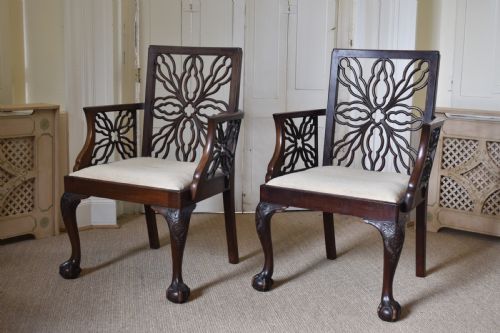
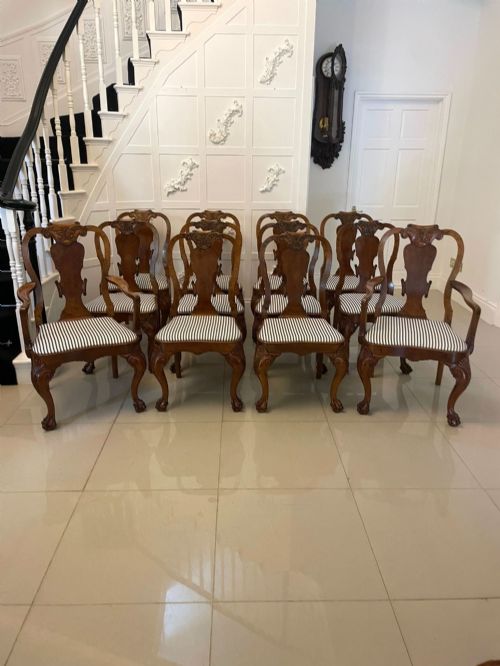
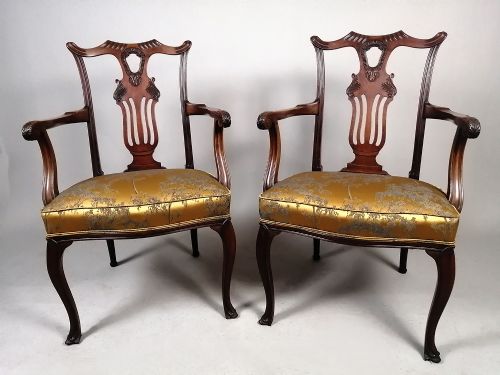
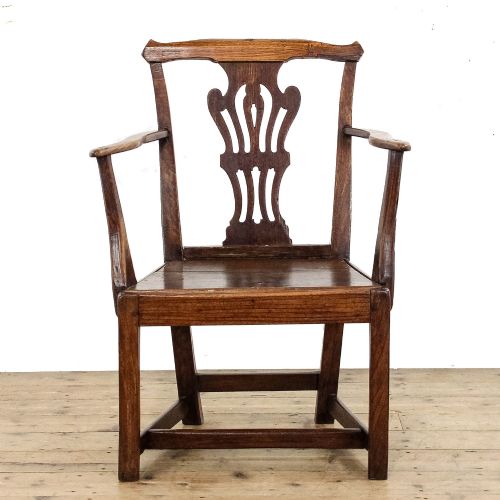
Chippendale Carver Armchairs
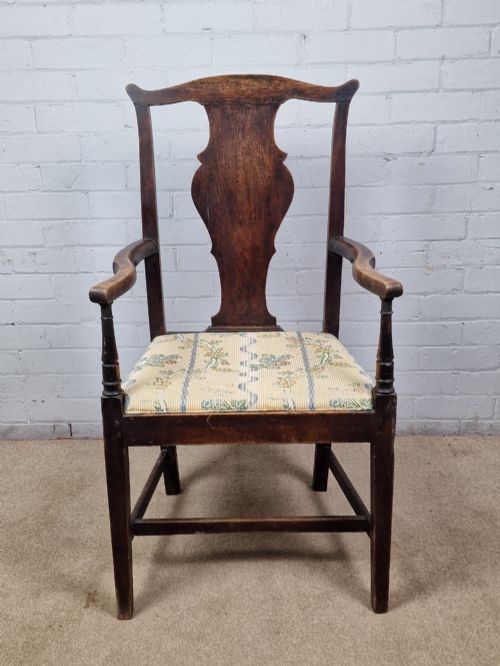
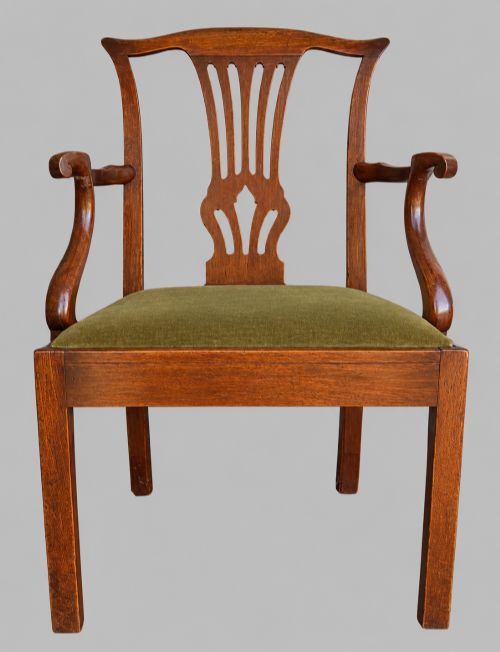
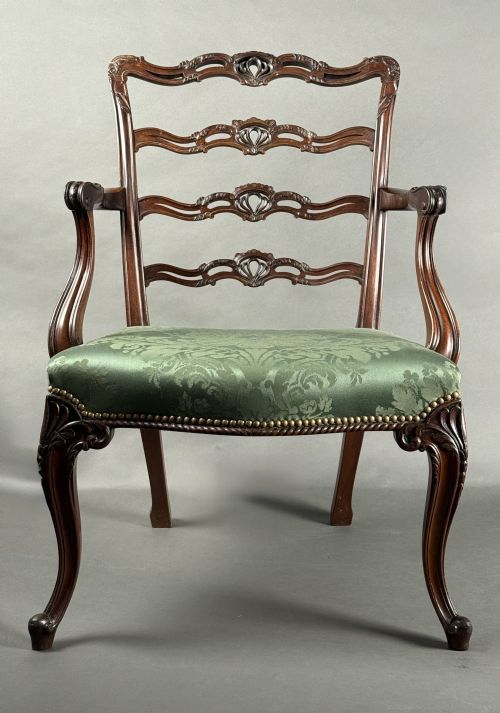
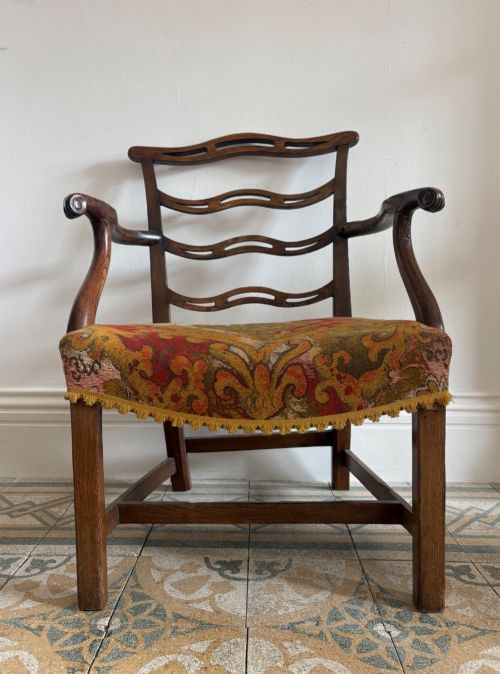
These chippendale carver armchairs span the eighteenth century to the twentieth, offering solid timber frames and carved splats for daily seating or desk work.
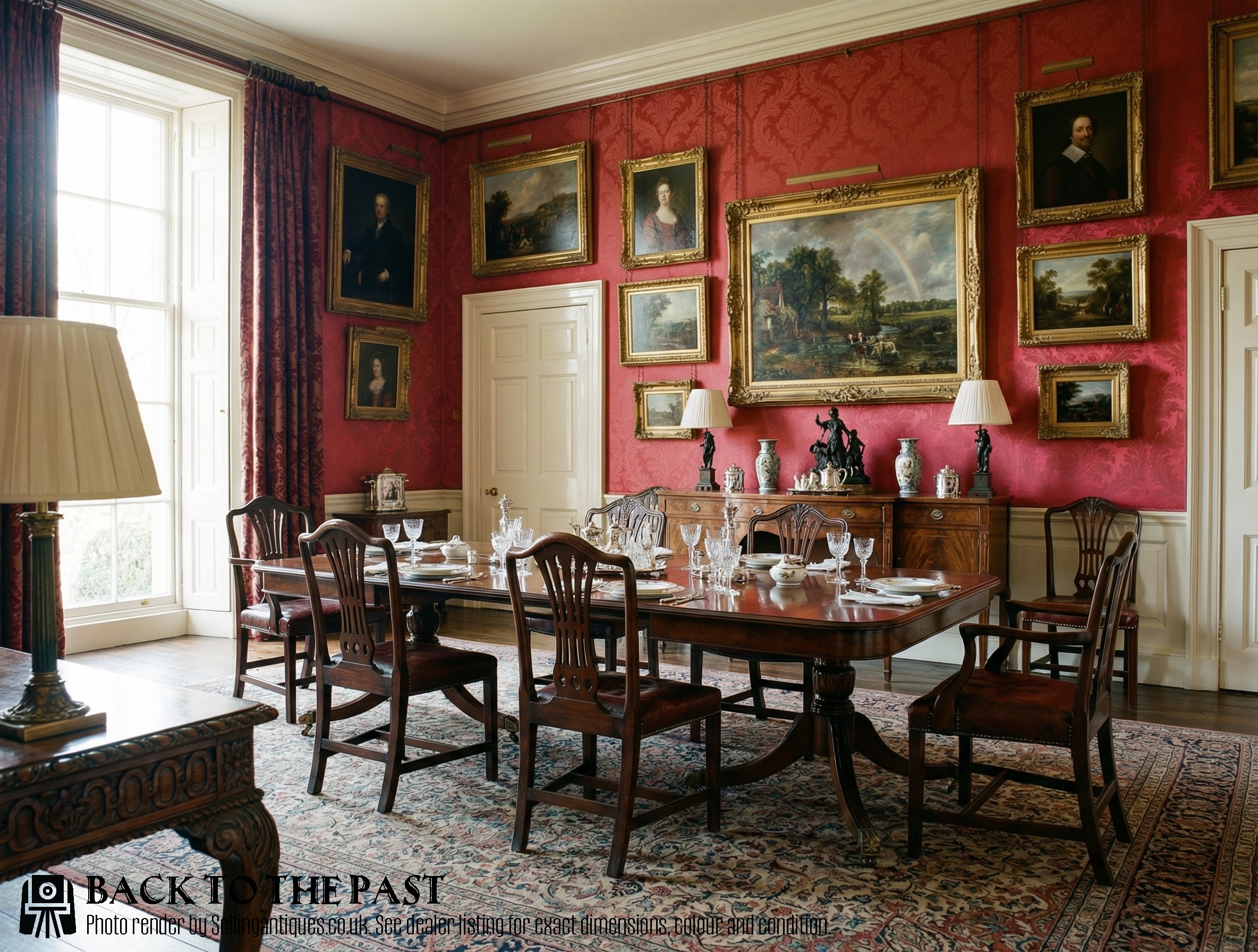
Chippendale Carver Armchairs
When you search for chippendale carver armchairs, you encounter seating designed for dining rooms, libraries, and morning rooms. The examples on this page range from authentic eighteenth-century Georgian pieces to later revival iterations produced across the nineteenth and early twentieth centuries.
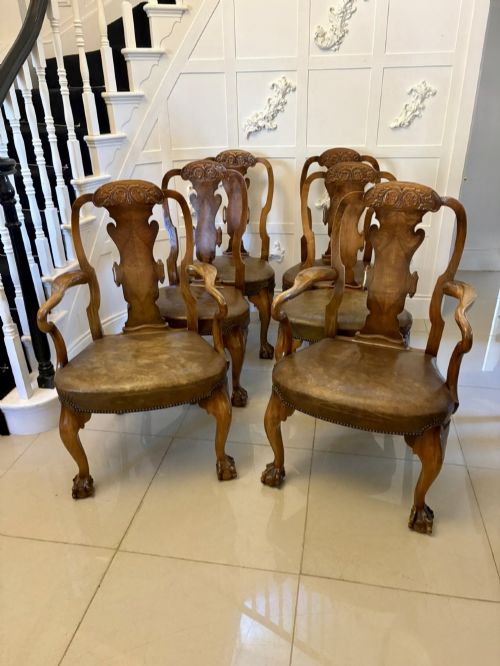
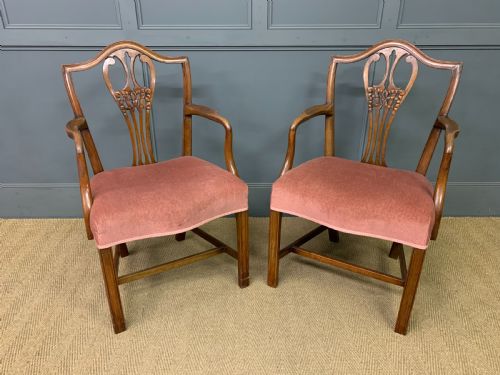
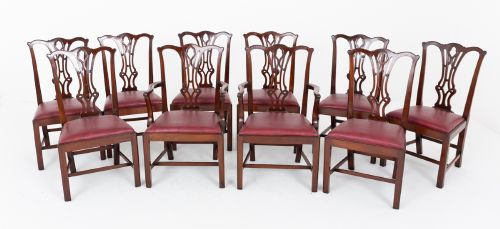
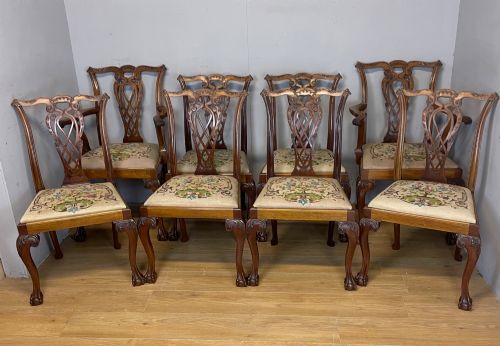
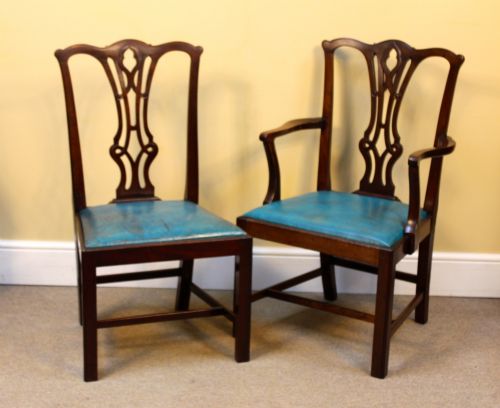
The most common forms are single armchairs and matched pairs, alongside larger dining sets that include carvers alongside side chairs. Makers utilised varied regional interpretations, yielding Scottish, Irish, and English formats from periods including the Georgian and Victorian eras.
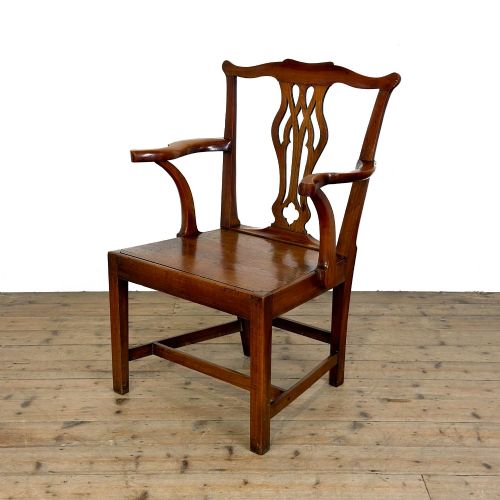
Many of these chairs function as elbow chairs, desk chairs, or Cockpen variants with specific lattice work. Their survival across centuries demonstrates their enduring role in formal interiors.
Materials and Construction
The primary material across these listings is solid mahogany, supplemented by walnut, fruitwood, elm, and burr walnut. Workshops constructed these frames using traditional joinery methods to support the substantial stresses placed on armchairs and carvers.
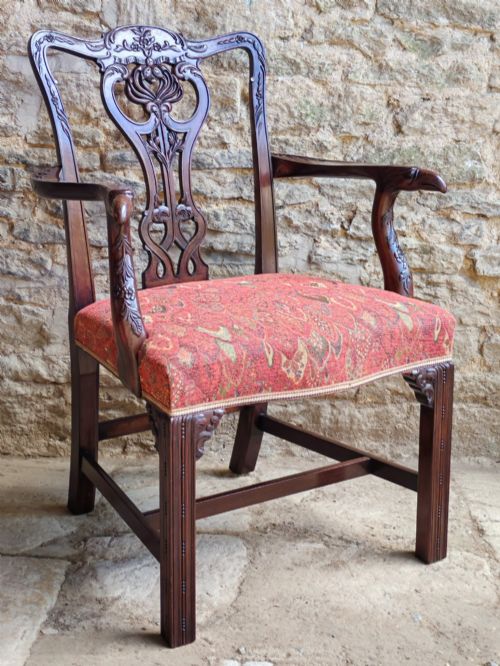
Carving defines the style, appearing on the top rails, splats, and knees of the cabriole or straight legs. Upholstery materials include leather, velvet, damask, fabric, and tapestry seats supported by webbing or drop-in frames.
Upholstery options across the available inventory include leather, velvet, damask, and tapestry seats.
Judging Quality
Quality rests in the crispness of the timber carving and the architectural proportion of the arms and back splat. Heavy, deep relief work executed with sharp tools separates superior examples from softer, more mechanically produced revival pieces.
The choice of timber grain and the integrity of the original frame construction dictate the standing of a piece. Original surfaces and patination elevate an armchair above examples that have undergone heavy structural intervention.
Howard and Sons·Warings·Alfred Allen of Birmingham
The Chippendale Carver Armchairs Glossary
- Carver
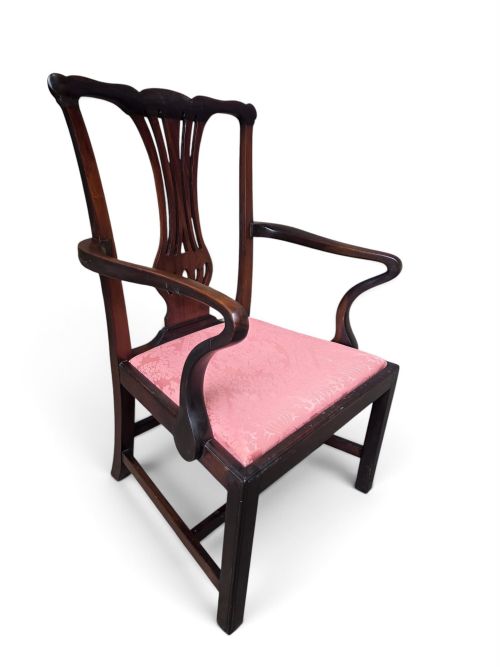
- An armchair, typically designed to sit at the head of a dining table or serve as an occasional chair. These pieces feature integrated armrests to accommodate formal clothing.
- Splat
- The vertical wooden slat placed in the centre of a chair back. In these pieces, the splat often displays intricate pierced or carved fretwork.
- Elbow Chair
- An alternative term for an armchair, referencing the support provided for the arms. They frequently served in libraries and morning rooms.
- Cockpen
- A specific Chinese-inspired lattice design utilised on chair backs and legs. This style appears on select nineteenth-century variants.
- Ball and Claw
- A furniture foot carved to resemble a bird's talon clutching a ball. This motif frequently terminates the legs of mid-nineteenth-century Irish examples.
Chippendale Carver Armchairs: Frequently Asked Questions
How do I spot a Georgian original?
Examine the timber density, hand-cut joinery, and the wear patterns accumulated over centuries of use.
Original eighteenth-century pieces display secondary woods appropriate to their region and lack modern mechanical tooling marks.
What is a Chippendale revival chair?
Revival pieces are later interpretations produced during the Victorian and Edwardian periods, typically between eighteen-eighty and nineteen-twenty.
These workshops drew inspiration from eighteenth-century design books to satisfy demand for historic styles.
Can I use these carvers at a desk?
Many carvers and elbow chairs function effectively at writing tables or in studies due to their supportive armrests.
Ensure the seat height aligns properly with your desk surface before daily placement.
Why do some chairs have tapestry seats?
Needlework and tapestry inserts were common forms of historic upholstery utilised on formal dining and parlour seating.
These textiles introduce texture and pattern that complement the dark tones of mahogany and walnut frames.