

Chippendale Bookcase
A chippendale bookcase brings architectural presence and visible timber figure to a room, offering glazed storage for library volumes or display.
Chippendale Bookcase
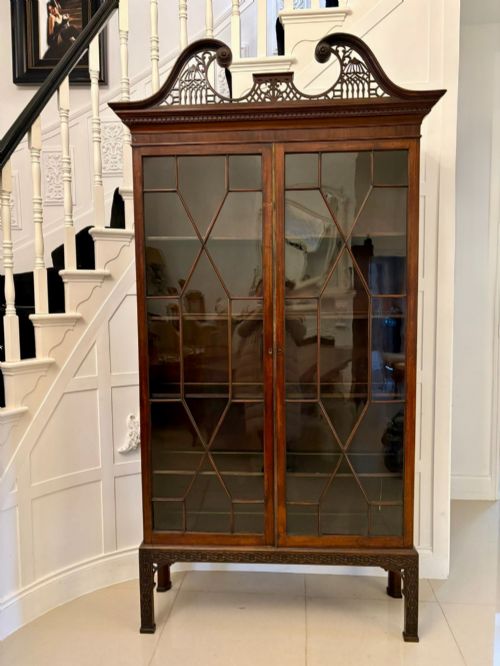
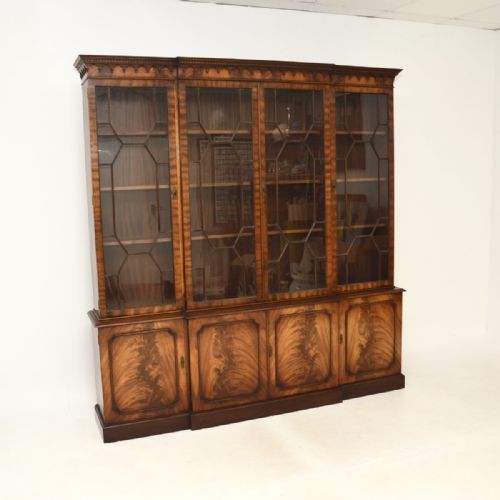
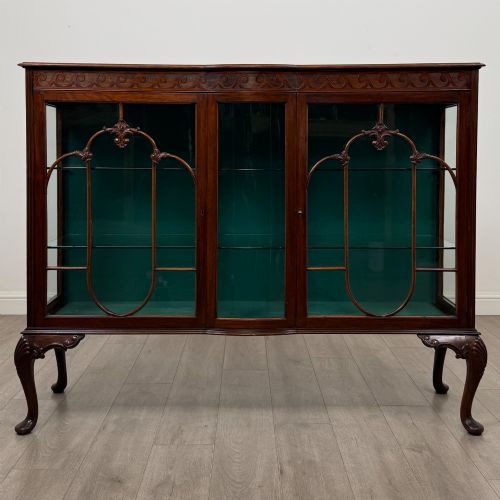
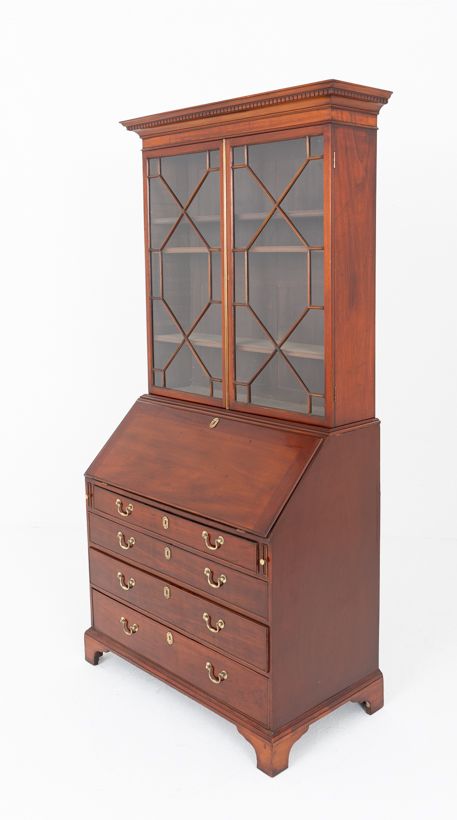
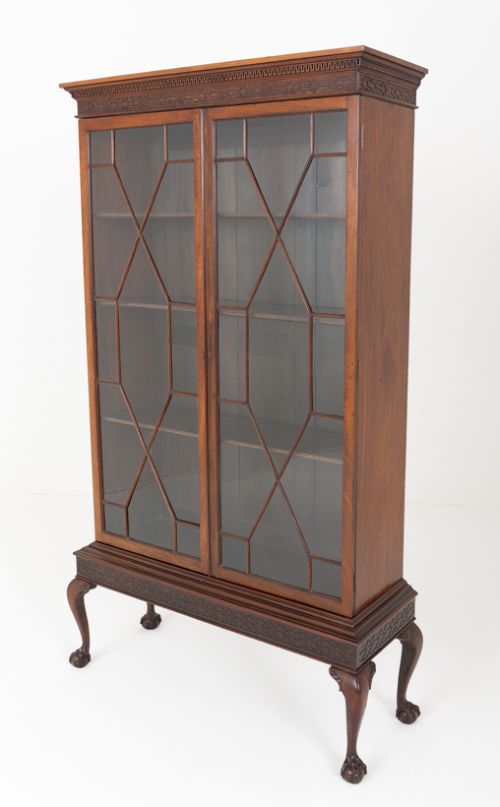
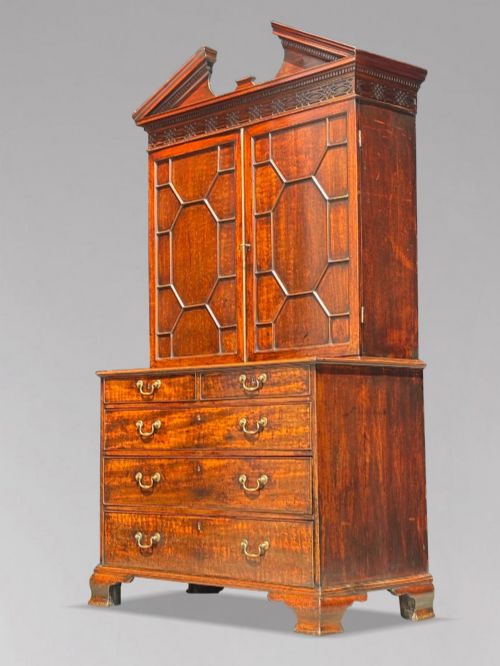
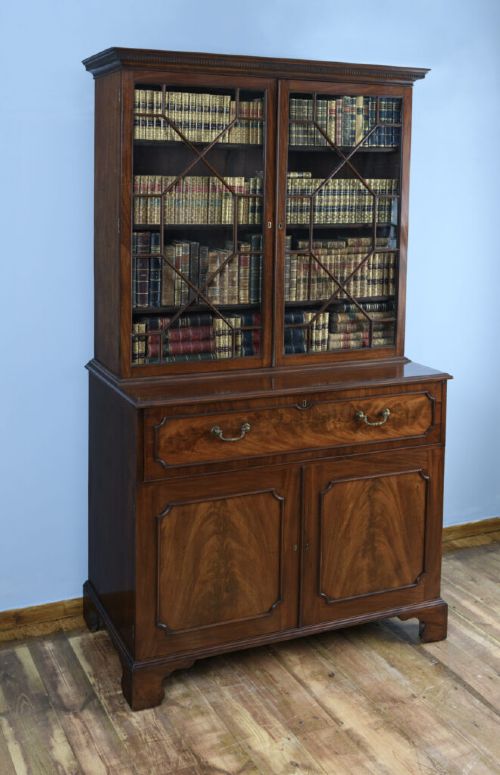
A chippendale bookcase encompasses tall library cupboards, breakfront cabinets, bureau bookcases with fitted desks, and glazed display pieces. These range from eighteenth-century George III originals to later Victorian, Edwardian, and twentieth-century revival interpretations.
The version most commonly met on this page is the Edwardian or late-nineteenth-century revival piece, often built in mahogany with glazed upper doors and carved details. Eighteenth-century period examples appear less frequently but remain central to the tradition.
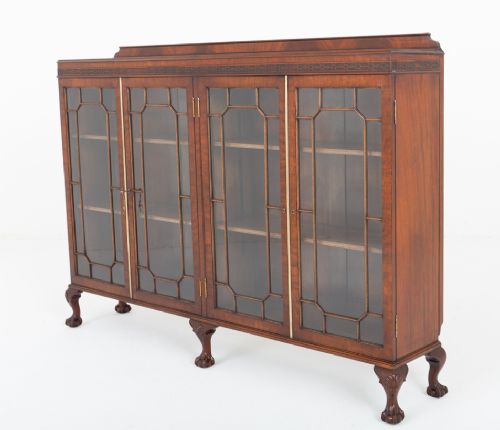
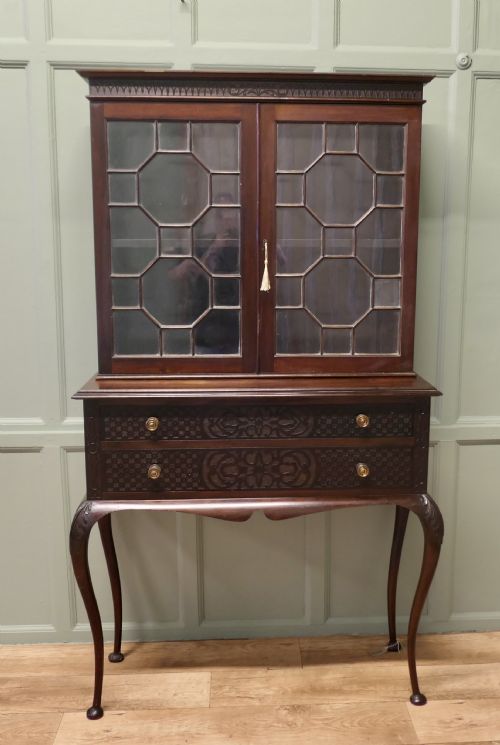
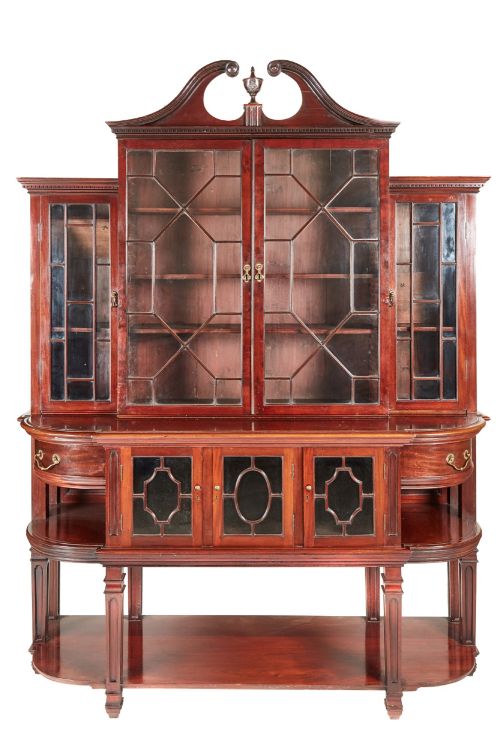
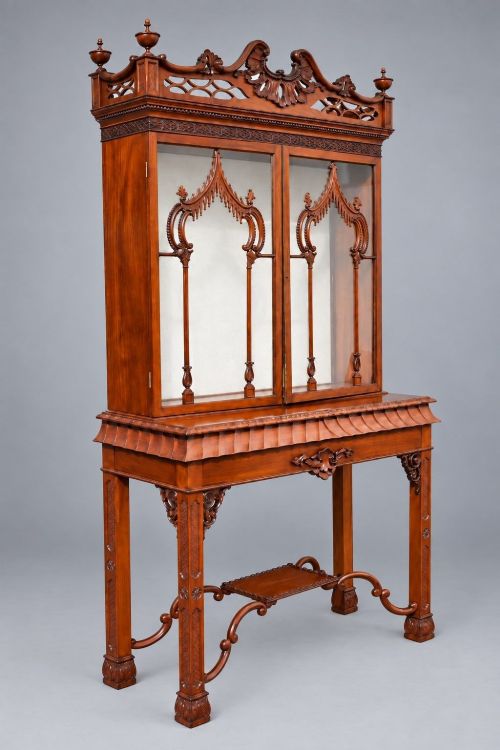
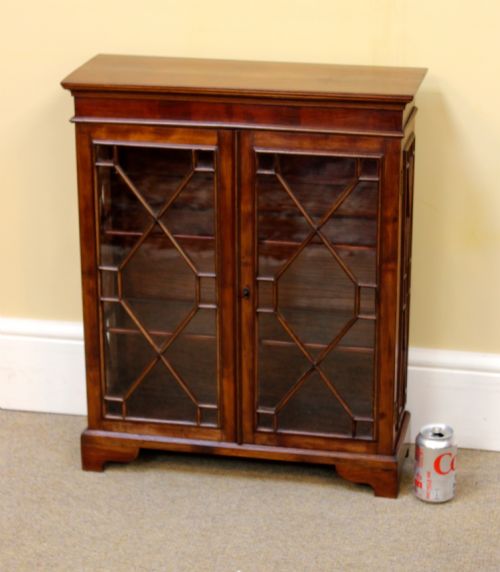
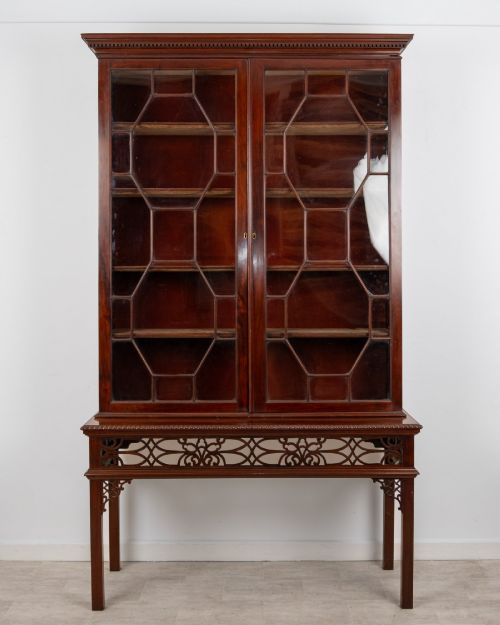
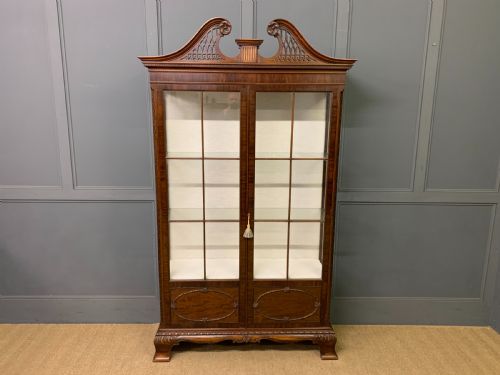
Forms vary from grand breakfront bookcases with multi-pane astragal glazing to compact bureau bookcases and miniature display cabinets. Open bookcases and side cabinets also occur within the broader selection.
Materials and construction
Makers built these cabinets predominantly in solid mahogany and mahogany veneers, occasionally incorporating satinwood, marquetry inlay, and wood inlay for contrast. Brass hardware, velvet linings, and fabric details appear on selected display pieces.
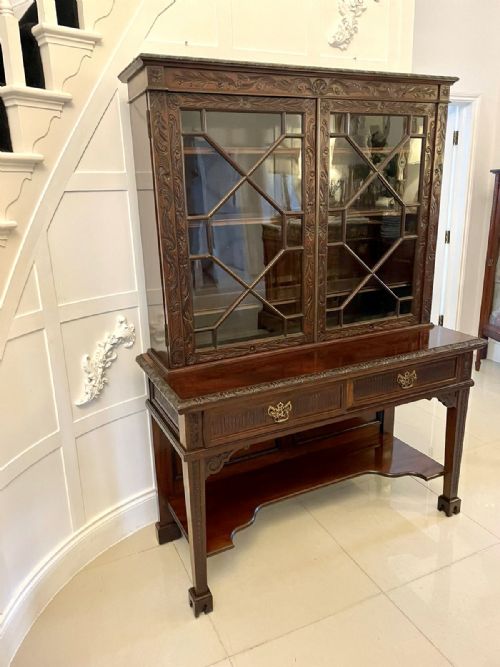
Glazing relies on timber bars arranged in geometric astragal patterns, with astral glazed doors providing visibility to the interior shelves. Carving, fretwork, and Chinese Chippendale motifs decorate the cornices, rails, and stiles of revival and period pieces alike.
Some miniature display cabinets let you curate a grand library entirely in miniature.
Distinctions in standard
Quality rests on the selection of timber figure, the crispness of hand-carved ornamentation, and the proportion of the architectural components. Pieces by recorded makers or workshops display superior joinery in the internal drawer construction and finer detailing in the glazing bars.
Revival pieces differ widely depending on whether the maker followed eighteenth-century proportions closely or produced heavier commercial furniture. Original period pieces command attention through the depth of patina accumulated in the mahogany over centuries.
Thomas Chippendale·James Winter And Sons·Edwards And Roberts·Waring And Gillows·Hille
The Chippendale Bookcase Glossary
- Astragal glazed
- Glass doors divided by thin timber glazing bars into smaller panes. These bars support the glass while creating a decorative grid across the front of the bookcase.
- Breakfront
- A piece of furniture where the central section projects forward from the side sections. This layout adds architectural depth to large library bookcases.
- Secretaire bookcase
- A cabinet featuring a pull-down writing drawer that conceals small pigeonholes and drawers. It combines a bureau workspace with upper shelving.
- Chippendale revival
- Furniture produced in the nineteenth and twentieth centuries copying eighteenth-century designs. These pieces adopt the carved ornamentation and proportions associated with Thomas Chippendale.
- Marquetry inlay
- Decorative patterns formed by fitted pieces of various coloured veneers. Craftsmen apply these wood designs to the surface of the cabinet.
Chippendale Bookcase: Frequently Asked Questions
How do I date a chippendale bookcase?
Dating relies on timber characteristics, construction methods, and secondary woods visible inside the drawers or behind the backboards. Eighteenth-century pieces show hand-cut dovetails and distinct patina, while revival pieces from the Victorian and Edwardian eras display machine-sawn timber and later brass hardware.
Cabinet construction evolved over time, moving from pegged joints and solid backs in the Georgian period to more standardised manufacturing processes by nineteen hundred. Comparing the internal structure and carving style helps separate original eighteenth-century furniture from later revival interpretations.
Where should I place a large breakfront bookcase?
A large breakfront bookcase requires a principal wall with adequate width and height to accommodate its architectural proportions without dominating the room. Placing it away from direct sunlight and heat sources protects the mahogany timber and prevents the veneer from drying out.
Allow sufficient clearance in front of the cabinet if the piece includes a secretaire drawer or bureau desk compartment that pulls open. Adequate space ensures the room remains functional while highlighting the glass doors and carved cornice.
What is the difference between revival and period pieces?
Period pieces date from the eighteenth century during the lifetime or immediate influence of Thomas Chippendale and his contemporaries. Revival pieces were manufactured later, primarily during the Victorian and Edwardian periods, reproducing those earlier eighteenth-century designs.
While both categories utilise mahogany and similar decorative motifs, period pieces carry genuine age and eighteenth-century construction traits. Revival pieces reflect the historicism of later design eras while offering functional storage and display capacity.
How do I care for mahogany shelves and glass doors?
Maintain mahogany surfaces by dusting with a dry, soft cloth and applying a microcrystalline wax sparingly when the timber appears dry. Avoid silicone-based polishes, which can penetrate the grain and damage the historic finish.
Clean the glass panes with a mild glass cleaner applied to a cloth rather than sprayed directly onto the surface, preventing moisture from reaching the timber glazing bars. Check the internal shelves and brass fittings periodically to ensure everything remains stable.