
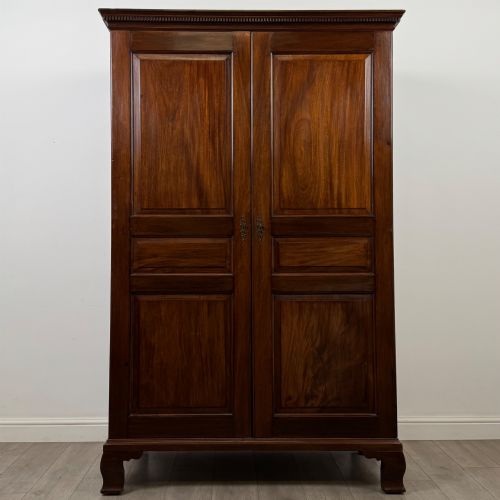
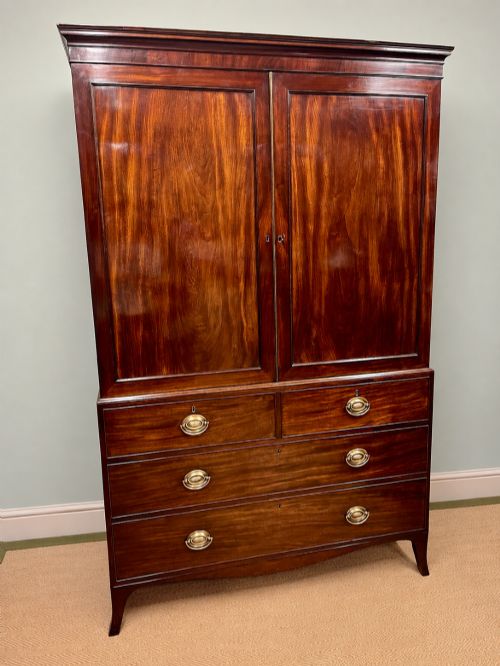
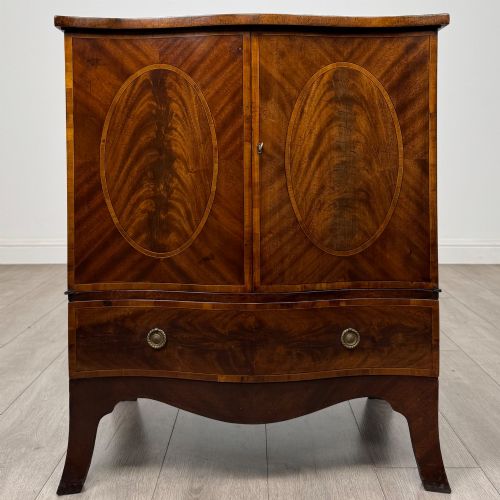
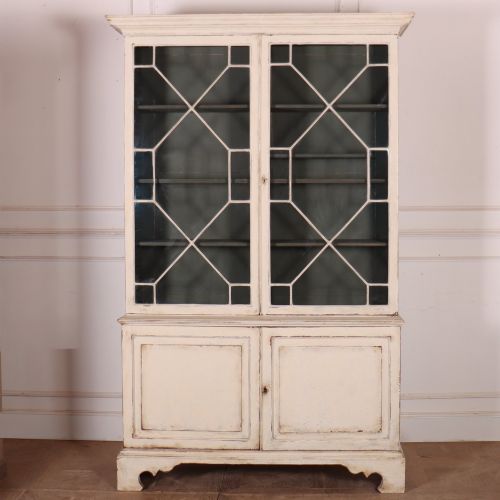
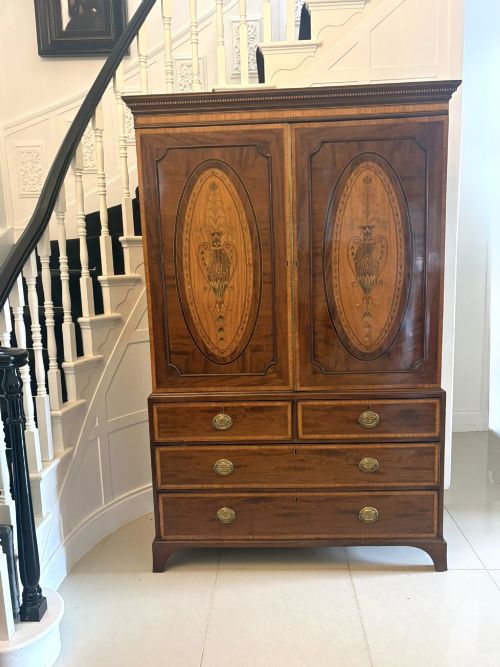
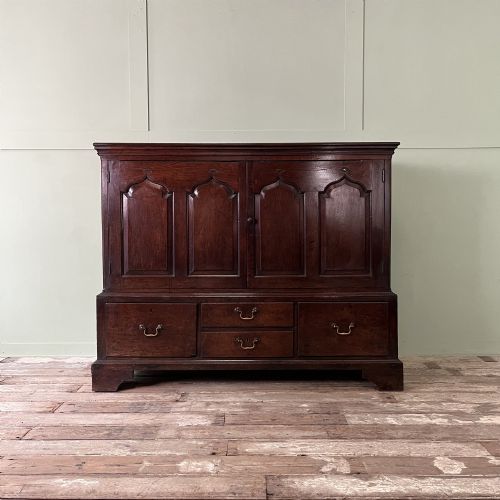
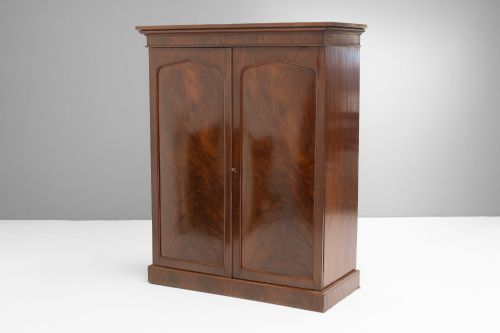
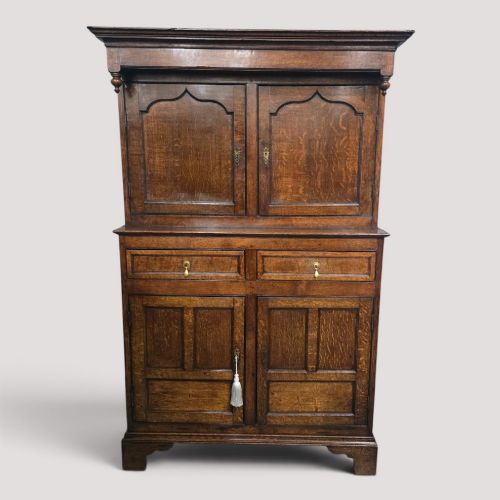
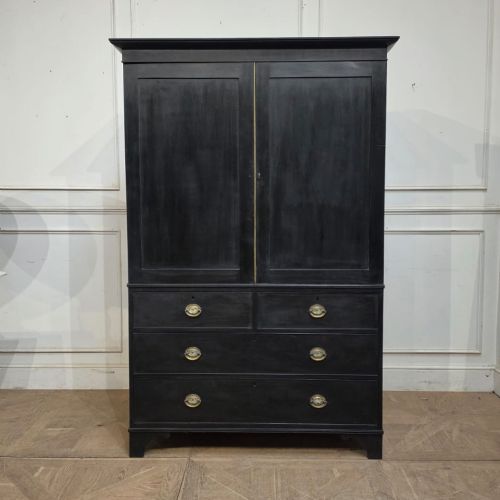
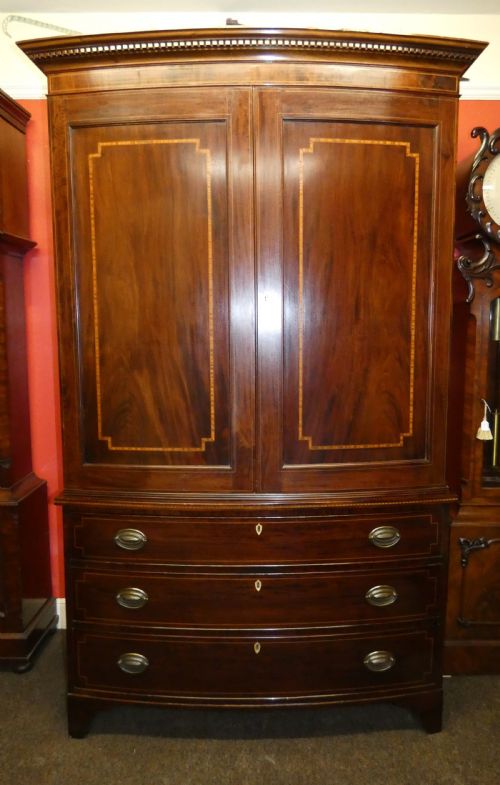
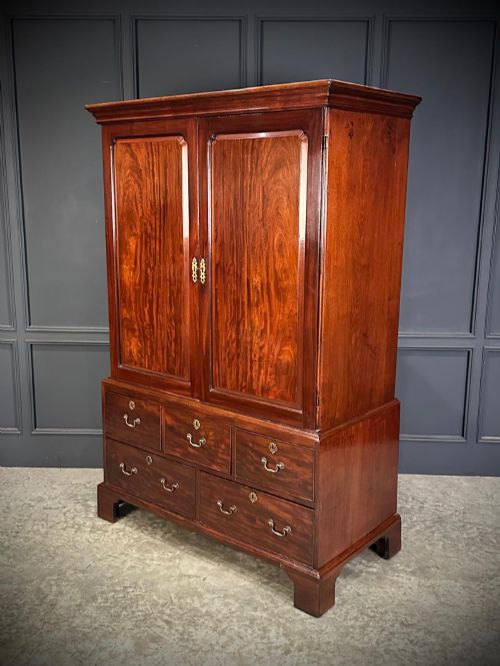
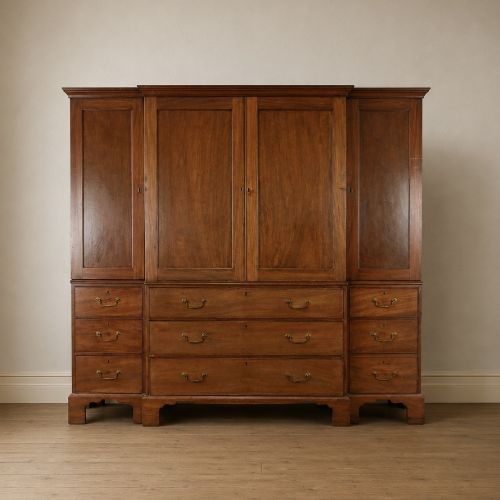
Georgian Linen Press Cabinet
A georgian linen press cabinet provides tall timber storage that brings grand architectural presence and practical depth into a bedroom.
Georgian Linen Press Cabinet
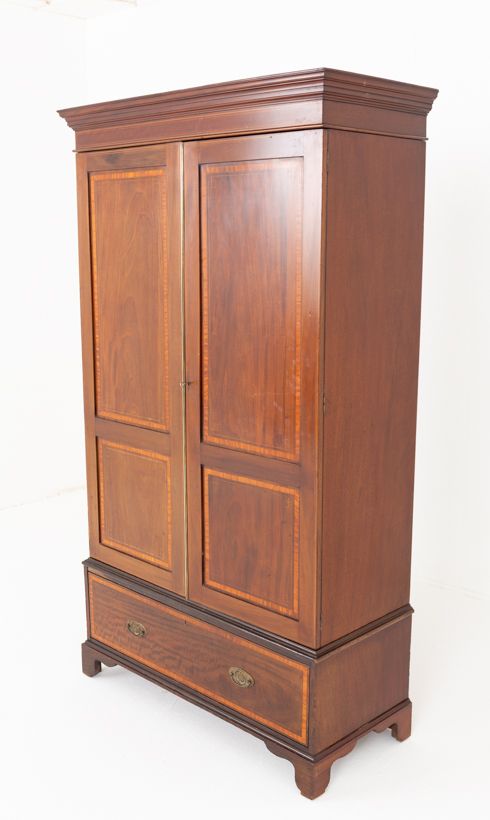
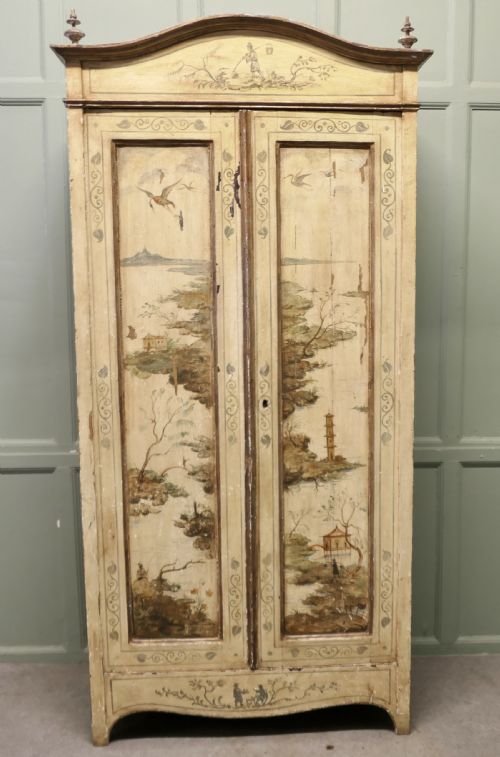
A georgian linen press cabinet combines an upper wardrobe section with lower drawer storage, designed for domestic organisation in domestic interiors. These pieces appear primarily in eighteenth and nineteenth century iterations, spanning George III, Regency, and country vernacular traditions.
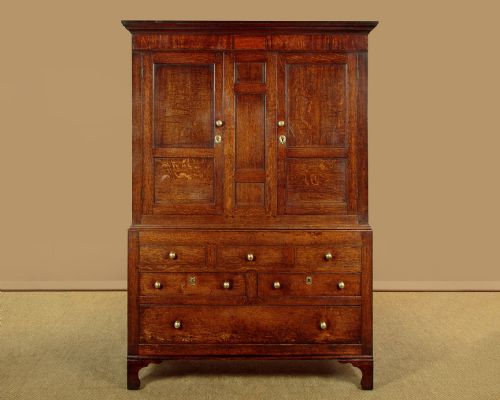
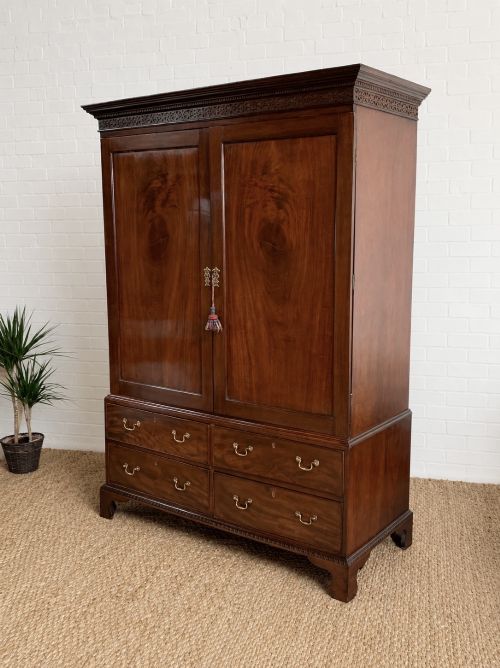
The most common formats on this page pair two upper panelled doors with a chest of drawers beneath. They range from formal urban architectural designs in figured mahogany to lower, sturdier country examples in oak and pine.
Makers adapted these cabinets for various domestic needs, producing tall formal presses alongside low cottage variants and smaller gentleman's wardrobes. Each piece reflects the functional requirements of storing folded household textiles and clothing before built-in closets became standard.
Materials and Construction
Cabinetmakers constructed these pieces using dense hardwoods like mahogany and oak, frequently applying flame mahogany veneer or satinwood inlay to primary display surfaces. Secondary timbers such as pine appeared in internal carcases, drawer linings, and backboards.
Joinery methods relied on hand-cut dovetails for drawer construction and sturdy mortise and tenon frames to support heavy panelled doors. Cornices often featured decorative elements like blind fretwork, while brass hardware secured doors and pulled drawers.
The archive records early nineteenth-century low dwarf presses alongside grand eighteenth-century breakfront wardrobe formats.
Evaluating Quality
Quality reveals itself in the selection of timber figures and the precision of the grain matching across drawer fronts and door panels. Superior examples exhibit tightly figured veneers and subtle inlay work that complement the proportions rather than overwhelming them.
Construction details differentiate standard workshop output from exceptional cabinet work, particularly in the hand-cut dovetailing of internal drawers and the crisp execution of carved cornices. The integrity of the original brass handles, locks, and internal sliding trays also dictates the standing of a piece.
Gillows
The Georgian Linen Press Cabinet Glossary
- Linen Press
- A tall cabinet designed with upper doors enclosing sliding trays for folded textiles and lower drawers for garments. It represents the primary storage form before fitted wardrobes became common.
- Blind Fretwork
- Carved decorative openwork glued to a solid background rather than pierced right through the timber. This technique added texture to cornices and friezes on formal mahogany pieces.
- Flame Mahogany
- Timber cut from the fork of the mahogany tree to produce a flickering, highly figured grain pattern. Cabinetmakers reserved this veneer for the most prominent exterior surfaces.
- Gentleman's Wardrobe
- A specialised clothing cabinet often featuring specialised internal partitions or sliding trays tailored for men's tailored garments and linen. They typically date from the Georgian and Regency periods.
- Dovetail
- A traditional interlocking joint used to connect drawer sides to drawer fronts with high tensile strength. Hand-cut versions display irregular, narrow pins that indicate period construction.
Georgian Linen Press Cabinet: Frequently Asked Questions
What went inside a linen press?
These cabinets originally held household linens, sheets, and tablecloths on sliding wooden trays behind the upper doors. The sliding shelves kept stacks flat and accessible without deep bending.
Lower drawers provided space for heavier garments and folded clothing. This dual arrangement predated hanging wardrobes in domestic interiors.
How do I tell George III from Regency pieces?
George III pieces tend to display architectural cornices, rich mahogany veneers, and classical brass hardware. Proportions are solid and balanced with classical pediments or fretwork.
Regency examples often feature cleaner lines, darker woods, and simpler brass inlay or mounts. The overall silhouette shifts toward refined classical austerity rather than ornate carving.
Are these cabinets one piece or two?
Most examples divide horizontally into an upper cabinet section and a lower drawer base. This modular construction helped transport heavy timber furniture through narrow doorways.
Smaller country pieces or low cottage variants occasionally utilise a single-piece frame. Checking the side seams reveals whether a cabinet separates.
How do I fit a tall press into a modern room?
Measure ceiling height carefully, as these tall cabinets require clearance above their decorative cornices. Placing them against a main bedroom wall anchors the room's proportions.
Internal sliding trays can be adapted for modern folded clothing storage or shelving. Ensure the floor level is even to keep the large doors swinging true.