

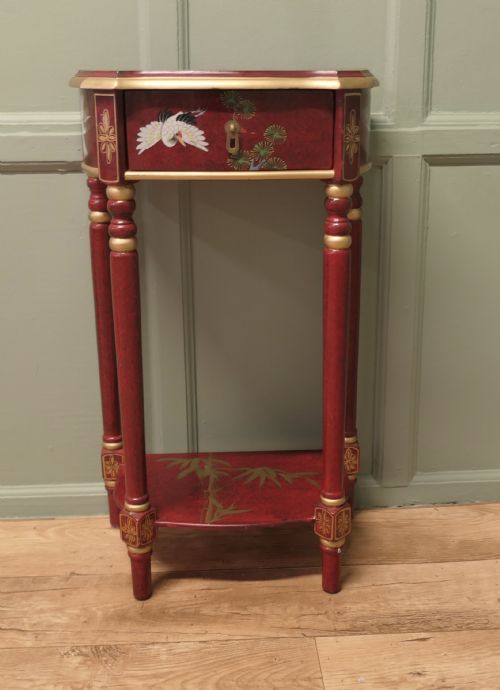


Chinoiserie Hall Table
These chinoiserie hall table pieces bring hand-painted motifs and lacquer surfaces into an entryway, offering an instant decorative focal point.
Chinoiserie Hall Table
A chinoiserie hall table serves as a striking entryway surface, combining Asian-inspired decorative motifs with European furniture forms from the eighteenth century onwards. When you search for a chinoiserie hall table, you encounter console tables, half-moon demi-lune shapes, and side tables designed to sit flush against a wall.
The selections span multiple eras, featuring Regency faux bamboo frames, Edwardian demi-lune card tables, and eighteenth-century black lacquered pieces with marble tops. These items often incorporate painted wood, gold leaf accents, and intricate oriental scenes to create a distinct visual statement in a hallway.
How they were made
Construction relies heavily on wood, softwood, and painted frames, frequently shaped into bamboo imitations or classical console silhouettes. Artisans applied layers of lacquer and gold leaf to achieve glossy, decorative surfaces that mimic traditional Asian lacquerware.
Many examples integrate heavy materials like marble for tabletops, while others utilise brass fittings and carved wood to support the elaborate painted or gilt ornamentation characteristic of the style.
Chinoiserie Hall Table Retail Price Guide 2026
Typical asking prices for chinoiserie hall table among the pieces listed under this phrase on Sellingantiques today, from the lower quarter to the upper quarter. They describe what is for sale here now, not the wider market.
Some tables double as card tables, proving that past generations enjoyed a quick hand of whist right beside the front door.
What varies in quality
The depth and execution of the painted decoration separate standard decorative items from finer examples, particularly where hand-applied gold leaf and lacquer are concerned. Original paint surfaces and period materials command greater attention than later decorative repainting.
Structural integrity also dictates quality, with heavier marble tops requiring robust, stable wooden bases and precise joinery in console and demi-lune formats.
The Chinoiserie Hall Table Glossary
- Demi-lune
- A half-moon shaped table designed to stand flat against a wall. This format makes it particularly suitable for narrow hallways and entryways.
- Lacquer
- A durable resin finish applied in multiple layers to wood surfaces. It provides a glossy, smooth protective coating often decorated with oriental scenes.
- Faux bamboo
- Wood carved and painted to imitate natural bamboo stalks. This technique gained popularity during the Regency and Aesthetic Movement periods.
- Console table
- A table fixed to a wall or supported by front legs, traditionally designed for display in a hall or reception room.
- Parcel-gilt
- Wood or metal partially covered with thin gold leaf or gold paint. It highlights specific carved details against a contrasting painted background.
Chinoiserie Hall Table: Frequently Asked Questions
Where should I place a chinoiserie hall table?
These tables fit naturally in entrance halls, narrow corridors, or reception spaces where surface area is needed without blocking foot traffic. Their decorative fronts make them effective focal points beneath a wall mirror.
Because many feature demi-lune or console designs, they sit flush against walls while offering a practical display space for lamps, bowls, or decorative objects.
How do I care for a lacquered surface?
Lacquered and painted surfaces require gentle dusting with a soft, dry cloth to prevent scratching the finish. Avoid placing damp items directly onto the wood or marble.
Keep these tables away from direct sunlight and extreme temperature fluctuations to protect the lacquer and gold leaf details from cracking or fading over time.
What periods do these tables represent?
The pieces span several eras, including the eighteenth century, the Regency period, the Victorian era, and the early twentieth century. Each period interprets the Asian-inspired aesthetic through contemporary furniture shapes.
For instance, Regency examples often feature faux bamboo turned wood, whereas Edwardian and later pieces frequently utilise demi-lune card table formats or heavy lacquer finishes.
Are marble tops original to these tables?
Marble tops appear on specific styles, such as console tables and certain Regency or eighteenth-century pieces, providing a durable and cool surface. They were often paired with lacquered or painted bases to add weight and contrast.
When evaluating a piece, the integration between the stone top and the wooden frame indicates whether the construction aligns with its attributed period.