






Painted Chinoiserie Console
These painted chinoiserie console tables bring together European furniture forms and Asian decorative motifs.
Painted Chinoiserie Console
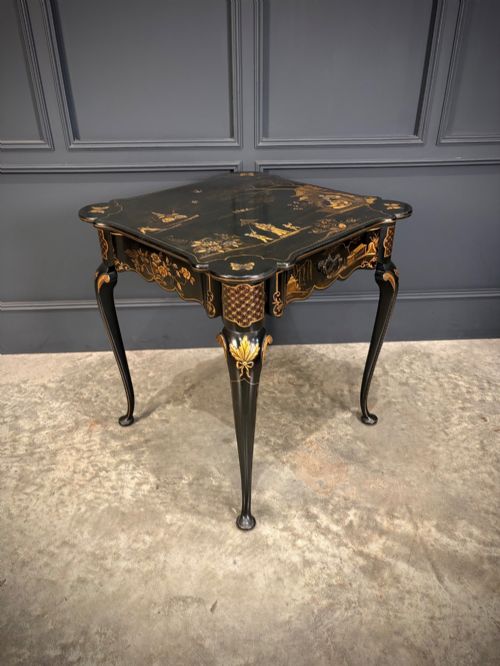
A painted chinoiserie console table sits flat against a wall, often featuring half-moon or rectangular tops. The forms recorded in the evidence range from side tables and writing tables to dedicated card tables and cabinets.
The aesthetic draws on historical periods including the eighteenth century, Regency, Victorian era, and Edwardian times. Makers adopted styles such as Brighton Pavilion, Qing Dynasty, and Japonisme to create these decorative surfaces.
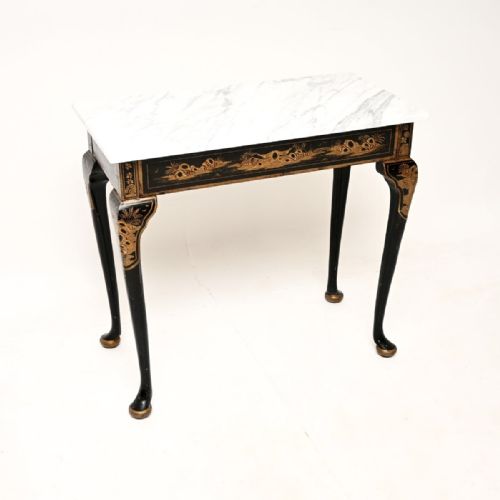
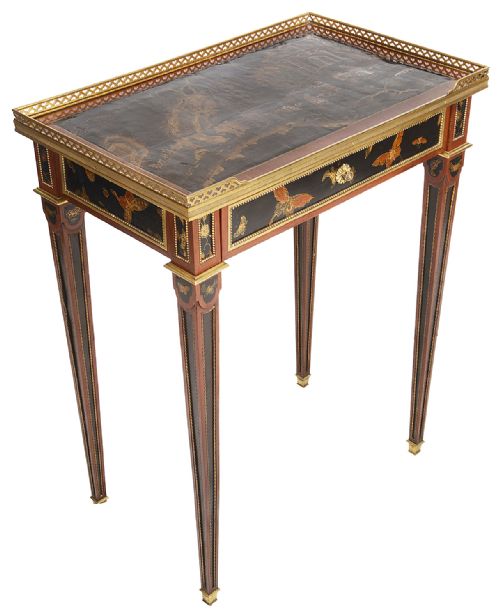
Surviving examples utilise wood, softwood, and lacquered wood finished with paint, lacquer, and gilt details. Some pieces incorporate marble tops and glass elements to complete the design.
Materials and construction
Wood and softwood form the structural carcasses of these tables, frequently shaped into demi-lune or rectangular silhouettes. Artisans also employed faux bamboo turning for specific Regency and nineteenth-century framework designs.
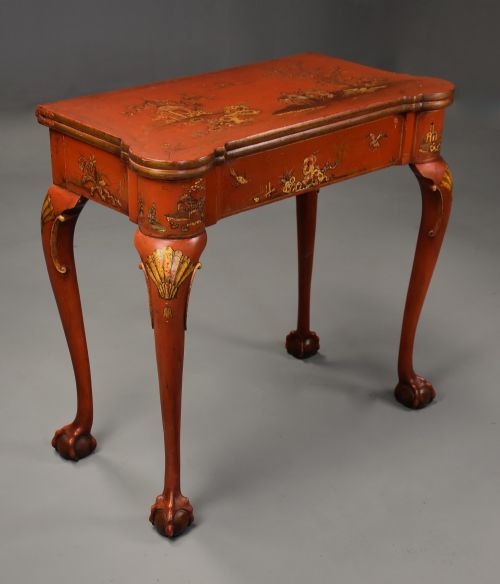
Surfaces received layers of black, red, or ochre paint and lacquer, applied to emulate Asian decorative arts. Parcel-gilt highlights and hand-painted motifs complete the ornamentation across the panels and borders.
Painted Chinoiserie Console Retail Price Guide 2026
Typical asking prices for painted chinoiserie console among the pieces listed under this phrase on Sellingantiques today, from the lower quarter to the upper quarter. They describe what is for sale here now, not the wider market.
Object forms recorded across the inventory include writing tables, wall mirrors, games tables, cabinets, and centre tables.
Factors of quality
The depth and preservation of the lacquer and hand-painted decoration distinguish superior examples from simpler ones. Intricate detailing in the gilt work and pictorial scenes requires skilled execution.
Materials such as fitted marble tops or original paint finishes elevate the character of a piece. The structural integrity of the timber frame and the precision of the joinery complete the assessment.
The Painted Chinoiserie Console Glossary
- Chinoiserie
- European interpretation and imitation of Chinese and East Asian artistic traditions. This style heavily influences the painted motifs found on these tables.
- Demi-lune
- Half-moon shape used for tables designed to stand flat against a wall. Such forms are common among surviving console and card tables.
- Lacquer
- Protective and decorative finish applied in multiple layers to wood surfaces. It provides the smooth, glossy background typical of Asian-inspired furniture.
- Parcel-gilt
- Partial application of gold leaf or gilt paint to highlight specific carved or turned details. This technique accentuates structural framing and ornamentation.
- Faux bamboo
- Wood turned and carved to resemble natural bamboo stalks. It appears frequently on Regency period writing and side tables.
Painted Chinoiserie Console: Frequently Asked Questions
How were these tables used historically?
Historically, console tables stood against walls in grand rooms to display decorative objects, porcelain, or mirrors. Versions with folding tops functioned as card or games tables for evening entertainment.
Writing tables provided a stable surface for correspondence, while cabinets offered concealed storage within domestic interiors.
How do I style a console table at home?
A console table works well in an entryway or living space, often paired with a matching wall mirror positioned above it. Keeping the surface uncluttered allows the painted and lacquered details to remain visible.
Positioning the table flat against a wall ensures stability while creating a distinct focal point within the room.
How can I tell the period of a table?
Dating relies on observing structural forms, such as Regency faux bamboo turnings or Edwardian demi-lune proportions. Materials like original ochre paint, marble tops, and specific lacquer techniques offer further clues.
Styles such as the Brighton Pavilion aesthetic or Japonisme tie pieces to distinct nineteenth and early twentieth-century movements.