





Chinoiserie Delftware Charger
Chinoiserie delftware chargers are tin-glazed earthenware display plates decorated with East Asian motifs, sought after for their rich hand-painted palettes and early ceramic history.

Chinoiserie Delftware Charger
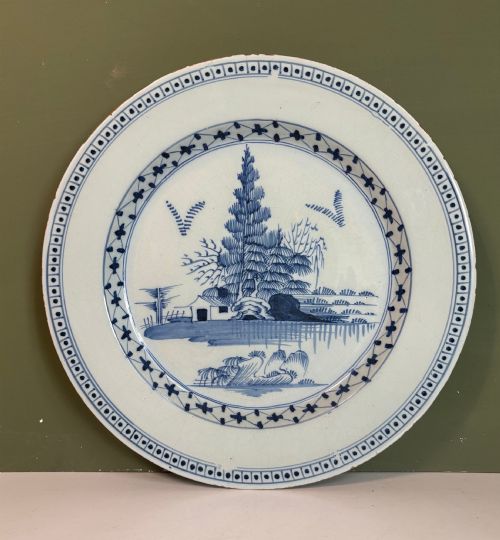
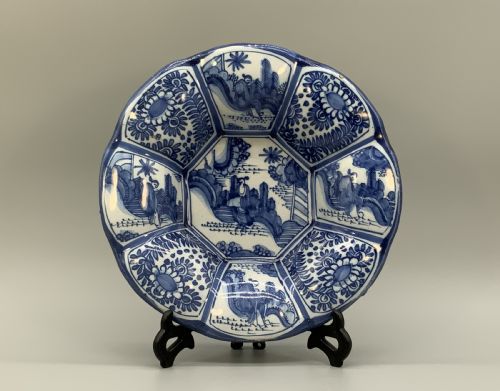
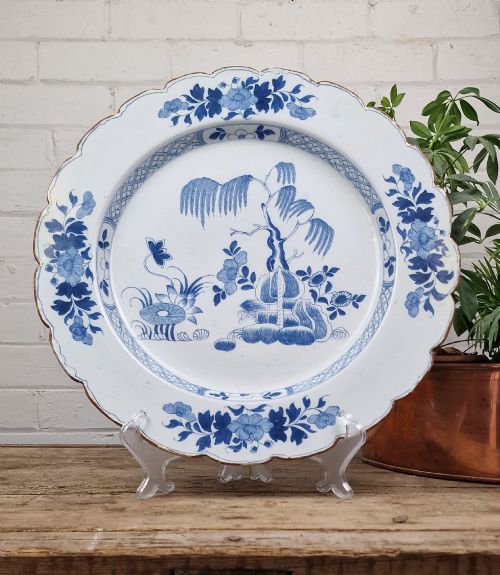
A chinoiserie delftware charger is a broad, shallow earthenware plate intended primarily for display rather than dining. When exploring this selection, buyers frequently encounter eighteenth-century English and Dutch examples decorated with hand-painted motifs.
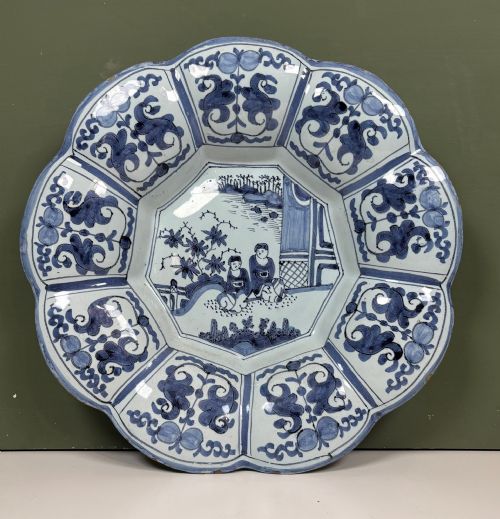
The forms range from wide chargers and platters to smaller plates and lobed dishes. Pieces frequently date from the seventeenth and eighteenth centuries, reflecting the height of European tin-glazed pottery production.
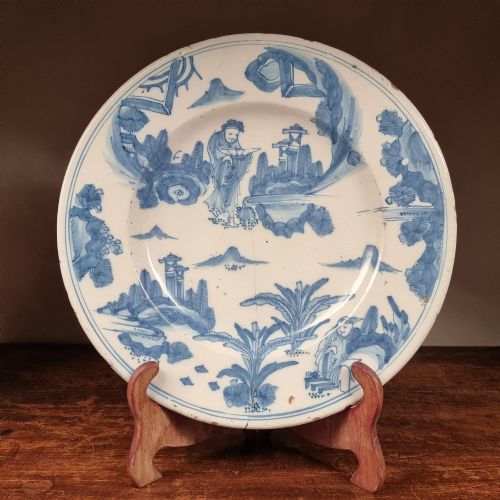
Makers drew inspiration from Chinese porcelain imports, translating exotic landscapes, figures and floral arrangements into European earthenware. These items bring tangible domestic history and vibrant pigment into contemporary interiors.
How they were made
Potters shaped earthenware bodies from local clays, which were then fired to create a porous base biscuit. Artisans coated this surface in an opaque tin glaze that provided a smooth, white ground for subsequent brushwork.
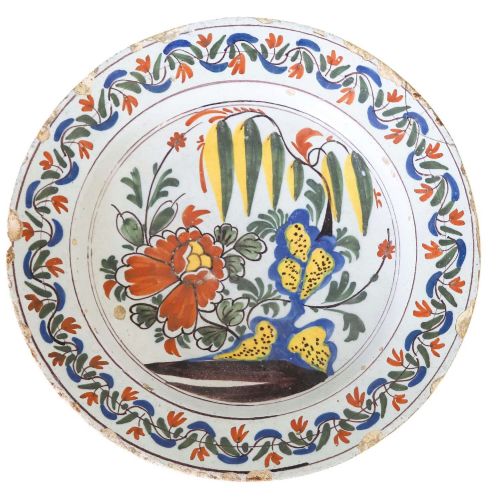
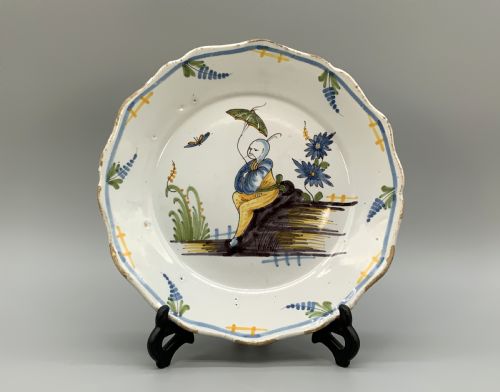
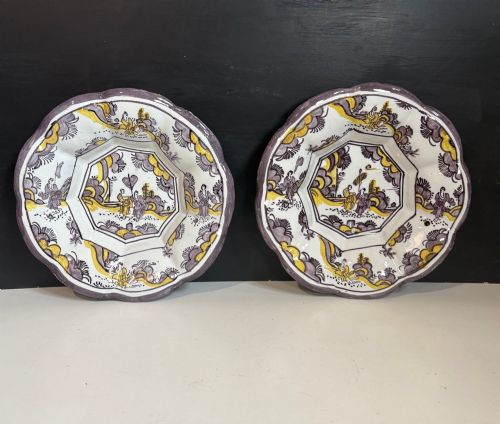
Painters applied cobalt pigment directly onto the unfired tin glaze, absorbing the colour permanently during the second kiln firing. Polychrome versions incorporated manganese and yellow pigments alongside cobalt to achieve varied visual depth.
Chinoiserie Delftware Charger Retail Price Guide 2026
Typical asking prices for chinoiserie delftware charger among the pieces listed under this phrase on Sellingantiques today, from the lower quarter to the upper quarter. They describe what is for sale here now, not the wider market.
Early potters occasionally painted European livestock into imaginary Chinese landscapes, creating delightfully confused pastoral scenes.
What varies in quality
Quality rests primarily in the fluidity and confidence of the brushwork across the surface. Rapid, expressive execution by skilled painters creates lively chinoiserie scenes that elevate the ceramic above stiffer, formulaic copies.
The purity and consistency of the white tin glaze also influence visual success. A stable, evenly applied glaze provides a better field for the cobalt oxide or polychrome pigments to sit upon without excessive running.
The Chinoiserie Delftware Charger Glossary
- Tin glaze
- An opaque white glaze rendered by adding tin oxide to a lead glaze base. This technique originated in the Middle East before spreading through Europe via Italy and the Netherlands.
- Cobalt oxide
- A mineral pigment used under the glaze to produce deep blue decoration. It withstands high kiln temperatures without burning away.
- Polychrome
- Decoration utilising multiple colours rather than a single pigment. In these ceramics, manganese and yellow join blue on the white ground.
- Kraak style
- A Dutch and English interpretation of Chinese export porcelain featuring segmented panels of motifs. Plates in this manner often display central landscapes surrounded by border borders.
Chinoiserie Delftware Charger: Frequently Asked Questions
How were delftware chargers displayed?
Historic interiors utilised these large earthenware plates on sideboards, dressers and walls to display wealth and artistic taste. Their broad rims and shallow wells suited visual presentation rather than daily service at the table.
Modern collectors continue this tradition by mounting plates on specialised wall hangers or displaying them on plate stands within cabinets. Their vibrant pigments draw the eye across a room without requiring complex arrangement.
How do I distinguish English from Dutch delft?
English delftware often exhibits softer earthenware bodies and distinct glaze tones developed in kilns around London, Bristol and Lambeth. Dutch pieces from centres like Delft frequently show crisp tin glazes influenced closely by imported Asian wares.
Examining the foot rim and the back of the plate reveals clues about kiln stacking methods and local clay preparation. Comparing these physical characteristics helps clarify the likely geographic origin of an individual dish.
What does chinoiserie mean on pottery?
Chinoiserie describes European artistic interpretations of Chinese and East Asian aesthetic traditions, particularly popular during the seventeenth and eighteenth centuries. Artisans imagined exotic landscapes, pavilions and figures without direct access to the Far East.
This stylistic lens produced whimsical, charming scenes painted in cobalt blue or polychrome palettes on European earthenware. The resulting chargers bridge two distinct decorative worlds through skilled brushwork.