
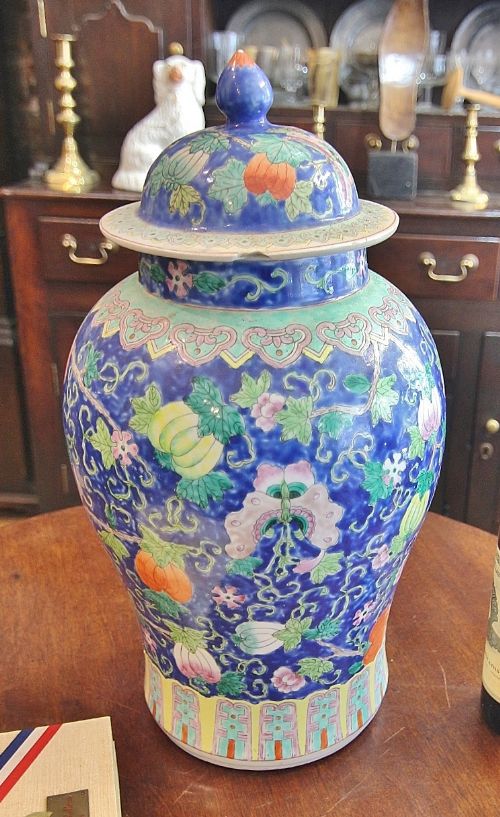


Chinoiserie Covered Vase
A chinoiserie covered vase brings European imagination of East Asian motifs into domestic rooms through lidded vessels spanning multiple centuries.
Chinoiserie Covered Vase
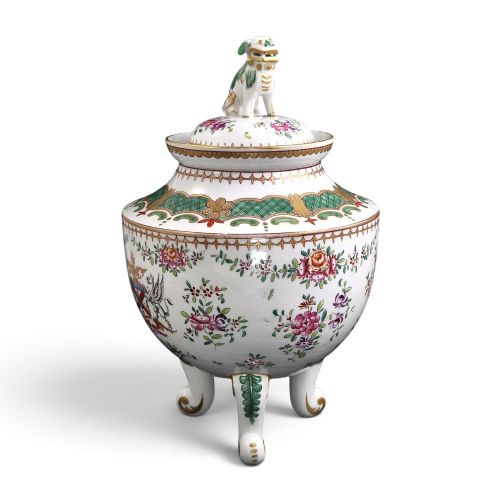
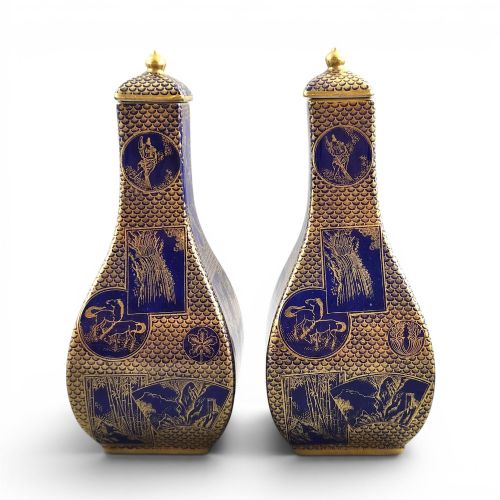
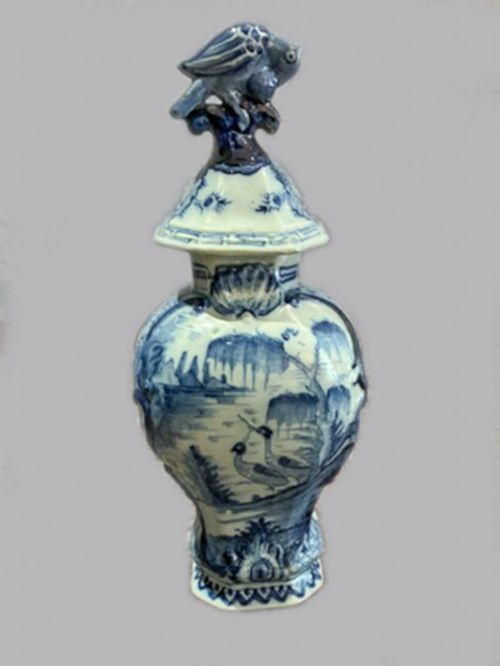
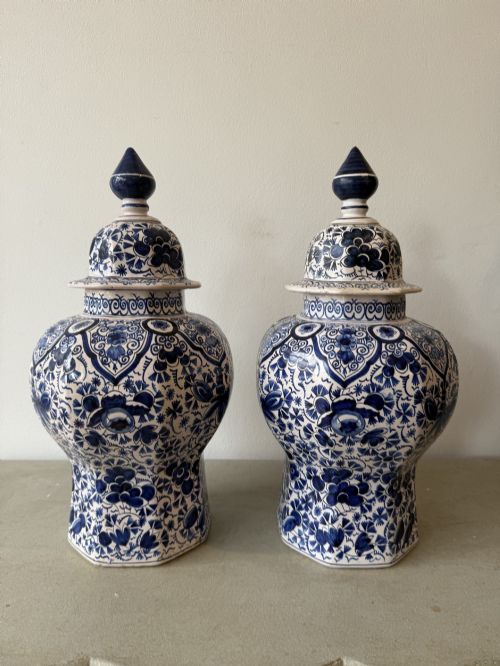
A chinoiserie covered vase combines European decorative interpretations with ceramic forms, often taking the shape of lidded jars, garniture pieces and potpourri vessels. The selections on this page span the nineteenth century, the Georgian era, the Regency period and twentieth-century examples.
Makers utilised ceramic, ironstone, tin-glazed earthenware and porcelain as primary bodies for these lidded vessels. Surface decoration incorporates enamel, gold leaf, gilt and blue-and-white glaze work.
The aesthetic bridges several distinct regional styles, encompassing Victorian chinoiserie, Dutch Delftware, Japanese Imari and nineteenth-century English interpretations. Buyers encounter everything from large Continental maiolica pieces to Mason's patent ironstone productions.
Materials and construction
Potters shaped ironstone, porcelain and tin-glazed earthenware bodies on the wheel or in moulds before applying detailed enamel and glaze layers. Many nineteenth-century examples incorporate transfer printing or hand-painted motifs executed in imitation of Chinese porcelain.
Gilt, gold leaf and ormolu mounts frequently accent the primary ceramic or metal structures. Toleware examples employ painted tin plates shaped into chestnut urn forms and finished with protective glazes.
Chestnut urns in painted toleware bring unexpected metallic flair to the ceramic-dominated world of lidded vases.
Assessment of quality
Quality rests upon the crispness of the moulded form and the precision of the hand-painted enamel or blue-and-white glaze. Stronger examples display deep, uniform cobalt tones and securely fitted matching covers.
The prestige of the maker and the complexity of the decorative scheme distinguish standard production wares from high-end display pieces. Intricate gilding and supplementary mounts elevate the finish of superior specimens.
Samson Paris·Mason's
The Chinoiserie Covered Vase Glossary
- Chinoiserie
- European artistic style reflecting Chinese motifs and cultural themes. It appears frequently on ceramics and decorative objects throughout the eighteenth and nineteenth centuries.
- Ironstone
- Heavy durable earthenware patented in Britain. It provides a sturdy body for large decorative vases and garniture sets.
- Garniture
- A set of matched vases or pots displayed together on a mantelpiece or sideboard. These groupings typically comprise three or five matching lidded vessels.
- Toleware
- Painted or enamelled metalware, usually sheet steel or tin. Makers shaped this material into decorative urns and chestnut vessels.
Chinoiserie Covered Vase: Frequently Asked Questions
What is a chinoiserie covered vase?
A chinoiserie covered vase is a lidded ceramic or metal vessel decorated with European interpretations of East Asian artistic motifs. These pieces function as decorative focal points in domestic interiors.
Craftsmen produced them across several centuries in materials ranging from ironstone and porcelain to tin-glazed earthenware and painted metal.
How were lidded vases used historically?
Historically, lidded vases served as display ornaments on mantelpieces, tabletops and cabinetry within formal rooms. Some variants, such as potpourri jars, held dried aromatic plant materials to scent the air.
Larger examples often formed part of matched garniture sets arranged symmetrically across architectural surfaces.
How do I date a covered vase?
Dating relies on identifying the ceramic body, the manufacturing marks on the base, and the specific stylistic characteristics of the glaze. Ironstone and porcelain formulations evolved significantly between the Georgian era and the late nineteenth century.
Comparative analysis of the hand-painted enamel work and mount styles helps narrow the production window.
Where should I display a large vase?
Large lidded vessels require stable, weight-bearing surfaces such as sideboards, pedestals or deep mantel shelves. Positioning them away from high-traffic areas protects the covers and handles from accidental knocks.
Natural light helps accentuate the depth of blue-and-white glazes and gilded surface details.