



French Chinoiserie Urn
These french chinoiserie urn pieces combine orientalist motifs with European decorative traditions, offering striking decorative presence for your interior.
French Chinoiserie Urn
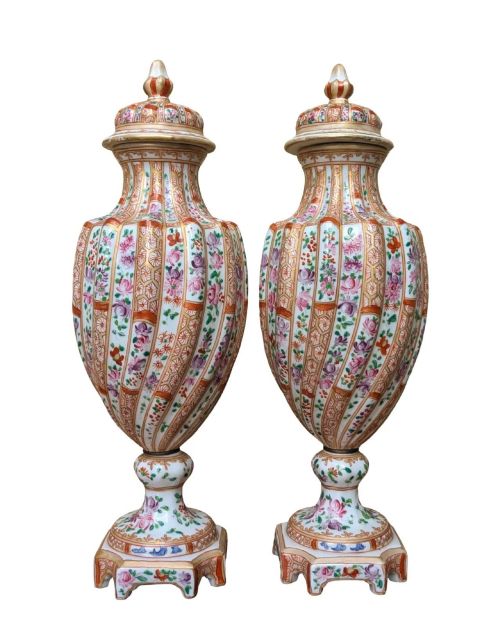
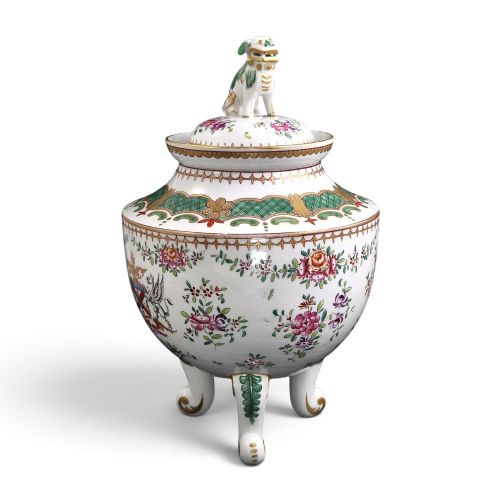
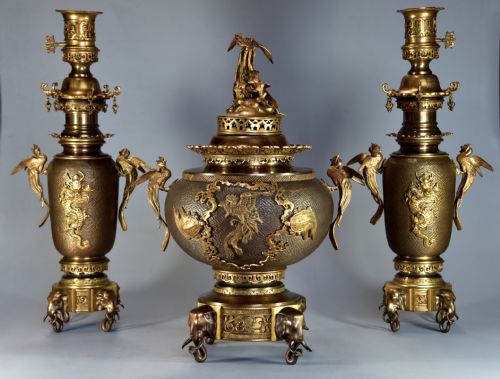
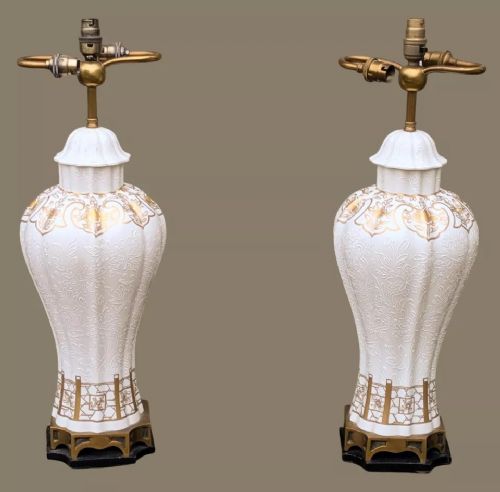
When you search for french chinoiserie urn, you find decorative objects spanning the nineteenth century into the twentieth century, including pieces from the victorian era and the year 1930. These works take forms such as vases, lidded urns, table lamps, and mantel clocks, often decorated in styles that blend chinese export aesthetics with french metalwork.
The most common examples on this page are porcelain vases and lamps mounted in gilt bronze or ormolu, alongside pieces by makers like Samson Paris. Many items integrate nineteenth century hard-paste porcelain with hand-painted enamel panels or powder blue glazes, reflecting both antique chinese traditions and European adaptation.
How they were made
Maker workshops utilised hard-paste porcelain shaped into vases and urns, applying detailed famille rose and armorial enamel painting by hand. These ceramic bodies were frequently paired with cast gilt bronze and patinated bronze mounts, secured using brass fittings.
Surface decoration incorporated gold leaf application and painted panels, sometimes complemented by fabric elements in related lighting pieces. Artisans combined traditional ceramic firing methods with precision metal casting to create these mounted decorative objects.
Some nineteenth-century vases started life as Chinese export porcelain before French artisans added heavy bronze mounts to satisfy European tastes.
What varies in quality
The standard of modeling in the gilt bronze and ormolu mounts distinguishes finer examples from simpler work, where sharper chisel-finishing indicates superior craftsmanship. Heavier metal casting and precise integration with the porcelain body show greater workshop investment.
Hand-painted enamel detail on the porcelain surfaces dictates visual depth, with multi-layered famille rose palettes achieving richer results than flat monochrome treatments. The crispness of the armorial or pictorial design reveals the skill of the painter.
Samson Paris
The French Chinoiserie Urn Glossary
- Ormolu
- Gilt bronze mounted onto decorative objects. This technique involves applying a gold amalgam to bronze, creating a durable golden finish typical of nineteenth-century French metalwork.
- Famille rose
- A palette of opaque enamel colours introduced in Chinese ceramics, dominated by pink or rose hues. It appears frequently on nineteenth-century porcelain vessels and lamps.
- Hard-paste porcelain
- A dense ceramic composition fired at high temperatures using kaolin and petuntse. It provides a durable, vitrified body suitable for intricate enamel painting.
- Japonisme
- The influence of Japanese art on European design, appearing alongside chinoiserie in late nineteenth-century decorative pieces. It emphasises asymmetric compositions and natural motifs.
French Chinoiserie Urn: Frequently Asked Questions
What is a french chinoiserie urn?
A french chinoiserie urn is a decorative vessel or lamp body created in Europe using Chinese-inspired ceramic forms and motifs, often enhanced with French bronze mounts.
These pieces reflect the nineteenth-century European fascination with eastern art, combining porcelain manufacturing traditions with domestic metalworking craftsmanship.
How were these urns used?
Originally created as decorative garniture sets or display pieces for grand interiors, many have since been adapted into table lamps.
They functioned primarily as focal points on mantelpieces, side tables, or cabinets within Victorian and later drawing rooms.
How do I style them at home?
These pieces suit traditional and eclectic interiors alike, serving as sculptural accents on sideboards or serving as functional lighting when fitted with lamp shades.
Their rich gilding and painted ceramic surfaces pair well with dark wood furniture and neutral backdrops that highlight their colour.
How do I distinguish periods?
Nineteenth-century examples typically exhibit heavier bronze casting, hand-chased ormolu mounts, and hand-painted enamels characteristic of factories like Samson Paris. Later twentieth-century interpretations may show cleaner porcelain bodies and different finishing techniques on the metal components.
Examining the underside of the porcelain and the construction of the metal mounts helps clarify the date of manufacture.