


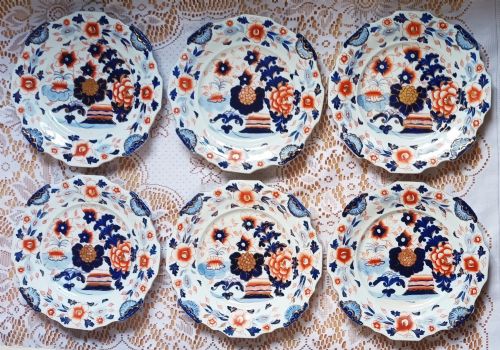

Chinoiserie Blue Plates
Chinoiserie blue plates bring together historic ceramics and painted Far Eastern scenes, drawing collectors who appreciate early blue and white earthenware and porcelain.
Chinoiserie Blue Plates
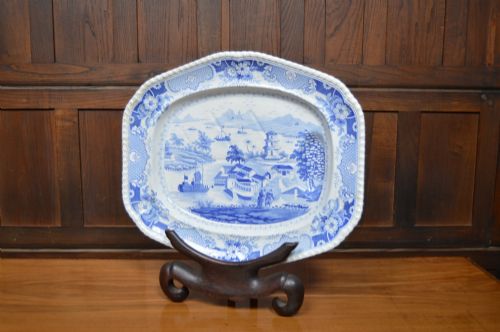
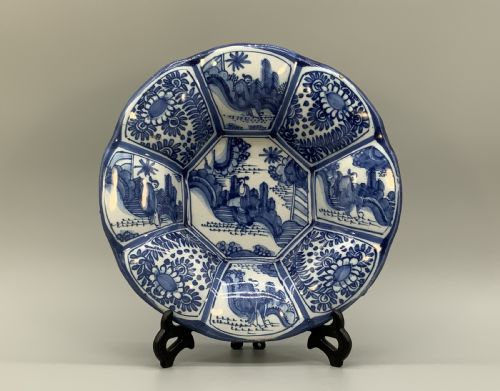
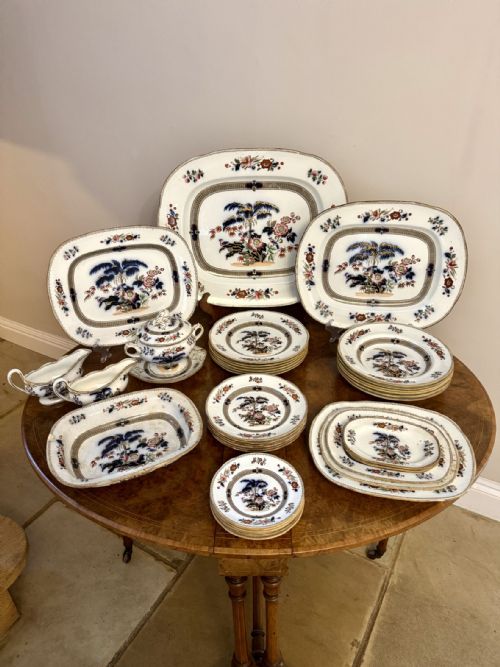
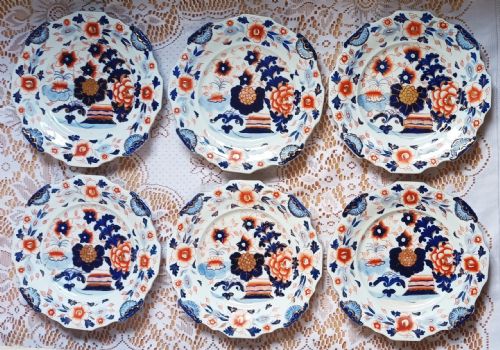
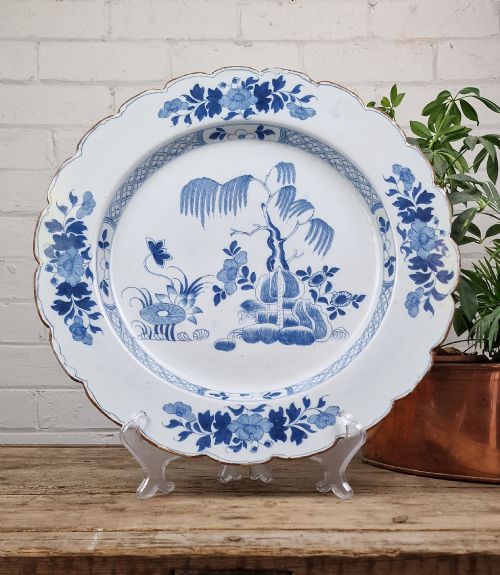
When searching for chinoiserie blue plates, buyers encounter a range of forms spanning charger plates, serving platters, and dinnerware from the eighteenth and nineteenth centuries.
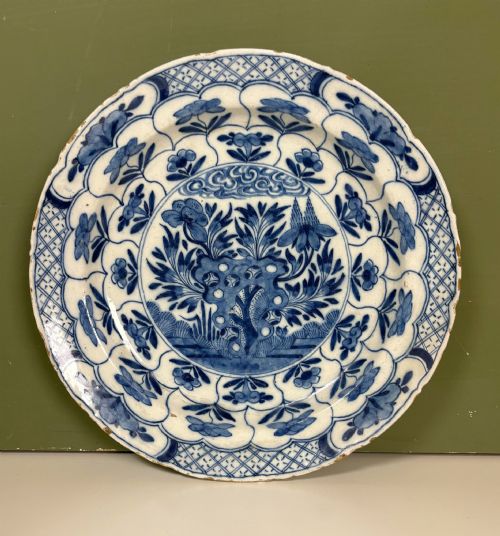
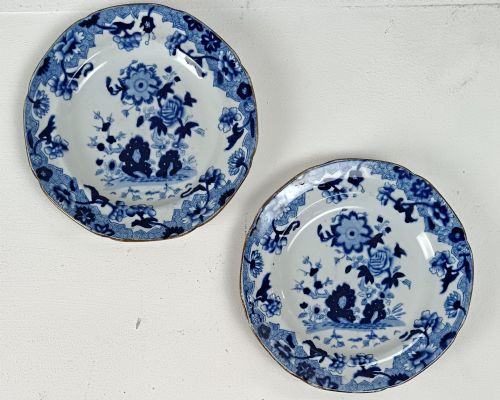
The pieces appearing most frequently on this page originate from English and European traditions, notably including eighteenth-century delftware and nineteenth-century ironstone and transferware.
Makers and potteries from periods such as the Georgian and Victorian eras produced these items to serve both functional dining and decorative display in homes.
Materials and methods
Potters built these plates using earthenware, stoneware, and ironstone bodies, often applying tin glaze or clear glaze over the ceramic base.
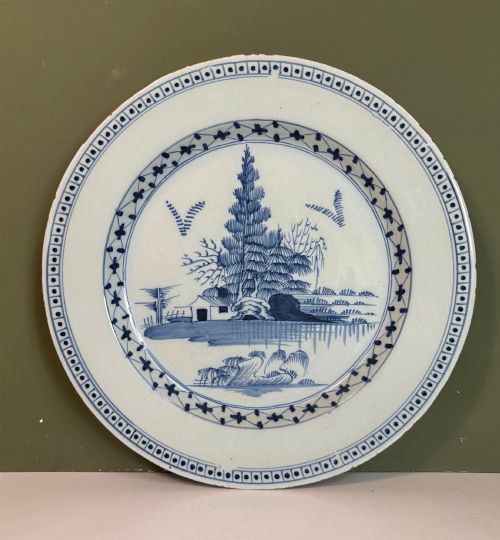
Decoration relied upon cobalt pigment applied by hand or via transfer printing to achieve the blue and white aesthetic characteristic of the style.
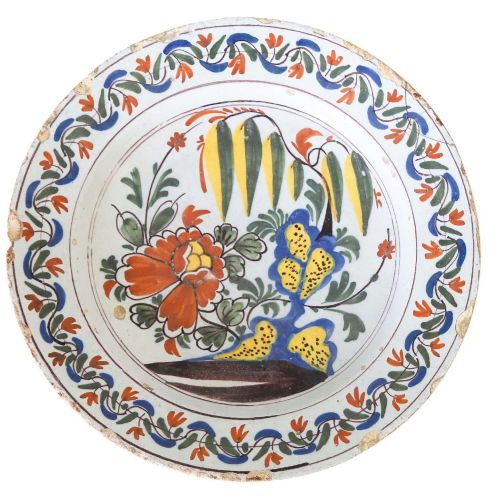
Several early plates feature improbable garden pagodas inhabited by decidedly European birds pretending to be Chinese.
Factors of quality
The clarity and depth of the cobalt pigment application dictate visual distinction, separating sharply defined painted motifs from blurred or uneven transfers.
The refinement of the ceramic body and the smoothness of the glaze surface differentiate standard utility wares from exhibition-grade chargers and fine dinner services.
Spode·Wedgwood·Coalport·Masons·John Ridgway·Caughley·Minton
The Chinoiserie Blue Plates Glossary
- Ironstone
- A heavy, durable type of earthenware patented in the nineteenth century. It resists chipping better than standard earthenware while providing a smooth white surface for transfer printing.
- Transferware
- Pottery decorated by pressing a design from an engraved copper plate onto tissue paper, which was then transferred onto the unglazed or bisque ceramic body. This technique allowed for consistent patterned production.
- Charger
- A large decorative plate intended for display on a sideboard or table rather than everyday dining use. These items frequently measure significantly wider than standard dinner plates.
Chinoiserie Blue Plates: Frequently Asked Questions
What are chinoiserie blue plates?
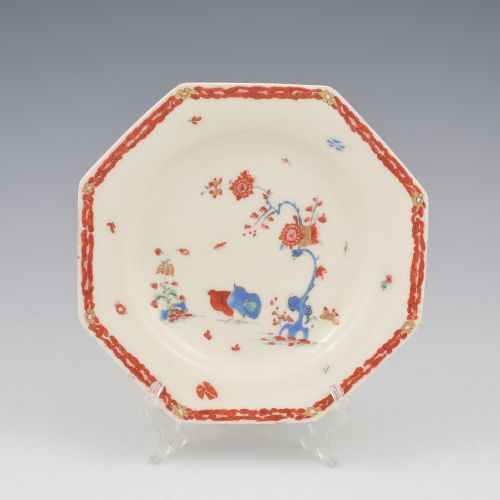
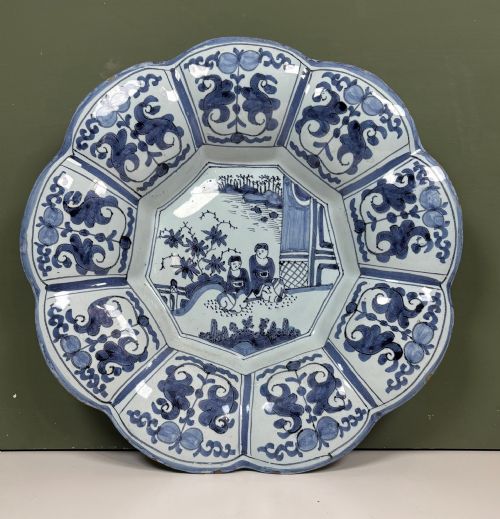
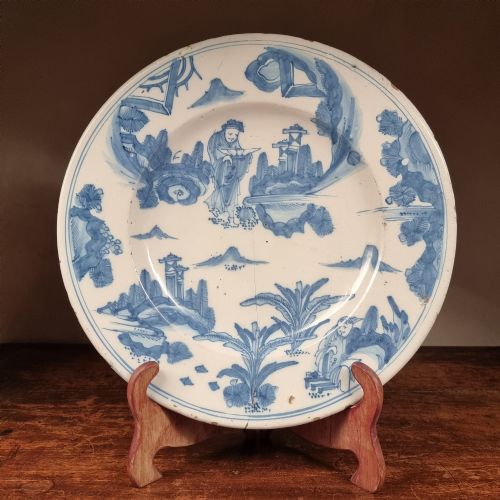
These items are ceramic plates and chargers decorated with European interpretations of East Asian landscapes, figures, and architectural motifs, rendered predominantly in blue pigment.
They encompass hand-painted delftware from the eighteenth century as well as mass-produced transferware and ironstone from the Victorian period.
How were chinoiserie blue plates used?
Many of these pieces served practical functions at dining tables for serving meats, desserts, or bread during formal meals.
Larger chargers and platters often functioned as decorative wall or sideboard display pieces to showcase wealth and taste.
How do I live with antique blue plates?
Displaying these plates on walls using coated wire hangers or standing them securely on plate racks prevents accidental damage from stacking.
Hand washing them gently avoids the aggressive detergents and thermal shock that modern dishwashers inflict on historic tin glaze and earthenware.
How do I tell periods apart?
Eighteenth-century examples often display hand-painted tin-glazed earthenware bodies with slight surface irregularities and soft cobalt bleeding.
Nineteenth-century pieces typically exhibit harder ironstone or pearlware fabrics with mechanical transfer printing and sharp, uniform blue lines.