


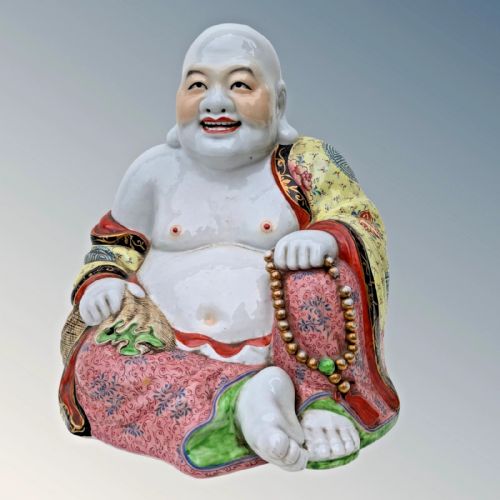


Chinese Porcelain Statue
A chinese porcelain statue brings centuries of kiln artistry into a room, capturing deities, emperors and animals in fired clay.
Chinese Porcelain Statue
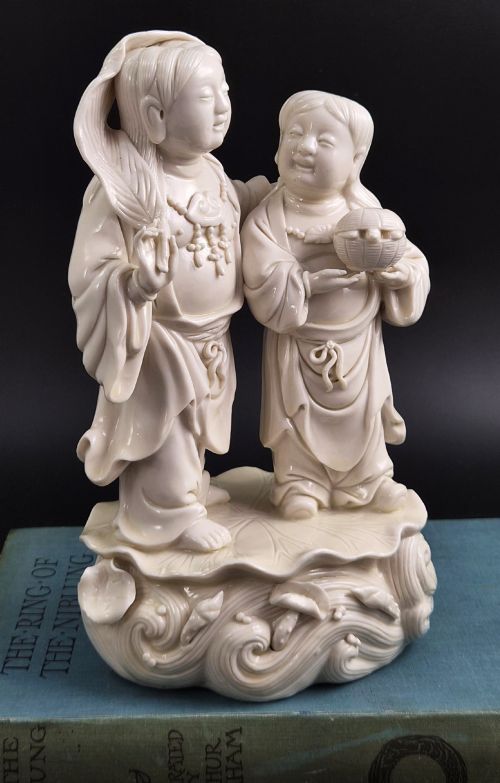
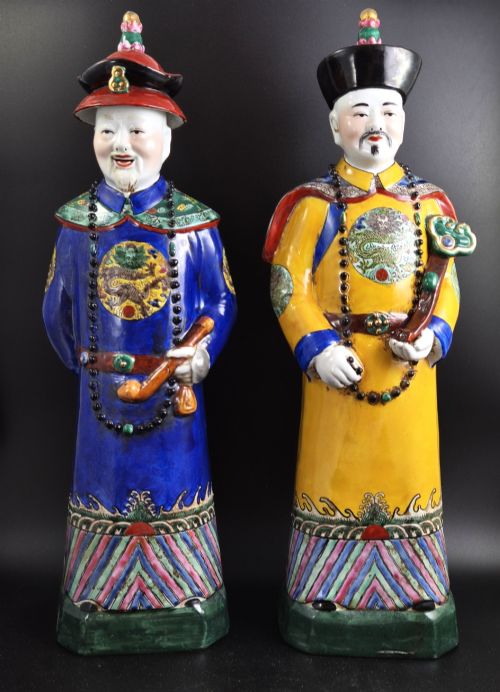
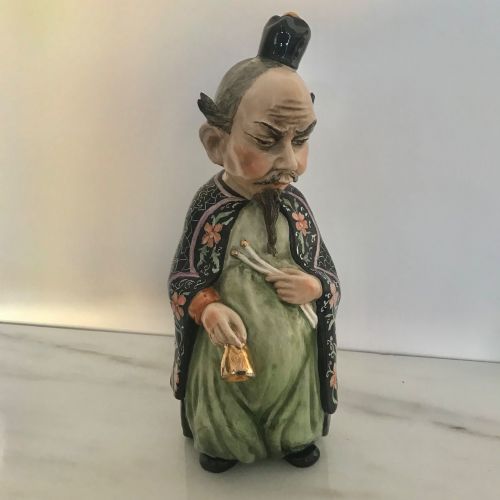
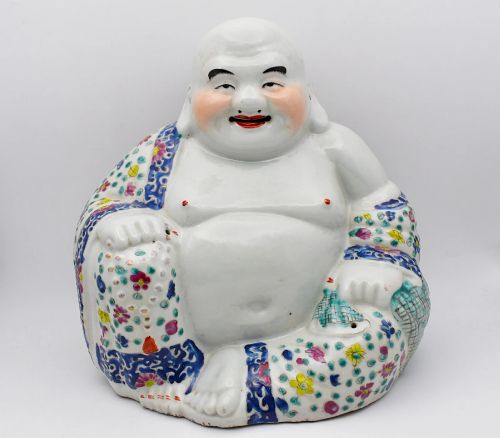
A chinese porcelain statue encompasses figures, figurines and sculptural groups modelled across the Qing dynasty, the Republic period and earlier reigns. The pieces on this page take the form of laughing Buddhas, immortals, Buddhist lions, Foo dogs, cockerels and ducks, standing singly or in pairs.
Buyers will encounter figures finished in monochrome glazes, turquoise washes, sancai palettes and polychrome famille rose enamels. These subjects draw on Buddhist, Daoist and folk traditions, originating from kilns in Jingdezhen, Dehua and Shiwan.
Materials and construction methods
Makers shaped these works from porcelain and ceramic bodies before applying liquid glazes and mineral enamels. Overglaze enamels and gilding were added in secondary firings to build up rich surface detail.
Glazed apes and laughing boys sit alongside fierce tigers, proving that historical kilns had a profound sense of humour.
Judging the range of quality
The sophistication of the facial expression and the balance of the stance separate standard decorative work from pieces produced by skilled workshops. Greater refinement in the carving and the application of overglaze pigments elevates a figure.
Zhu Mao Ji·Fujian Huiguan Mark
The Chinese Porcelain Statue Glossary
- Blanc-de-Chine
- A pure white porcelain made in Dehua, Fujian province, known for its milky glaze and smooth finish. This ceramic type was widely used for figures of Guanyin and immortals.
- Famille Rose
- A palette of opaque pink and overglaze enamel colours introduced during the Qing dynasty. The style permits subtle tonal gradations in robes and floral motifs.
- Sancai
- A three-colour glaze tradition typically combining amber, green and cream tones. This technique appears on figures styled after earlier Ming models.
- Foo Dog
- A guardian lion figure placed to protect domestic spaces. These sculptural animals often sit with one paw resting on a brocade ball or a cub.
- Wucai
- A contrasting five-colour palette using underglaze blue combined with overglaze red, green, yellow and black. It creates vibrant patterns across robes and bases.
Chinese Porcelain Statue: Frequently Asked Questions
How do I identify a Qing dynasty figure?
Look to the palette of enamels, the crackle or purity of the glaze, and the character of the modelling. Qing dynasty pieces often display famille rose colours or rich turquoise washes.
Compare the style of the base and the weight of the ceramic body with documented examples from the same period to confirm the era.
Were these statues meant for display?
Many figures served devotional, protective or decorative roles within households and temples. Immortals and Buddhas brought auspicious blessings to domestic spaces.
Animals like cockerels, ducks and Foo dogs symbolised fidelity, marital harmony and guardian protection.
How should I clean porcelain figures?
Dust the surface gently with a soft, dry brush to prevent accumulation in crevices and around delicate enamel details. Avoid harsh chemical cleaners and abrasive cloths.
Keep figures away from direct sunlight and areas subject to sudden temperature shifts to protect the glaze and any accompanying wood bases.