






Chinese Medallion Urns
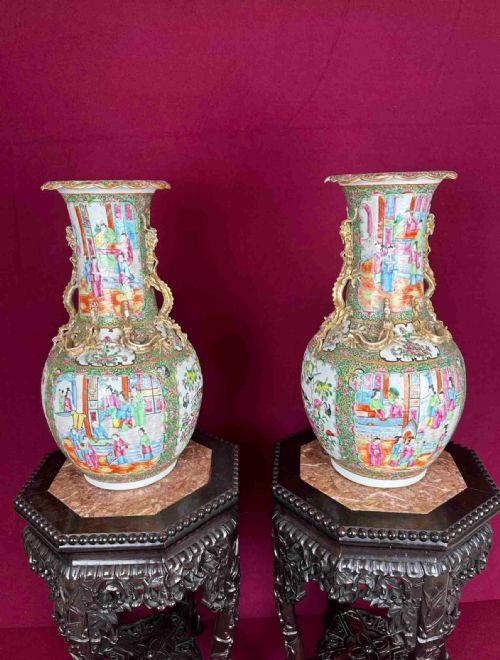
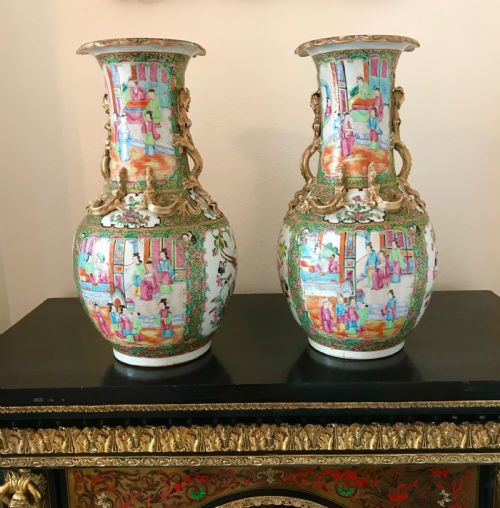
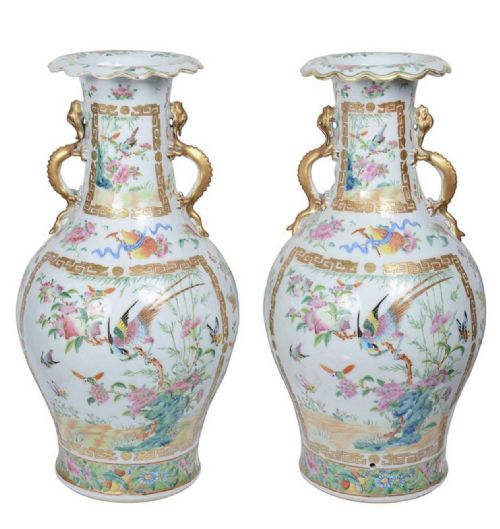
Chinese medallion urns are nineteenth-century porcelain vessels decorated with vibrant enamel panels, offering collectors intricate hand-painted scenes and rich gilt bronze mounts.
Chinese Medallion Urns
When you search for chinese medallion urns, you encounter nineteenth-century porcelain vases originating from the Qing Dynasty and Victorian periods. These pieces frequently appear as pairs of lidded vases or as large decorative vessels mounted on stands.
The objects seen here span Chinese Export and Chinoiserie styles, alongside Japanese Rose Medallion examples. Forms range from traditional temple jars to table lamps adapted with gilt bronze or brass fittings.
Vessels are constructed from porcelain and enamel, sometimes accompanied by fabric, copper, or padouk wood tables. The predominant aesthetic relies on compartmentalised painted panels depicting figures and floral motifs.
Materials and construction methods
The primary construction relies on fired porcelain shaped into vases and urns, painted with coloured enamel pigments. Gold leaf and gilt bronze provide metallic highlights and mounts that elevate the status of the vessels.
Secondary elements include brass fittings, copper details, and occasional padouk wood stands or tables. Enamel work is applied directly to the porcelain body before secondary firing stages fix the polychrome decoration.
Object forms on this page include vases, table lamps, decorative vessels, and occasional padouk tables with temple jars.
Distinctions in craftsmanship
Quality separates through the precision and density of the hand-painted enamel panels. Finer examples display meticulous brushwork within the medallion borders, whereas simpler pieces show broader application.
The integration of metal mounts, such as gilt bronze or brass, dictates overall finish. Superior specimens retain original mounting hardware that complements the proportions of the porcelain body.
The Chinese Medallion Urns Glossary
- Rose Medallion
- A distinct style of nineteenth-century porcelain decoration featuring panels filled with figures, birds, and flowers. These panels are typically arranged around a central medallion on a ground of green foliage and butterflies.
- Canton
- A major port city in China associated with export porcelain production for Western markets. Pieces from this region often combine intricate enamel painting with characteristic gilt highlights.
- Cloisonné
- A metalwork technique where enamel paste is applied within compartments created by soldered wire. This method appears on distinct vases from the early twentieth century.
- Gilt Bronze
- Metal cast in bronze and treated with a gold application to provide a lustrous surface. It frequently serves as mounts for nineteenth-century lamps and large vases.
- Padouk
- A dense tropical hardwood utilised for tables and stands supporting oriental porcelain. The wood provides a dark, stable base that contrasts with the bright colours of the vases.
Chinese Medallion Urns: Frequently Asked Questions
How are chinese medallion urns dated?
Dating relies on stylistic markers from the nineteenth century, including Victorian import periods and Qing Dynasty production traits. Examining the enamel palette and porcelain body helps confirm the era.
Changes in mount materials, such as early brass or gilt bronze, also assist in establishing the age of the piece.
Can these vases be used as lamps?
Many nineteenth-century examples are adapted into table lamps using gilt bronze mounts and electrical fittings. This conversion often occurred during the Victorian period to suit domestic interiors.
Such adaptation preserves the decorative porcelain body while making the vessel functional for modern rooms.
Where were these pieces made?
Production centres include Canton in China, alongside Japanese workshops influenced by export demands. These items were created specifically for international markets during the nineteenth century.
Export wares reflect a blend of traditional Eastern techniques and Western decorative preferences of the period.