
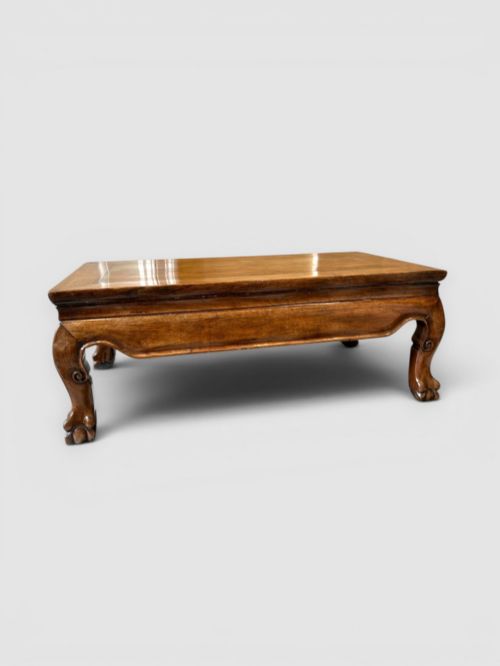


Chinese Low Tea Table
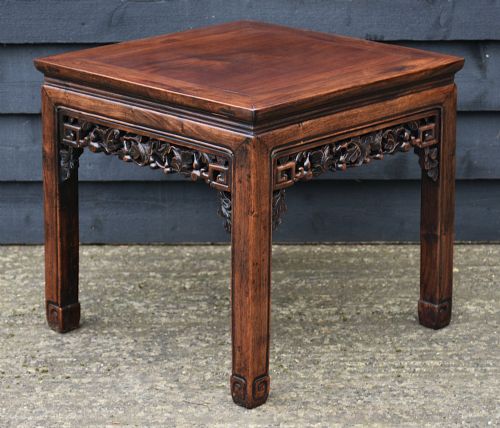
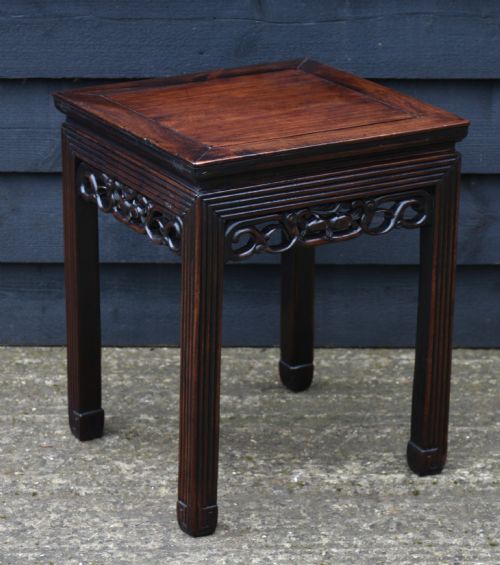
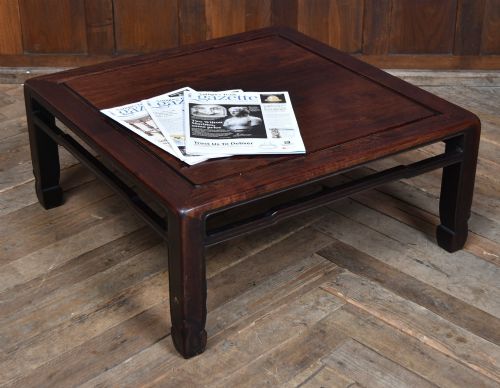
A chinese low tea table brings grounded proportion and dense timber grain to a room, serving comfortably as a low coffee surface.
Chinese Low Tea Table
A chinese low tea table sits close to the floor, adopting forms traditionally used for serving tea, dining, or relaxing upon heated platforms. These pieces appear most frequently in nineteenth century and early twentieth century manifestations, reflecting Qing dynasty traditions and export production.
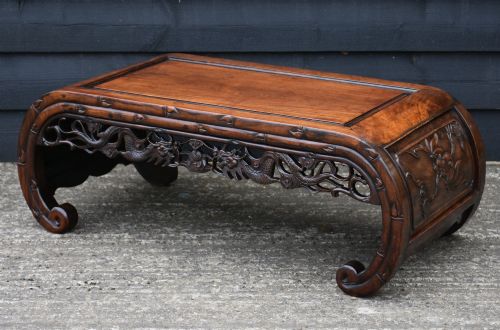
The selections here range from square and rectangular coffee configurations to circular surfaces and scroll-end kang tables. Elm and various oriental hardwoods dominate the offerings, providing low profiles suited to contemporary living spaces.
Materials and Construction
Cabinetmakers constructed these tables using dense timbers such as rosewood, padouk, huanghuali, hongmu, and elm. These durable woods allowed for stable joinery without excessive bulk.
Surfaces received either clear finishes that emphasised natural grain and rich patina, or applications of red, black, and gilt lacquer. Selected examples incorporate carved dragon motifs and scroll ends.
The inventory records traditional Qing dynasty forms alongside export pieces designed specifically for Western domestic interiors.
Judging Quality
The distinction between ordinary and superior examples rests in the choice of timber and the crispness of carved details. Dense rosewood and figured huanghuali command attention for their weight and depth of colour.
Proportion and joinery integrity dictate overall standing. Tables retaining a deep, undisturbed patina and restrained ornamentation demonstrate superior craftsmanship.
The Chinese Low Tea Table Glossary
- Kang table
- A low platform table designed to sit atop a heated brick bed or floor in traditional dwellings. These pieces typically feature scroll ends and compact proportions.
- Opium table
- A common historical descriptor for low tables used for dining or smoking while reclining. They share the low stance of kang tables.
- Padouk
- A heavy, reddish-brown tropical hardwood prized for stability and rich colour. It appears frequently in nineteenth century export furniture.
- Huali
- A traditional Chinese term for fragrant hardwoods, encompassing several species of rosewood. It displays complex, highly figured grain patterns.
Chinese Low Tea Table: Frequently Asked Questions
What is a chinese low tea table used for?
These tables function well as low coffee tables in modern living rooms, placed before low sofas or seating areas. Their modest height creates an open, grounded feel in a room.
Historically, occupants used them for partaking in tea, writing, or resting upon platforms and mats.
How do I identify a kang table?
Kang tables typically feature distinctive scroll ends or upturned flanges along the short sides of the rectangle. They stand noticeably lower than standard occasional furniture.
Their proportions relate directly to sitting or kneeling on low domestic platforms.
What woods were used for these tables?
Craftsmen utilised various oriental hardwoods, including rosewood, padouk, hongmu, and huanghuali. These dense timbers provided natural strength and attractive grain.
Elm served as a popular choice for rustic country pieces, offering a distinct fibrous texture.
Are lacquered finishes authentic?
Lacquered surfaces appear on genuine period pieces finished in red, black, or gilt schemes. Chinoiserie interpretations also emerged during the Edwardian era.
These finishes required multiple coats applied over timber bases to achieve a smooth, resilient sheen.