


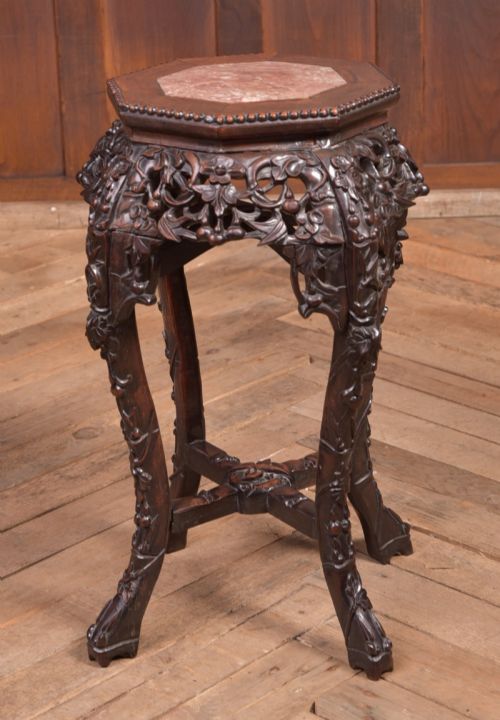
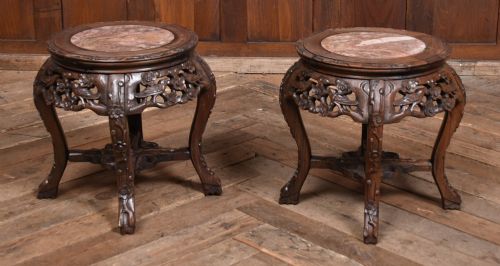



Chinese Jardiniere Pedestal Table
A Chinese jardiniere pedestal table elevates heavy ceramic planters and bronze urns using dense exotic timbers inset with cool stone.
Chinese Jardiniere Pedestal Table
A Chinese jardiniere pedestal table serves primarily as an elevated platform for display, functioning variously as a plant stand, vase stand, urn holder, or side table in domestic interiors. These pieces appear frequently in nineteenth-century and early twentieth-century variations, spanning the Victorian and Edwardian eras through to the Republic period.
The prevailing form on this page combines a sturdy wooden frame with a circular or multi-sided inset top designed to support substantial weight without tipping. Such tables emerge under descriptions ranging from plant stands to occasional lamp tables, reflecting how nineteenth-century and later households adapted imported oriental furnishings for everyday European room settings.
Materials and construction
Carpenters constructed these stands using dense tropical timbers such as padouk, rosewood, mahogany, and general hardwood, often applying ebonised finishes or lacquer to the surfaces. These heavy woods provided the structural rigidity necessary to support solid stone inserts without warping under pressure.
Many examples feature contrasting circular marble or rouge marble panels inset directly into the timber frame, providing a cool, stable surface for damp plant pots or heavy ceramic vessels. Artisans carved the surrounding wooden skirts and cabriole or straight legs with intricate floral and foliate motifs characteristic of Qing Dynasty styles and Chinese export production.
Chinese Jardiniere Pedestal Table Retail Price Guide 2026
Typical asking prices for chinese jardiniere pedestal table among the pieces listed under this phrase on Sellingantiques today, from the lower quarter to the upper quarter. They describe what is for sale here now, not the wider market.
Materials documented across the available pieces include heavy hardwoods, rosewood, padouk, mahogany, and ebonised timber paired with marble.
Assessing quality and craftsmanship
The standard of a Chinese jardiniere pedestal table depends heavily on the density and choice of timber, with richly figured rosewood and heavy padouk representing finer production than general hardwood. The depth and crispness of the wood carving also distinguish superior workshops, where foliage and structural joints show deliberate hand-cut precision rather than soft, mechanical rounding.
The integration of the marble insert dictates much of the physical balance, with tightly fitted, high-grade stone indicating better original craftsmanship. Tables demonstrating more complex structural joinery and heavier overall proportions tend to hold their presence in a room more effectively than lighter, simpler plant stands.
The Chinese Jardiniere Pedestal Table Glossary
- Jardiniere stand
- A tall, small-surface table specifically designed to hold an ornamental flower pot or ceramic jardiniere. These pieces keep heavy or damp planters raised safely off textile floor coverings.
- Padouk
- A heavy, durable tropical hardwood prized for its reddish-brown colour and strength. It forms the structural core of many export tables.
- Rouge marble
- A deep red or reddish-brown decorative limestone with white or grey veining. It is frequently set into the tops of nineteenth-century oriental tables.
- Qing Dynasty style
- A design aesthetic reflecting the decorative conventions of China's final imperial dynasty, marked by deep carving and natural motifs. Pieces in this style often reached Western markets via nineteenth-century trade routes.
Chinese Jardiniere Pedestal Table: Frequently Asked Questions
What is a Chinese jardiniere pedestal table used for?
These tables were built to support heavy ceramic flower pots, bronze urns, and decorative vases within a reception room or hallway. Their raised tops kept damp plant pots safely away from polished wooden floors and expensive carpets.
Over time, owners also repurposed them as occasional lamp tables or side tables for displaying decorative objects. Their compact footprints allow them to fit into tight corners and alcoves where a standard table would not go.
How do I identify a Qing Dynasty style table?
Qing Dynasty style tables usually feature dense tropical hardwoods like rosewood or padouk, combined with deep, detailed hand carvings of natural motifs. They often incorporate inset marble panels designed to handle the weight and moisture of large ceramic planters.
Many examples date from the late nineteenth century, reflecting the steady flow of Chinese export goods into British and European homes during the Victorian and Edwardian periods.
Can these tables support heavy lamps?
Their original purpose of holding heavy ceramic planters filled with soil means these stands are structurally suited to support substantial table lamps. The heavy timbers and stable marble tops prevent tipping under uneven weight distributions.
However, buyers should check the diameter of the top surface to ensure a lamp base sits securely within the raised wooden rim or stone perimeter without overhanging.
What woods were used to make them?
Cabinetmakers utilised dense exotic hardwoods including rosewood, padouk, and mahogany, alongside general hardwood and ebonised timber. These heavy materials were selected to bear the considerable weight of stone inserts and large ceramic vessels.
Some examples also feature applied lacquer finishes or dark stains designed to mimic the appearance of rarer native Chinese timbers intended for export markets.