



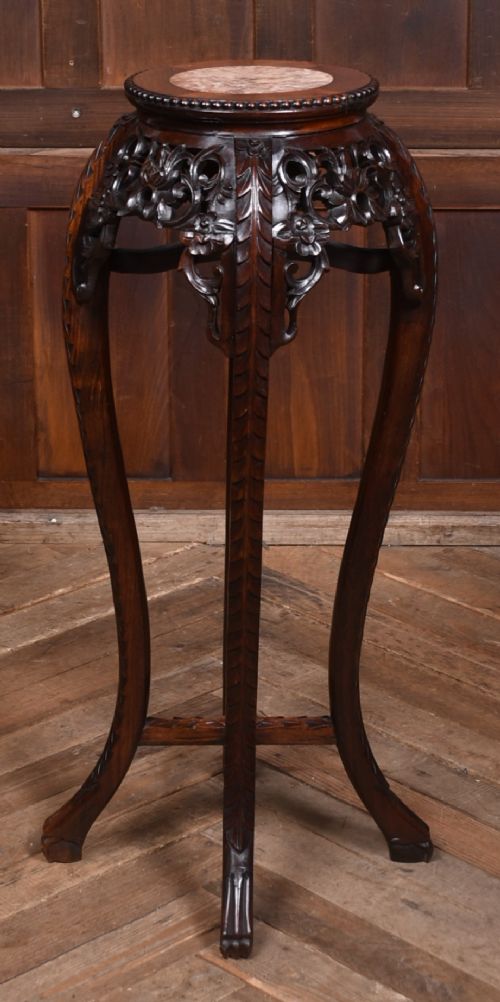


Carved Rosewood Vase Stand
These carved rosewood vase stand pieces are traditional Chinese hardwood supports designed to elevate jardinieres and decorative vessels with genuine craftsmanship.
Carved Rosewood Vase Stand
A carved rosewood vase stand provides a solid and decorative platform designed to elevate planters, jardinieres, and display items. When searching for a carved rosewood vase stand, buyers encounter pieces originating from the nineteenth century through to the early decades of the twentieth century. These furnishings take the form of plant stands, pedestal tables, and low display supports.
The objects on this page largely reflect Chinese export and Qing dynasty traditions, spanning periods from the Victorian era up to nineteen thirty. Forms vary from small wine and lamp tables to substantial urn stands and jardiniere supports. Most examples incorporate inset stone tops or heavily carved wooden surfaces suited for traditional display.
Buyers are most likely to meet nineteenth-century examples alongside late nineteenth-century items representing Chinese traditional and Qing dynasty styles. These objects serve both utilitarian and aesthetic functions within an interior scheme, offering sturdy support for heavy ceramic vessels.
Materials and construction methods
The construction relies heavily on dense exotic hardwoods such as rosewood, huali wood, and hongmu, chosen for their ability to sustain intricate hand-carving without splitting. Artisans utilised traditional joinery techniques to frame the wooden structures, ensuring stability under heavy weight.
Carved Rosewood Vase Stand Retail Price Guide 2026
Typical asking prices for carved rosewood vase stand among the pieces listed under this phrase on Sellingantiques today, from the lower quarter to the upper quarter. They describe what is for sale here now, not the wider market.
Listings feature items spanning the nineteenth century, Victorian era, and nineteen thirty, constructed from hard woods, marble, rosewood, huali wood, and hongmu.
Distinctions in craftsmanship and materials
Quality separates pieces through the depth and crispness of the hand-carving, where superior examples display sharp undercut details rather than shallow, machine-like impressions. The selection of the timber also dictates value, with dense, highly figured huali wood and heavy hongmu commanding greater appreciation than simpler domestic hardwoods.
The integrity of the structural joints and the matching of the inset marble top to the wooden rebate determine the overall standard of manufacture. Better items maintain tight joinery and stable frames that support weight evenly across the pedestal or legs.
The Carved Rosewood Vase Stand Glossary
- Rosewood
- A heavy, dense tropical timber prized for its rich grain and dark colour. It provides the structural strength required for intricate carving.
- Hongmu
- A category of dense Chinese hardwoods translating to red wood. This material was frequently used for high-status furniture and display stands.
- Jardiniere stand
- A tall or low table specifically designed to hold a large ornamental flower pot or jardiniere. These stands often feature water-resistant stone insets.
- Huali wood
- A prized Chinese hardwood noted for its distinctive figuring and durability. It forms the basis of many fine nineteenth-century export pieces.
- Marble top
- A polished stone insert fitted into the surface of a table or stand. This feature provides a stable, heat-resistant, and decorative platform for vessels.
Carved Rosewood Vase Stand: Frequently Asked Questions
What is a carved rosewood vase stand used for?
These stands serve primarily to elevate heavy ceramic vessels, urns, and plant pots above floor level. By raising the container, the stand protects delicate surfaces and draws the eye to the decorative object placed upon it.
Historically, they functioned within traditional interiors as dedicated display furniture for prized porcelain and plants. Today, they adapt easily to modern rooms as small side tables for lamps or decorative objects.
How do I date a carved rosewood vase stand?
Dating relies on examining the timber density, tool marks left by the maker, and the specific stylistic cues of the carving. Nineteenth-century and Qing dynasty examples typically display hand-cut joinery and heavy, patinated hardwood.
Later pieces from the early twentieth century or Republic period often show slight shifts in decorative motifs and construction methods. Comparing the hardware, if any exists, and the wear patterns helps confirm the age of the wood.
Are marble top stands suitable for daily use?
The inset marble top provides a durable and water-resistant surface that handles potted plants and heavy vases with ease. The stone resists moisture and scratches better than polished wood alone.
Owners should still use caution with standing water and heavy impacts to protect both the stone and the surrounding wooden frame. Regular dusting and occasional wax maintenance keep the timber and marble in good condition.
How do Qing dynasty stands differ from later ones?
Qing dynasty and late nineteenth-century stands generally feature heavier timbers like hongmu and deeper, more traditional relief carving. The craftsmanship reflects strict adherence to classic Chinese furniture forms and joinery.
Stands from the early twentieth century or later periods may exhibit simpler decorative schemes or lighter construction. Examining the weight, wood grain, and carving depth clarifies these distinctions.