




Chinese Hardwood Coffee Table
A Chinese hardwood coffee table brings sculptural form and rich timber grain to a room, rooted in centuries of traditional craftsmanship.
Chinese Hardwood Coffee Table
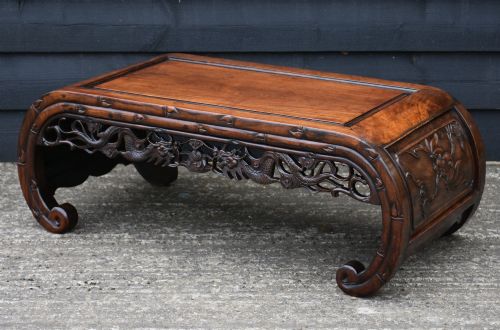
A Chinese hardwood coffee table represents a fusion of traditional Asian furniture forms and modern living requirements, often manifesting as low tables, kang tables, or opium tables adapted for contemporary spaces. These pieces frequently date from the nineteenth century up to the early twentieth century, spanning late Qing Dynasty production and early twentieth-century export wares.
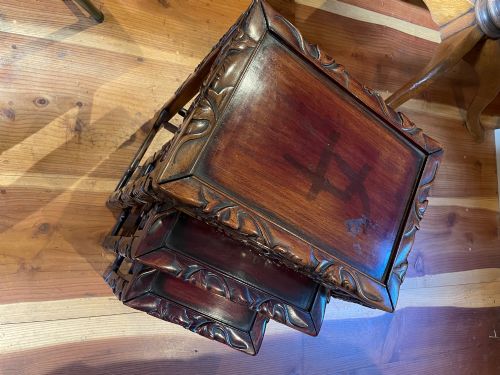
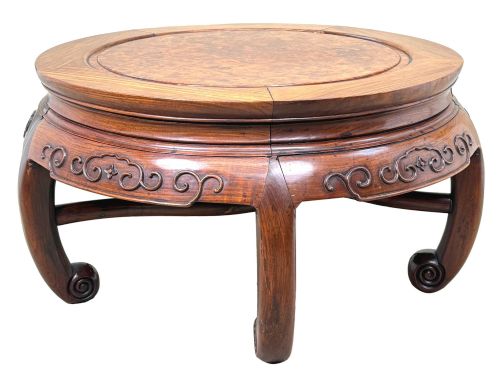
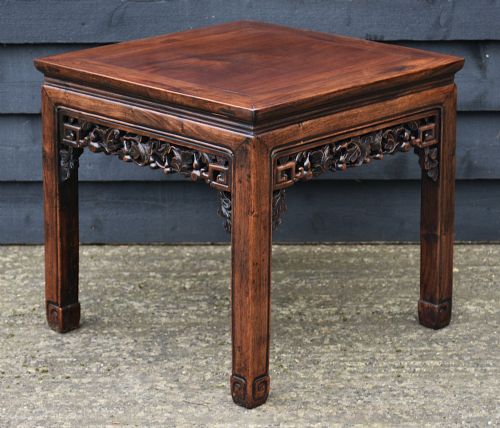
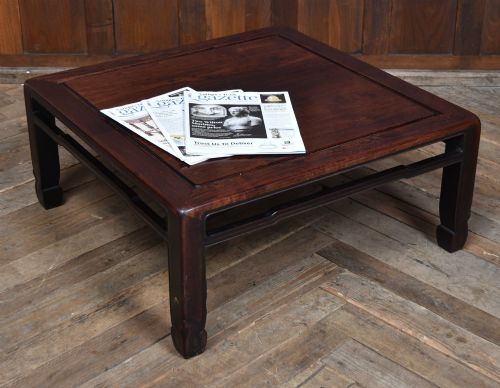
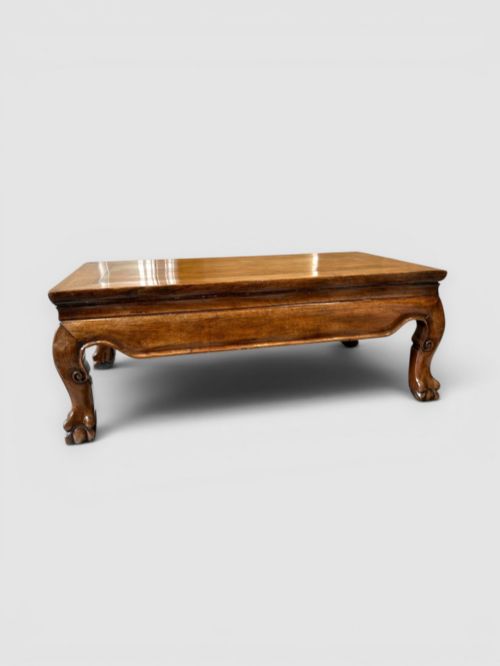
Buyers encounter a variety of structural formats on this page, ranging from single rectangular low tables to nests of four graduated tables and circular reception surfaces. They serve practical domestic functions while displaying characteristic regional woodworking styles such as Chinese Export and traditional Qing designs.
How they were made
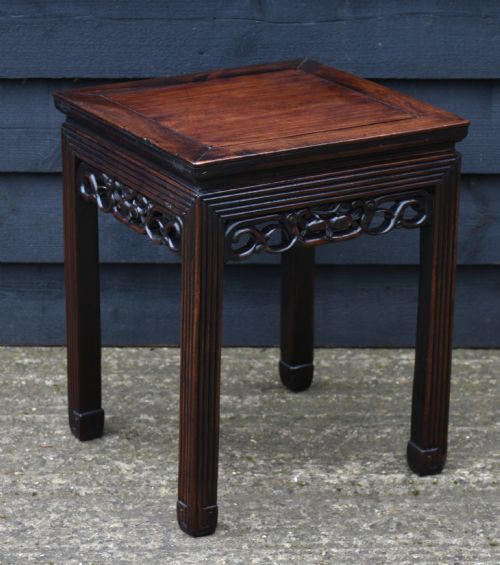
The construction relies on dense, durable timbers such as rosewood, padouk, elm, and hongmu, often selected for deep natural colour and pronounced grain. Artisans utilised traditional joinery methods alongside detailed hand carving, depicting motifs like dragons and scroll ends.
Surface finishing involves highlighting the natural patina of the wood, sometimes paired with inset marble panels or ebonised treatments to create textural contrast.
Chinese Hardwood Coffee Table Retail Price Guide 2026
Typical asking prices for chinese hardwood coffee table among the pieces listed under this phrase on Sellingantiques today, from the lower quarter to the upper quarter. They describe what is for sale here now, not the wider market.
Many tables owe their low stance to centuries-old heated brick beds in northern homes.
What varies in quality
Quality rests in the crispness of the hand carving and the selection of the timber, where dense grain and good natural patina elevate an example above standard production. The integrity of the traditional joinery and the balance of proportions distinguish finer workshops from simpler utility pieces.
The Chinese Hardwood Coffee Table Glossary
- Kang table
- A low platform table traditionally used on a heated brick bed in northern China for sitting, dining, or writing. These low formats translate readily into modern coffee tables.
- Opium table
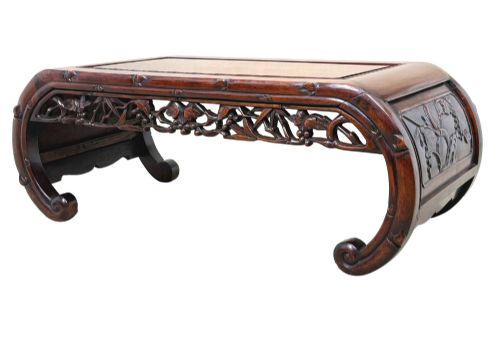
- A common descriptor in the trade for low rectangular or square tables with scroll ends or cabriole legs. They share proportions similar to traditional kang furniture.
- Hongmu
- A translation meaning red wood, referring to a category of dense, heavy tropical hardwoods used in traditional Chinese furniture. It typically exhibits a deep reddish-brown tone.
- Padouk
- A sturdy tropical timber valued for its stability and rich red or brown coloration. It responds well to detailed carving on nineteenth-century tables.
- Huali
- A traditional Chinese term for fragrant hardwoods, often associated with rosewood species used in fine scholarly and domestic furnishings.
Chinese Hardwood Coffee Table: Frequently Asked Questions
What is a kang table?
A kang table is a low household surface originating from northern China, traditionally placed on a sleeping platform or raised brick bed for domestic tasks.
Today, these low proportions make them ideal for modern coffee tables, offering a compact footprint and distinct historical character.
How do I care for hardwood tables?
Hardwood surfaces require minimal maintenance beyond regular dusting with a soft, dry cloth to protect the natural finish and patina.
Avoid placing them in direct sunlight or near extreme heat sources to prevent the timber from drying out or splitting.
What woods were used?
Tables on this page utilise dense Asian timbers including rosewood, padouk, elm, and hongmu.
These woods were chosen for their structural strength, heavy weight, and rich grain patterns that respond well to hand carving.
Are these tables antique?
The pieces listed span the nineteenth century, the Edwardian era, and the early twentieth century, encompassing late Qing Dynasty production.
Dates are determined by construction methods, timber choice, and stylistic characteristics recorded across the inventory.