




Chinese Export Porcelain Lamp
These Chinese export porcelain lamps bring centuries of ceramic artistry and refined mounting into modern interiors.

Chinese Export Porcelain Lamp
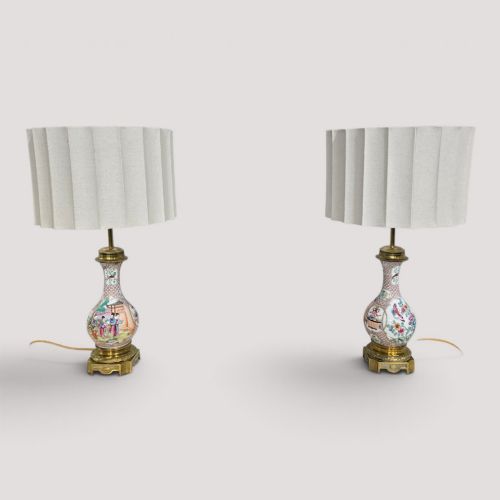
A chinese export porcelain lamp adapts antique vessels into functional lighting for domestic spaces. These pieces transform decorative vases, ginger jars, and lidded vessels into table lamps through careful electrical conversion.
The selections on this page draw predominantly from the eighteenth and nineteenth centuries. Many examples feature elaborate hand-painted palettes including famille rose, celadon, and blue and white designs.
Vessels originating from Canton and Japanese workshops appear alongside European interpretations. Collectors encounter both single statement lamps and matching pairs suited for sideboard or console placement.
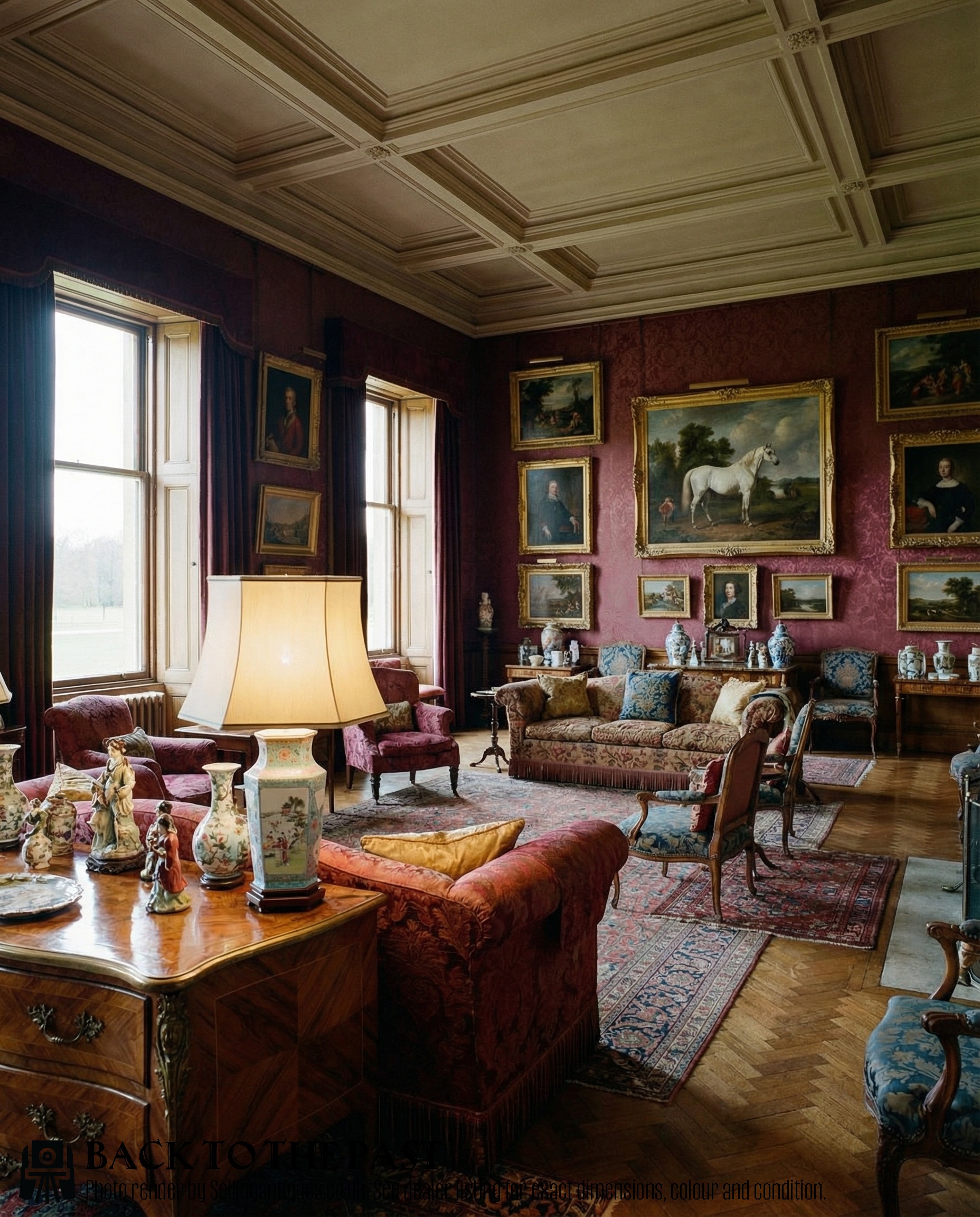
Materials and construction methods
The underlying bodies consist of hard-paste porcelain decorated with underglaze cobalt or vibrant overglaze enamel pigments. Artisans applied detailed floral, figural, and narrative motifs directly onto the ceramic surface before firing.
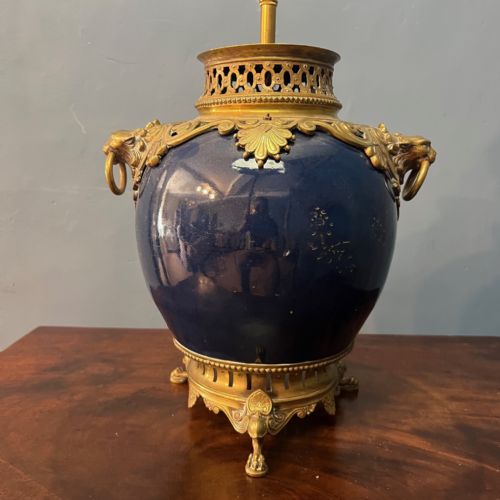
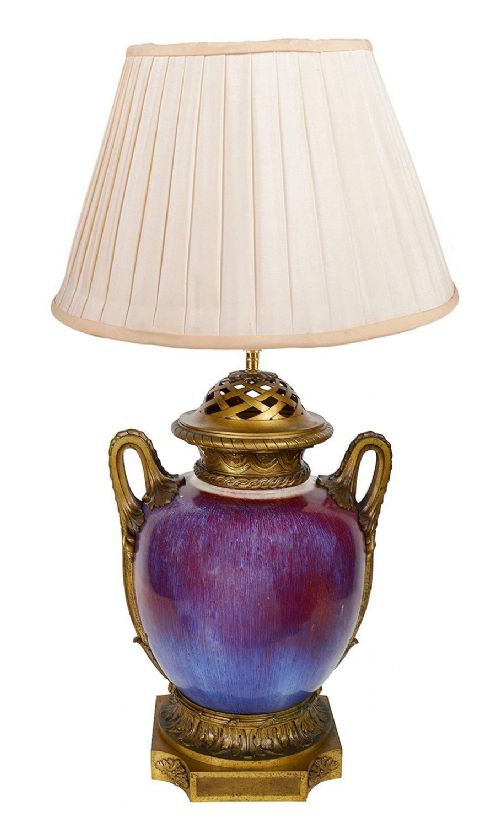
Metal mounts in brass, ormolu, and gilt bronze provide structural support and aesthetic enhancement. These metalwork additions frequently secure the base and top fittings, reflecting the interior tastes of the nineteenth century.
Fabric shades in silk and standard textiles complete the assemblage. Rewiring accompanies many conversions to ensure safe operation while retaining the historic ceramic body.
Chinese Export Porcelain Lamp Retail Price Guide 2026
Typical asking prices for chinese export porcelain lamp among the pieces listed under this phrase on Sellingantiques today, from the lower quarter to the upper quarter. They describe what is for sale here now, not the wider market.
Ginger jars originally held spices and preserves before finding a second life illuminating nineteenth-century reading rooms.
Assessing quality in mounted lamps
The crispness and density of hand-painted enamel work dictate the visual strength of the porcelain body. Superior pieces display precise brushwork, balanced colour palettes, and well-preserved gilding across complex floral and figural scenes.
The quality of the metal mounts shapes the overall integrity of the piece. Finely chased ormolu and substantial brass fittings indicate careful workshop production rather than utilitarian conversion.
Condition and completeness matter significantly when evaluating pairs. Matching vases with intact covers, stable porcelain, and complementary mounts represent the peak of this category.
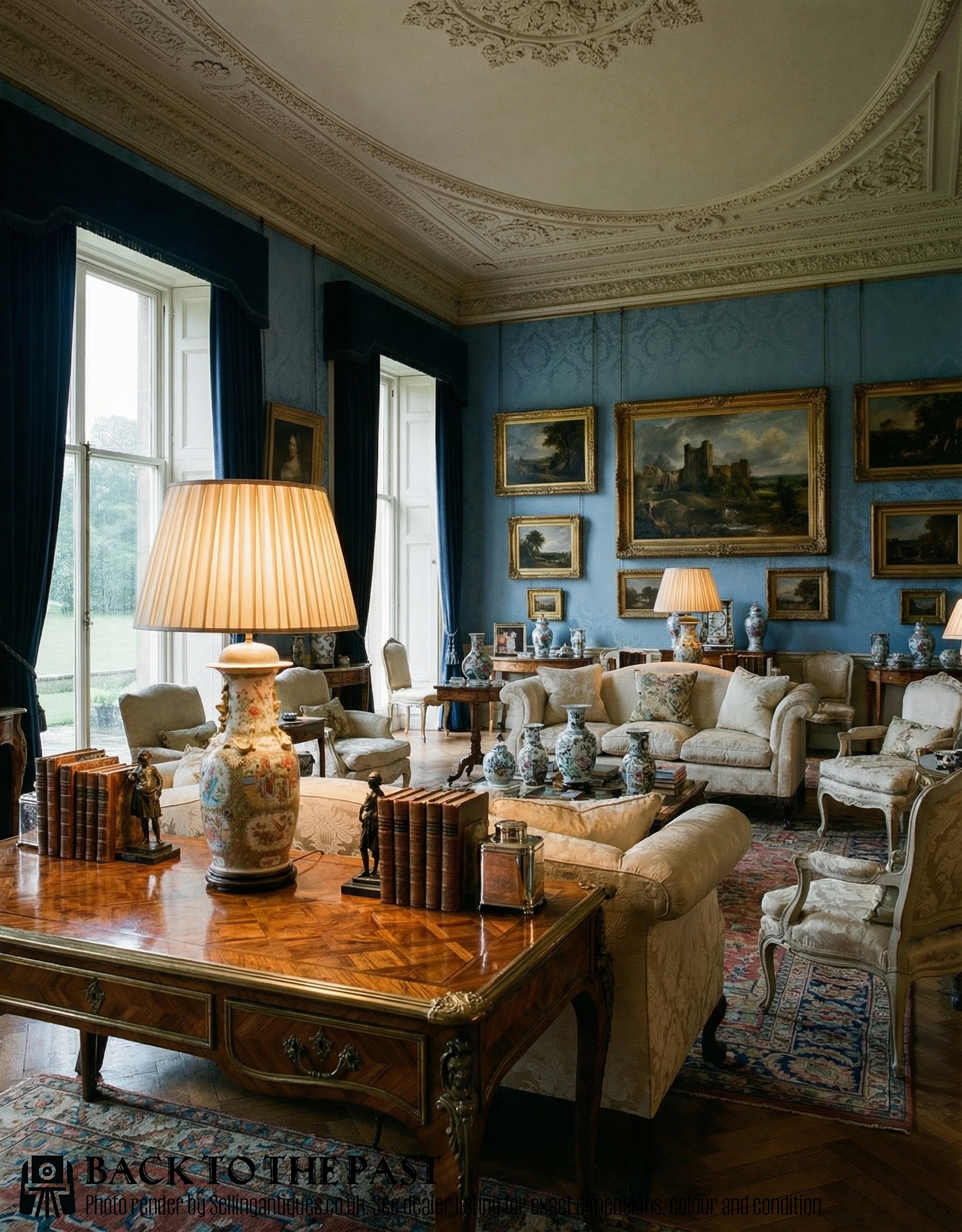
The Chinese Export Porcelain Lamp Glossary
- Famille rose
- A prominent enamel colour palette dominated by opaque pink or rose tones. Introduced during the Qing dynasty, it allowed for subtle shading and intricate floral depictions.
- Ormolu
- Finely ground high-carat gold applied to a bronze base. This decorative technique adds a warm metallic lustre to mounts and decorative trims.
- Celadon
- A transparent jade-green glaze over a pale grey or white clay body. The subtle cracking or crazing within the glaze surface develops naturally during the cooling process.
- Ginger jar
- A high-shouldered storage vessel with a domed lid. These sturdy jars provide balanced proportions well-suited for table lamp conversions.
- Cloisonné
- An ancient metalworking technique employing wire partitions filled with vitreous enamel paste. Pieces featuring this method combine colourful enamel cells with polished bronze outlines.
Chinese Export Porcelain Lamp: Frequently Asked Questions
How do I care for my lamp?
Dust the porcelain body gently with a dry, soft cloth to prevent particulate buildup. Avoid harsh chemical cleaners that might degrade delicate overglaze enamels and historic gilding.
Inspect the electrical wiring periodically to ensure safe daily operation. Keep the lamp away from direct sunlight to protect fabric shades and maintain pigment stability.
Are these lamps converted antique vases?
Many examples begin life as decorative vessels, ginger jars, or lidded urns before receiving professional electrical fittings. This adaptive practice preserves historic ceramics while giving them a functional domestic purpose.
Conversion methods vary from piece to piece depending on the original vessel shape. The underlying porcelain retains its historic character beneath the added hardware.
Can I find matching pairs?
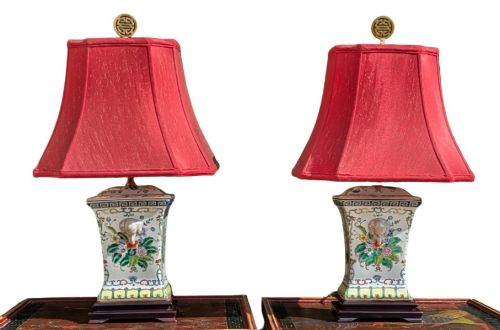
Matching pairs appear frequently among nineteenth-century Cantonese and Rose Medallion selections. These balanced sets suit placement on twin side tables or flanking a fireplace mantel.
Slight variations in hand-painted details often confirm the authentic antique nature of paired vessels. Artisans completed each hand-decorated piece individually rather than through industrial replication.
What periods are represented here?
The inventory spans the eighteenth and nineteenth centuries, with particular concentration in the eighteen-hundreds. Pieces reflect evolving export aesthetics from Qing dynasty workshops up to later nineteenth-century production.
European revival styles from the same era also feature prominently in the selection. These include French interpretations that incorporate elaborate gilt bronze mounts.