
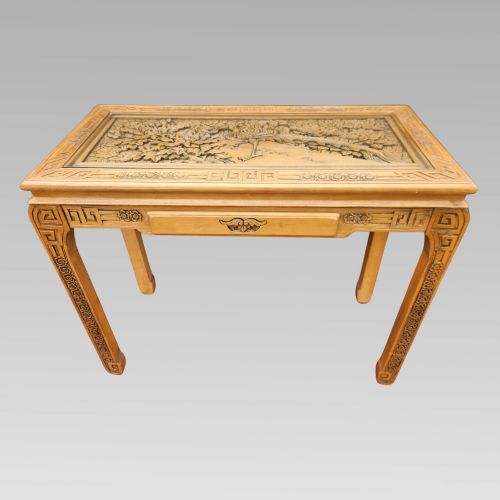


Chinese Entry Console Table
A chinese entry console table brings quiet structure to a hallway, offering a surface of elm, hardwood, or lacquer that grounds an interior.
Chinese Entry Console Table
A chinese entry console table spans several distinct forms in the listings, predominantly appearing as altar tables, console tables, and side cabinets. These pieces serve immediate practical placement in hallways and living spaces while drawing on traditional regional and imperial designs.
The materials and periods represented stretch from the nineteenth century into the early twentieth century, taking in Qing Dynasty pieces, provincial elm furniture, and export lacquer work. Buyers will frequently encounter rectangular elm tables alongside carved hardwood altar tables and red lacquered surfaces.
Materials and construction
Construction relies heavily on traditional timbers such as elm, camphorwood, and dense hardwoods, often paired with brass hardware. Artisans shaped these woods into console and altar forms using joinery suited to structural longevity.
Surface treatments range from clear finishes that highlight the grain of elm and rosewood to rich layers of red lacquer. Some examples incorporate glass panels or detailed wood carving reflecting regional craftsmanship and export traditions.
Listings span the nineteenth century and the early twentieth century, featuring elm, camphorwood, and red lacquer.
Distinctions in quality
Quality rests upon the integrity of the timber and the crispness of any carved decoration, whether executed in elm or hard timber. Pieces reflecting specific Qing Dynasty design idioms or regional traditions show greater refinement in their proportions.
The condition of the finish, from polished hardwood to lacquered surfaces, distinguishes standard examples from those retaining finer patination. Structural soundness in the legs and stretcher joints also determines the calibre of each console.
The Chinese Entry Console Table Glossary
- Altar table
- A traditional rectangular form with upturned flanges at the short ends, originally designed for ritual use but well suited to hallway placement.
- Elm
- A resilient domestic timber favoured for provincial furniture, known for its distinct grain pattern and structural strength.
- Lacquer
- A durable resin coating applied in multiple layers, frequently tinted red in export and regional pieces.
- Qing Dynasty
- The final imperial dynasty of China, spanning the seventeenth to the early twentieth century, whose stylistic vocabulary heavily influences these tables.
- Demi-lune
- A half-moon shaped table designed to stand flat against a wall, appearing in nineteenth-century hardwood formats.
Chinese Entry Console Table: Frequently Asked Questions
What is a chinese entry console table used for?
These tables provide a narrow surface in hallways and reception rooms for lamps, decorative objects, or correspondence.
Their restrained depth allows them to fit circulation spaces where standard tables would obstruct movement.
How do I identify a Qing Dynasty console?
Qing Dynasty tables often feature carved hardwood, structured joinery, and formal proportions reflecting imperial or regional tastes.
Many examples from this era date to the nineteenth century and display traditional altar or rectangular formats.
Are these tables made of solid wood?
The listings consist primarily of solid timbers including elm, camphorwood, and various dense hardwoods.
Surface finishes range from clear polish on natural grain to red lacquer applications.
Where should I place a console table?
A console sits comfortably against an entrance hallway wall, often paired with a mirror or art above.
They also function in living spaces as side tables or writing surfaces depending on the tabletop configuration.