

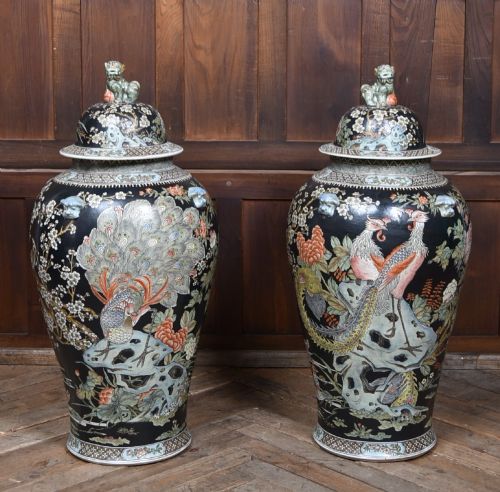



Chinese Covered Urns
Chinese covered urns bring together centuries of ceramic artistry and metalwork, offering striking focal points for a traditional or eclectic interior.
Chinese Covered Urns
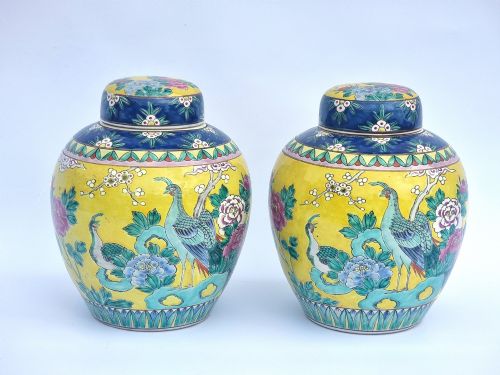
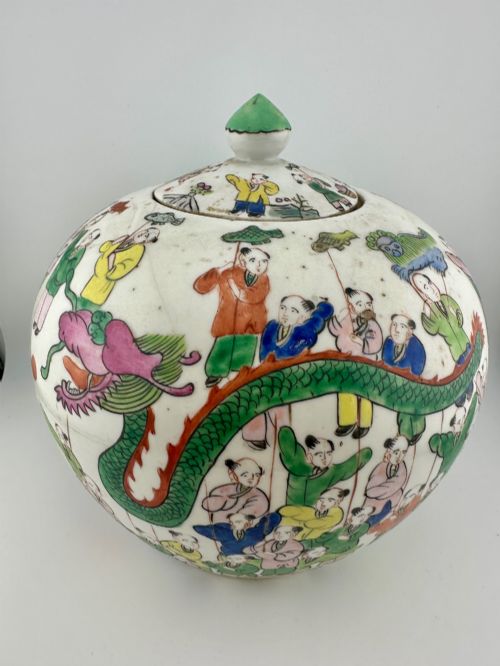
Chinese covered urns encompass a diverse selection of lidded vessels, ginger jars, and temple jars spanning several centuries of production. When searching for Chinese covered urns, collectors encounter everything from early pottery pieces with covers to grand nineteenth-century porcelain examples and later twentieth-century interpretations.
The forms range from compact ginger jars to large palace floor jars, often accompanied by matching covers that complete the silhouette. Many of these vessels reflect specific historical periods, including the Qing Dynasty, the Republic Period, and earlier dynastic styles.
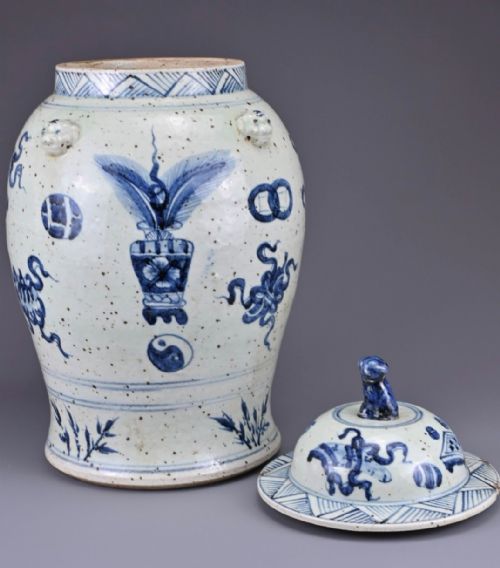
Makers utilised various object types, including ovid jars and kamcheng jars, sometimes paired with stands or mounts. The visual language draws heavily on traditional motifs, blue and white painting, and intricate polychrome enamel schemes.
Materials and methods
Porcelain serves as the primary substrate for the majority of these vessels, shaped and fired at high temperatures before receiving cobalt glaze or hand-painted enamel decoration. Artisans applied cobalt blue beneath the glaze to achieve deep, permanent blue and white designs.
Cloisonné enamel represents another prominent technique, where thin metal wires form compartments on a brass or copper body before being filled with enamel paste and fired. Some pieces incorporate supplementary materials such as gold leaf, ormolu mounts, and fitted wooden stands carved from padouk wood.
Chinese Covered Urns Retail Price Guide 2026
Typical asking prices for chinese covered urns among the pieces listed under this phrase on Sellingantiques today, from the lower quarter to the upper quarter. They describe what is for sale here now, not the wider market.
Listings feature pieces spanning from pre-sixteenth century pottery up through the nineteenth and twentieth centuries, encompassing porcelain, brass, and copper.
Assessing quality and execution
The refinement of the hand-painted brushwork dictates much of the visual success, distinguishing hastily decorated items from pieces executed with meticulous control and precision. In cloisonné examples, the neatness of the wirework and the evenness of the fused enamel surface indicate the maker's level of skill.
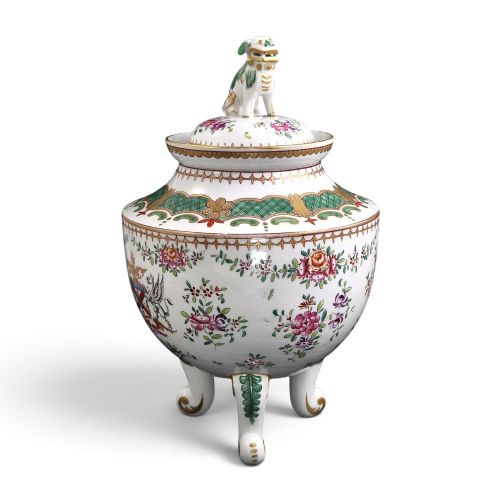
The integrity of the body and the preservation of the original cover remain paramount, as mismatched lids or extensive restoration alter the historical cohesion of the piece. The depth and clarity of the glaze, whether cobalt blue or polychrome famille rose, reveal the purity of the ingredients and the precision of the kiln firing.
Samson Paris
The Chinese Covered Urns Glossary
- Famille Rose
- A major palette of Chinese porcelain enamel colours introduced in the eighteenth century, dominated by opaque pinks and rose shades. This technique allowed for subtle gradations of tone and complex pictorial scenes.
- Cloisonné
- An ancient metalworking technique where flat wires are soldered to a metal base to create cells that are filled with vitreous enamel. The entire object is then fired and polished to a smooth finish.
- Ginger Jar
- A broad-shouldered ceramic storage vessel with a domed cover, originally used for spices and preserved ginger. These jars became a staple of decorative export ware.
- Ormolu
- Gilded bronze mounts applied to the base, rim, or handles of ceramic vessels, particularly popular in European adaptations of Asian porcelain during the nineteenth century.
- Kangxi Period
- An era of the Qing Dynasty renowned for exceptional porcelain production, particularly vibrant blue and white wares and fine glaze formulations that later makers frequently emulated.
Chinese Covered Urns: Frequently Asked Questions
How are Chinese covered urns dated?
Dating relies on stylistic clues, reign marks, potting techniques, and the composition of the glaze or enamel. Comparing the vessel to established examples from specific periods helps narrow down the decade or century of production.
Examining the foot ring, the wear on the base, and the characteristics of the clay body provides further evidence regarding the age of the piece.
What is the difference between an urn and a ginger jar?
Ginger jars typically feature a rounded body and a flat or slightly domed lid, designed originally for utility before becoming purely decorative. Urns often possess a more formal silhouette with a distinct foot, body, neck, and fitted cover.
Both categories overlap significantly in antique nomenclature, particularly within export wares intended for Western mantelpieces.
How do I care for antique cloisonne and porcelain?
Maintenance requires gentle dusting with a soft, dry cloth to prevent the accumulation of dirt in crevices or wire margins. Avoiding harsh chemical cleaners protects both the fragile enamel surfaces and the historic glaze layers.
Keeping the pieces away from direct sunlight and sudden temperature fluctuations ensures the materials remain stable over time.
Are bronze mounts original to the pieces?
Many nineteenth-century European pieces and select export items feature ormolu mounts added either at the time of manufacture or later by European workshops. These mounts were designed to elevate the status of the vessel for Western interiors.
Assessing the fit and wear of the metal in relation to the ceramic body helps determine whether the mounts are contemporary with the jar.