

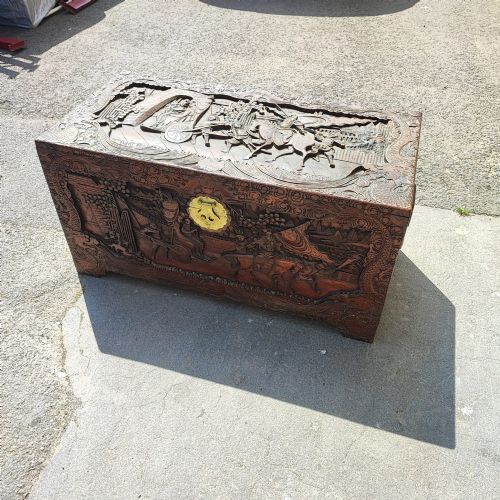


Chinese Camphorwood Chest
A chinese camphorwood chest brings distinctive aroma and solid utility into a room, forged through decades of global trade and regional craftsmanship.
Chinese Camphorwood Chest
A chinese camphorwood chest serves primarily as a robust storage box, blanket box, or trunk, encountered across the nineteenth and early twentieth centuries. These pieces emerge from traditional chinese workshops as well as export trades catering to western markets.
The selection ranges from heavily carved trunk coffers to functional military campaign chests, occasionally featuring fitted secretaire drawers or brass-bound corners. Most examples span the nineteenth century up through the nineteen-thirties, reflecting steady production for maritime travel and domestic storage.
Forms vary from simple brass-bound transport trunks to elaborately carved blanket boxes and two-section campaign chests of drawers. Each piece combines practical utility with regional aesthetic traditions designed for durability during long sea journeys.
Construction and Materials
The primary material is camphor wood, chosen for its insect-repellent properties and distinct aromatic qualities. Cabinetmakers utilised solid timber alongside hardwood framing to ensure the heavy trunks could withstand maritime transit.
Metal hardware such as brass corners, strapwork, and recessed handles reinforced the joints and facilitated lifting during military campaigns or trade voyages. Carved exterior panels frequently display deep relief work depicting traditional scenes, foliage, or motifs associated with chinese export production.
Chinese Camphorwood Chest Retail Price Guide 2026
Typical asking prices for chinese camphorwood chest among the pieces listed under this phrase on Sellingantiques today, from the lower quarter to the upper quarter. They describe what is for sale here now, not the wider market.
Listings feature camphor wood, brass, and hardwood across pieces dated from the nineteenth century up to nineteen-thirty.
Quality and Craftsmanship
Quality rests upon the crispness of the exterior carving and the structural integrity of the timber joints. Superior examples feature deeply undercut relief carving that retains sharp definition across the panels without splintering or shrinkage cracks.
The sophistication of the internal fittings, such as secret compartments in campaign chests or well-fitted brass mounts, separates standard domestic trunks from high-grade export pieces. The weight and selection of the camphor wood itself also dictate the substance and longevity of the box.
The Chinese Camphorwood Chest Glossary
- Camphor wood
- A fragrant timber native to asia, valued for its natural insect-repellent qualities and pale grain. It forms the essential body of these chests.
- Campaign chest
- A modular piece of furniture built in sections with recessed brass handles, designed for easy dismantling and transport by military officers. These chests often include internal writing drawers.
- Secretaire chest
- A cabinet or chest incorporating a fitted writing drawer with small compartments and a fold-down writing surface. It combines storage with a compact desk function.
- Brass-bound
- Furniture reinforced at the edges and corners with brass plates and straps to protect against heavy handling during travel. This hardware is a hallmark of export pieces.
- Chinese export
- Goods manufactured in china specifically for western markets, blending traditional eastern construction methods with european tastes and room requirements.
Chinese Camphorwood Chest: Frequently Asked Questions
Why do these chests smell strongly?
Camphor wood naturally secretes aromatic oils that protect the timber from moths and insects while giving the wood its signature scent. This inherent fragrance remains active across generations of use.
Over time, airing the interior can soften the intensity of the aroma if desired, though the scent is a defining characteristic of genuine camphorwood furniture.
How do I date a camphor chest?
Dating relies on examining the construction methods, the style of the brass hardware, and the presence of export markings. Pieces from the early nineteenth century often feature utilitarian campaign framing, while later examples from nineteen-hundred onward frequently display heavier carved decoration.
Comparing the dovetailing, lock mechanisms, and wood shrinkage provides additional clues to the decade of manufacture.
Were these chests used at sea?
Many brass-bound trunks and campaign chests were specifically commissioned by merchants, diplomats, and military officers for long sea voyages. The durable timber and protective metal mounts were engineered to endure maritime humidity and rough handling.
Standard blanket boxes served domestic storage roles on land, preserving textiles and clothing within homes.
How should I care for the wood?
Maintenance requires keeping the timber away from direct heat sources and sudden temperature fluctuations to prevent splitting. Regular dusting with a dry cloth preserves the finish without requiring heavy polishes.
Allowing the wood to breathe naturally maintains the structural stability of the panels and protects the original surface patination.