


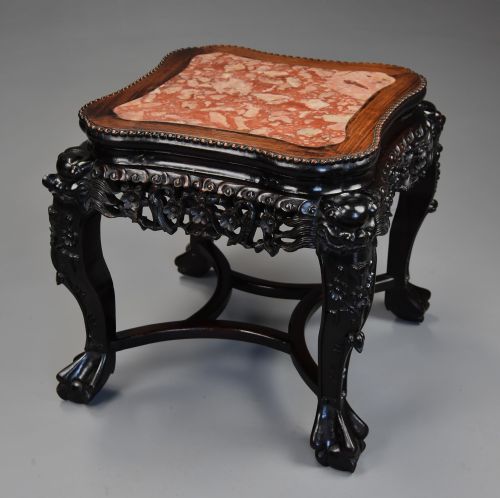


Chinese Bonsai Display Stand
A Chinese bonsai display stand brings the disciplined architecture of the scholar's garden into a room through carved timber and inset stone.
Chinese Bonsai Display Stand
A chinese bonsai display stand takes the form of a low table, a tall pedestal, or a shaped pot stand designed to elevate plants, vases, and scholar's rocks. The pieces on this page span the nineteenth century, including the Victorian era and the Qing Dynasty.
Most examples function as plant stands, jardiniere stands, or small display tables. These objects emerge from Chinese Export production alongside pieces made for domestic Qing use, rendered in compact proportions suitable for domestic interiors.
Materials and Construction
The primary material is dense tropical timber, recorded in the evidence as hardwood, rosewood, hongmu, padouk, and mahogany. These dark woods permit deep relief carving and provide the structural strength needed for narrow legs and complex aprons.
Many examples incorporate a shaped marble inset top, held flush within a wooden frame to support heavy ceramic jardinieres. Joinery is traditional and precise, often combining carved structural members with mortise and tenon connections.
Chinese Bonsai Display Stand Retail Price Guide 2026
Typical asking prices for chinese bonsai display stand among the pieces listed under this phrase on Sellingantiques today, from the lower quarter to the upper quarter. They describe what is for sale here now, not the wider market.
Several stands come ready to hold an opium pipe or a modest fern.
Execution and Detail
Quality rests in the crispness of the carving and the selection of the wood. Finer examples show deeply undercut foliage and disciplined geometric borders rather than shallow or mechanical incision.
The integration of the marble insert and the weight of the timber separate standard utility stands from exceptional scholar's tables. Balance and proportion in the curved legs and pierced aprons dictate the visual success of the piece.
The Chinese Bonsai Display Stand Glossary
- Hongmu
- A category of dense, dark-red Asian hardwoods favoured for fine furniture and display pieces. It polishes to a rich sheen without heavy staining.
- Jardiniere
- A large ornamental pot or container for plants or flowers. Stands built for these vessels require robust platforms and stable leg assemblies.
- Padouk
- A heavy, durable timber with a reddish hue used in nineteenth-century carving. It handles intricate joinery and sharp relief work exceptionally well.
- Kang table
- A low table traditionally used on a heated brick bed or platform in northern China. Smaller versions function effectively as display surfaces for vessels and plants.
Chinese Bonsai Display Stand: Frequently Asked Questions
What is a Chinese bonsai display stand used for?
These stands elevate potted plants, miniature trees, and decorative vases to give them prominence in a room. They allow light to pass beneath the vessel and frame the organic shape of the plant against carved timber.
Historically, they served scholars and collectors who displayed prized natural objects and ceramics indoors. Today, they function as lamp tables, plant pedestals, and low accent surfaces.
How do I identify a Qing Dynasty stand?
Nineteenth-century Qing Dynasty stands rely on dense tropical hardwoods like hongmu and padouk, often featuring inset marble tops. The carving typically displays traditional motifs executed with considerable depth and undercut detail.
Construction methods reflect traditional joinery without modern metal fasteners. The presence of nineteenth-century wear and patination confirms the period of manufacture.
Can these stands support heavy pots?
The heavy tropical hardwoods used in these pieces provide immense structural strength despite slender legs and delicate aprons. The addition of an inset marble top adds both weight and a stable, flat surface for ceramic vessels.
Care should still be taken with exceptionally heavy planters to ensure the weight distributes evenly across the frame. Most standard jardinieres and bonsai pots sit securely on the inset platforms.
What woods were used in nineteenth-century stands?
The evidence records rosewood, mahogany, padouk, and hongmu alongside general oriental hardwoods. These timbers were selected for their density, dark natural colour, and capacity to hold sharp carved details.
Some pieces also incorporate painted or treated hardwood elements to achieve specific decorative effects. The heavy weight of these woods distinguishes genuine period stands from lighter modern replicas.