
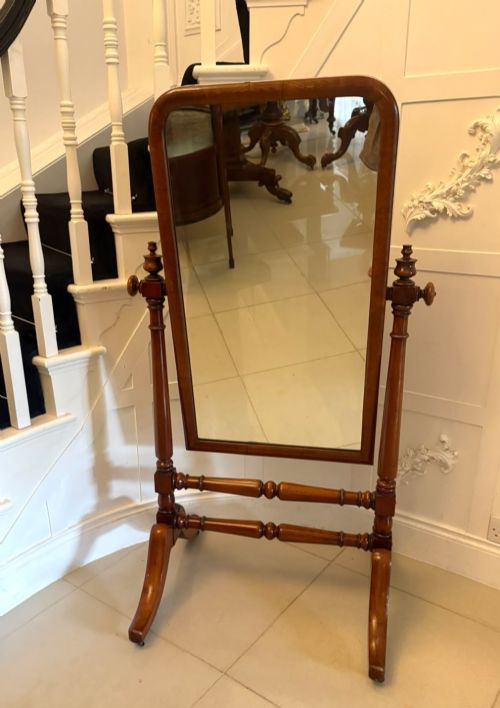
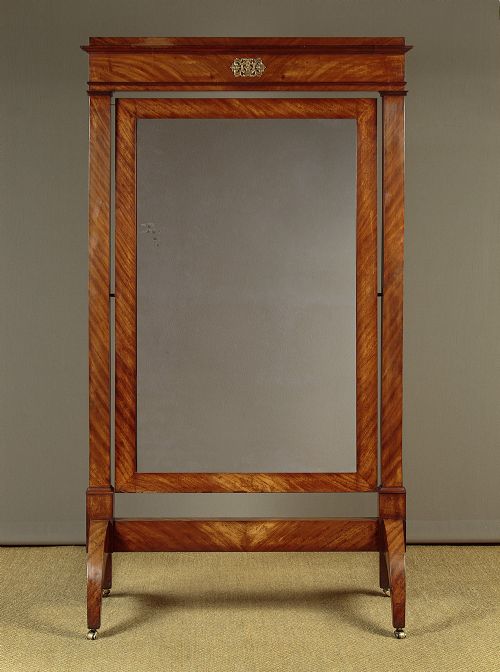
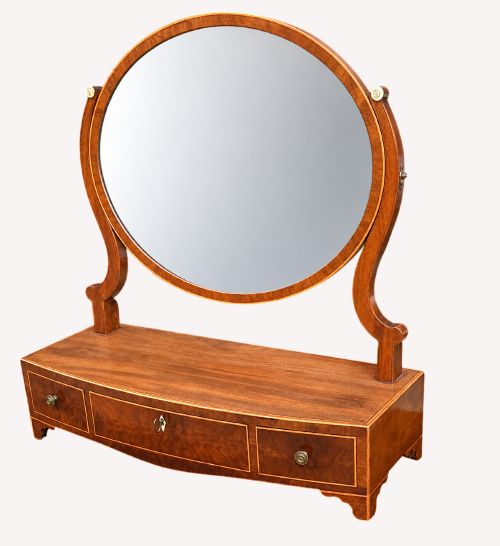
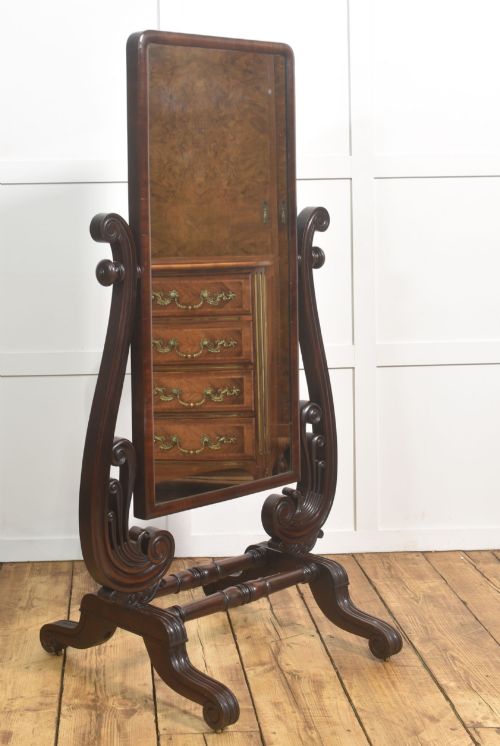
Cheval Glass Mirror
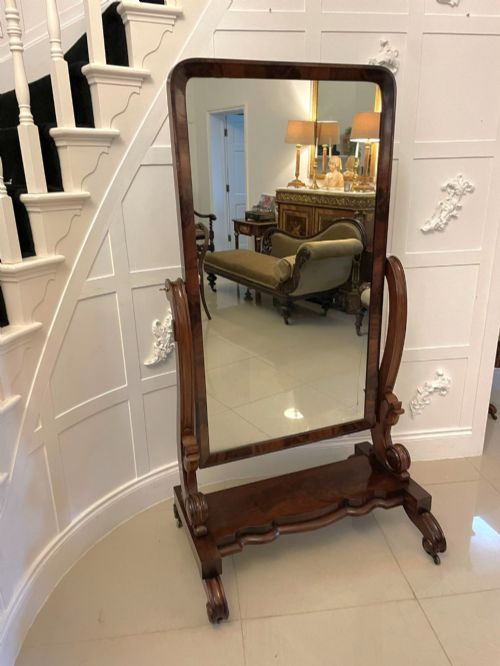
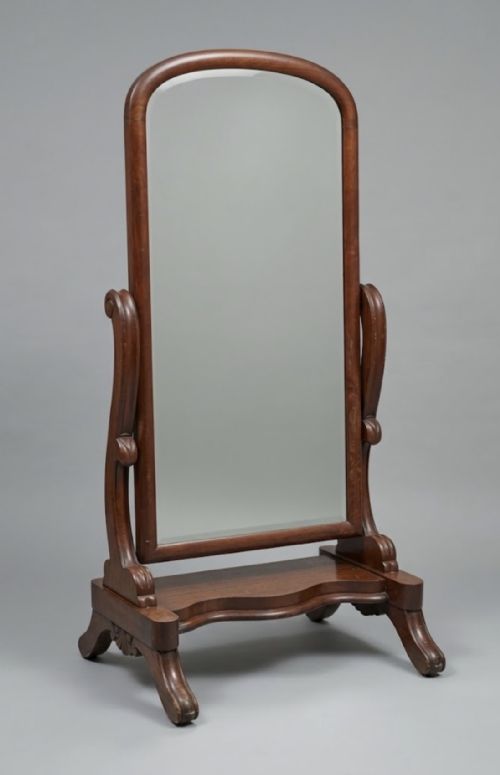
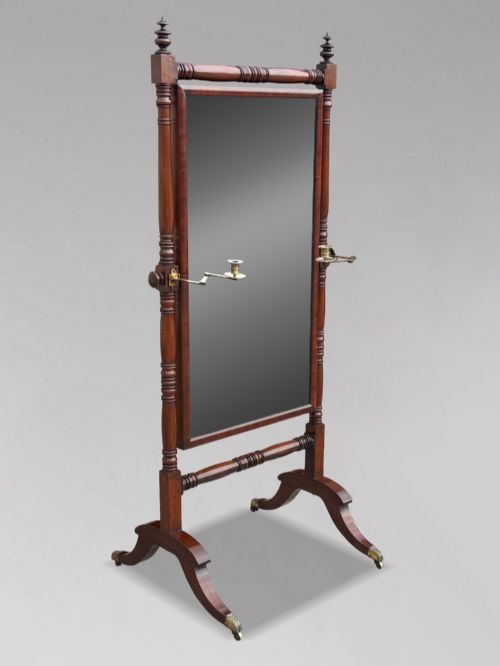
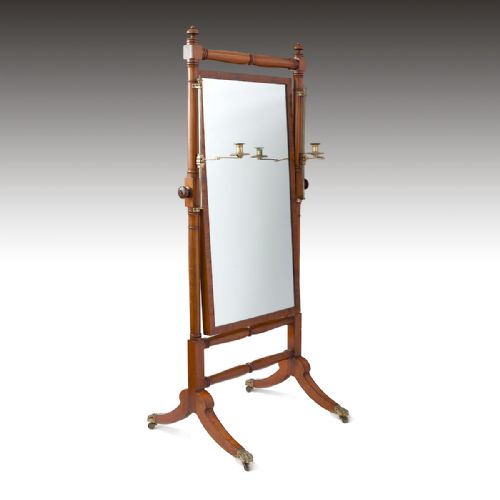
A cheval glass mirror is a tall, freestanding swing frame designed for full-length dressing.
Cheval Glass Mirror
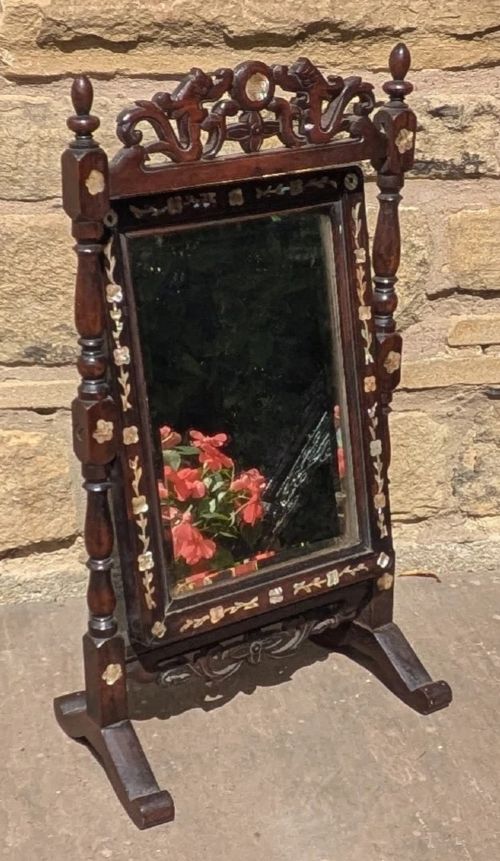
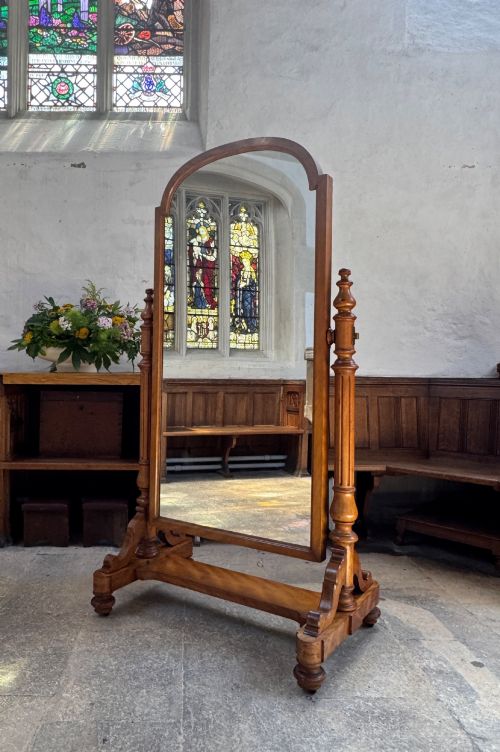
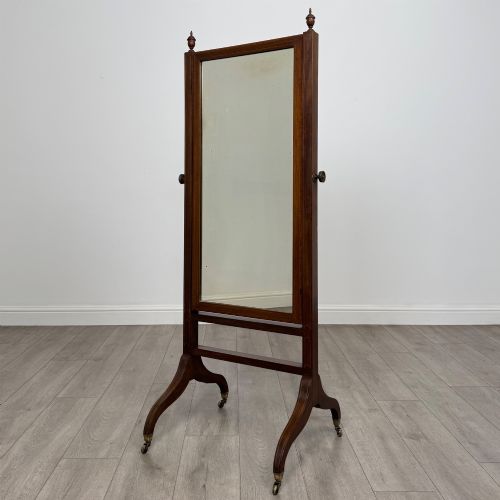
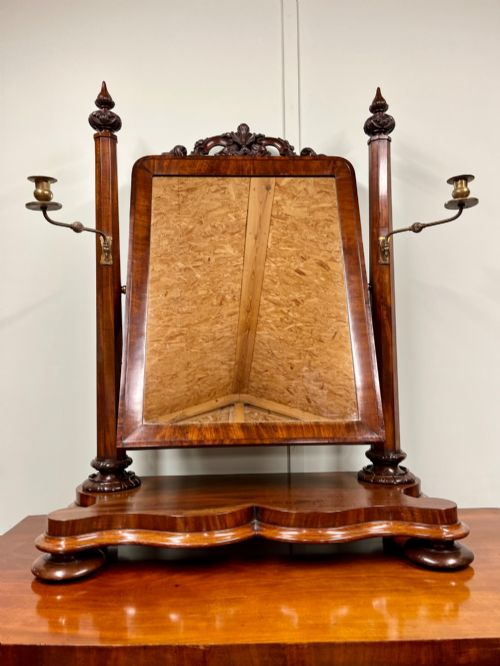
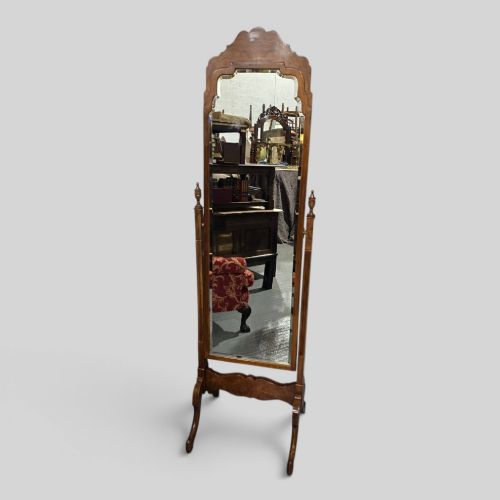
When you search for a cheval glass mirror, you are looking at tall, freestanding swing frames designed to tilt and show the full figure. The pieces you meet most often on this page are mahogany examples from the Victorian and Georgian periods, alongside floor-standing and table-top variants.
Makers designed these mirrors for bedrooms and dressing rooms, supporting the swinging glass plate within vertical pillars on stable feet. You will also encounter walnut, oak, and satin birch iterations, spanning from the early nineteenth century through to Edwardian and later twentieth-century interpretations.
How they were made
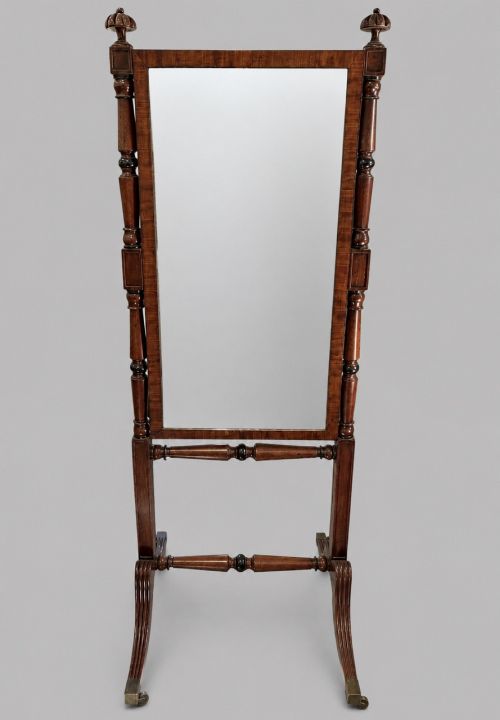
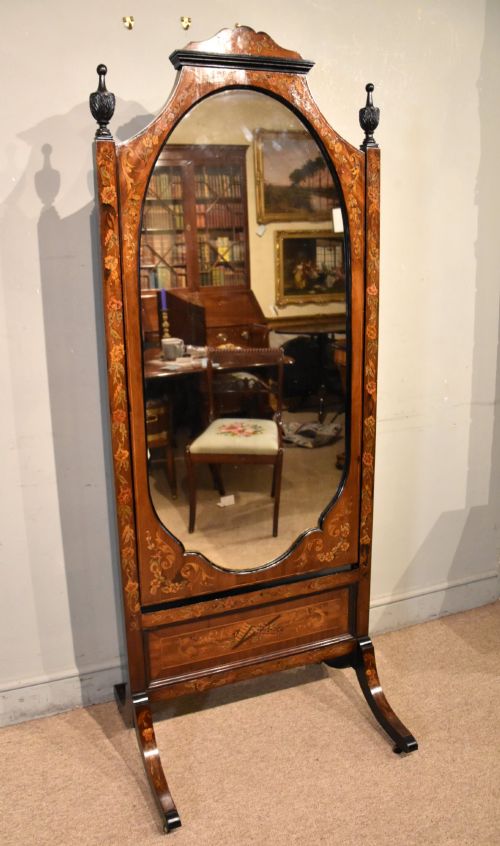
Cabinet makers built the primary frames using timbers such as mahogany, walnut, and oak, frequently incorporating boxwood inlay, marquetry, or brass mounts. The glass plate hung securely between upright supports using adjustable pivot screws, allowing the user to tilt the reflection.
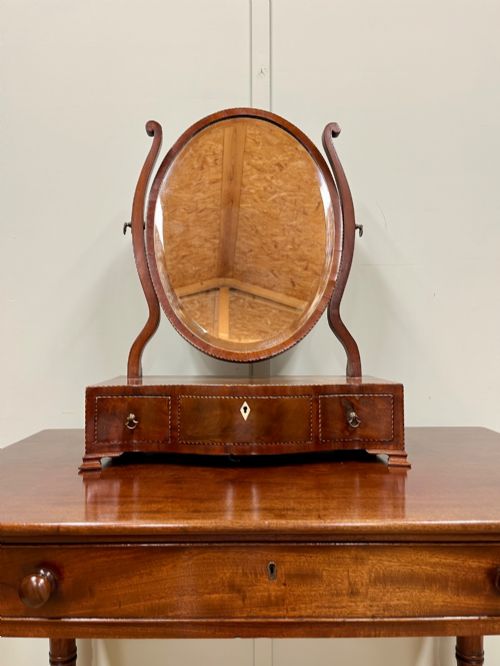
Heavier floor-standing variants relied on robust scroll feet, trestle bases, or barley twist supports to maintain balance as the mirror tilted. Smaller table mirrors similarly utilised pivoting brass hardware mounted upon fitted box bases or drawers.
What varies in quality
The distinction between standard examples and top-tier pieces lies in the refinement of the timber and the sophistication of the joinery. Cabinet makers who invested greater skill in carved details, boxwood inlay, or marquetry produced more desirable furniture.
Proportion and stability also dictate the tier of a piece, where well-balanced frames and original mirror glass command higher regard than utilitarian replacements or clumsy proportions.
The Cheval Glass Mirror Glossary
- Cheval glass mirror
- A tall mirror hung on a freestanding frame with pivots that allow it to swing. This design enables a person to view their entire outfit.
- Swing mirror
- A glass plate mounted on vertical pivots within a frame. It tilts forward or backward to adjust the angle of reflection.
- Marquetry
- Decorative veneer work arranged in intricate patterns using different coloured woods. It often enhances the visual appeal of Georgian and Regency furniture.
- Barley twist
- A turned wooden column carved in a helical spiral shape. This decorative support appears frequently on Victorian pieces.
- Boxwood inlay
- Narrow strips of pale wood inserted into contrasting darker timbers to form geometric borders. Cabinet makers utilised this technique to accent edges and panels.
Cheval Glass Mirror: Frequently Asked Questions
Where should I place a cheval mirror?
These tall mirrors function best in bedrooms or dressing rooms where floor space permits full-length viewing.
Position them near natural light sources to brighten the room and maximise the reflective surface.
How do I adjust the mirror angle?
Most examples use lateral pivot screws or brass hardware fitted into the upright support pillars.
Turning these mechanisms gently allows the glass frame to tilt forward or backward to the desired viewing angle.
Are these mirrors heavy to move?
Freestanding floor models constructed from solid mahogany or oak possess substantial weight due to the timber frame and glass.
Two people should lift and relocate them to prevent straining the upright joints and pivot fixings.
What is the difference between cheval and toilet mirrors?
Cheval mirrors stand tall upon the floor to reflect the entire body. Toilet mirrors are scaled down for placement on top of dressing tables or chests of drawers.