
Cheval Dressing Glass
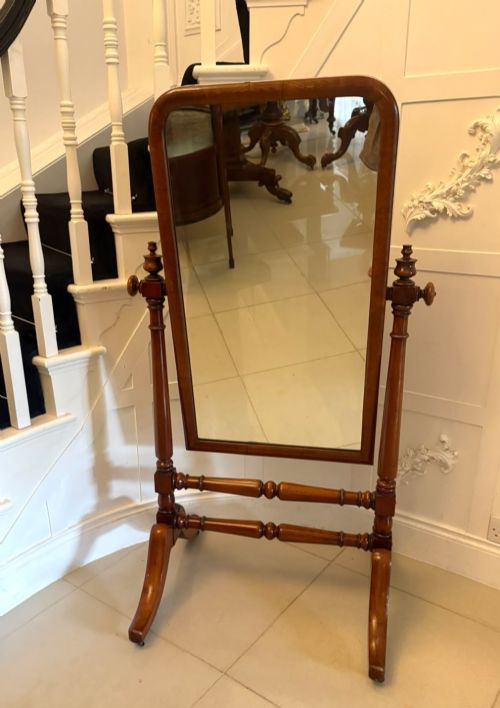
A cheval dressing glass is a tall, freestanding swing mirror that lets you see your whole outfit at once.
Cheval Dressing Glass
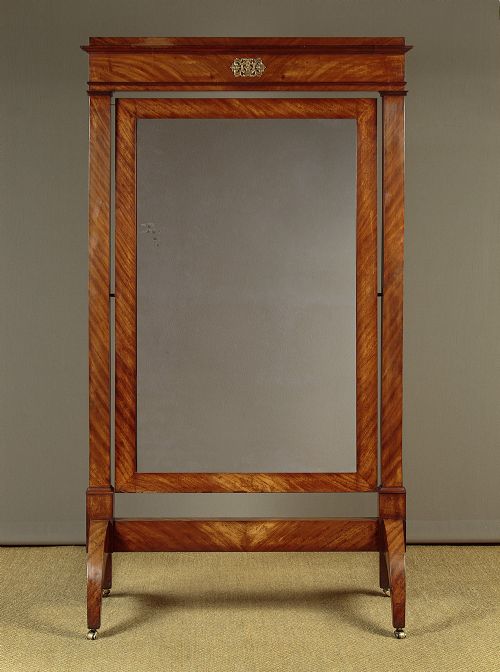
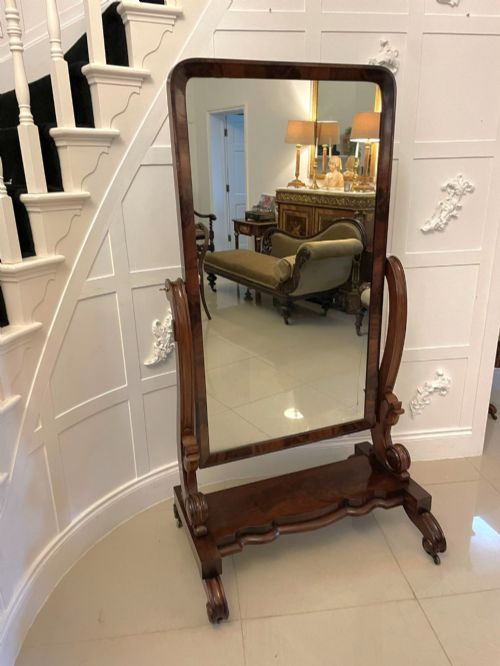
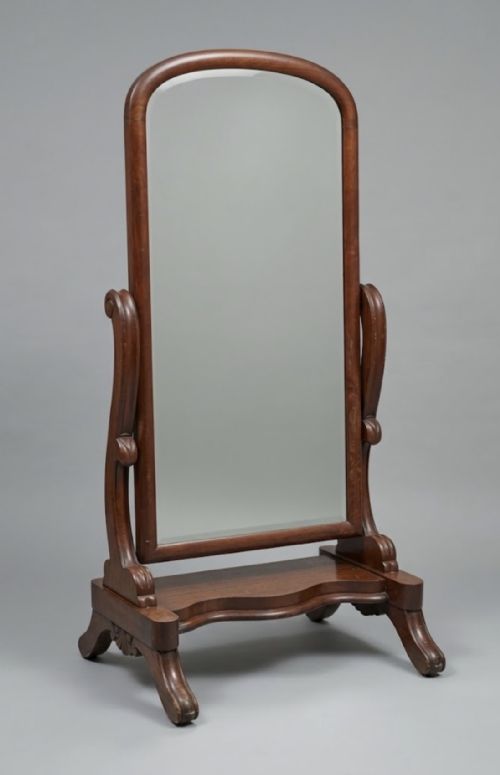
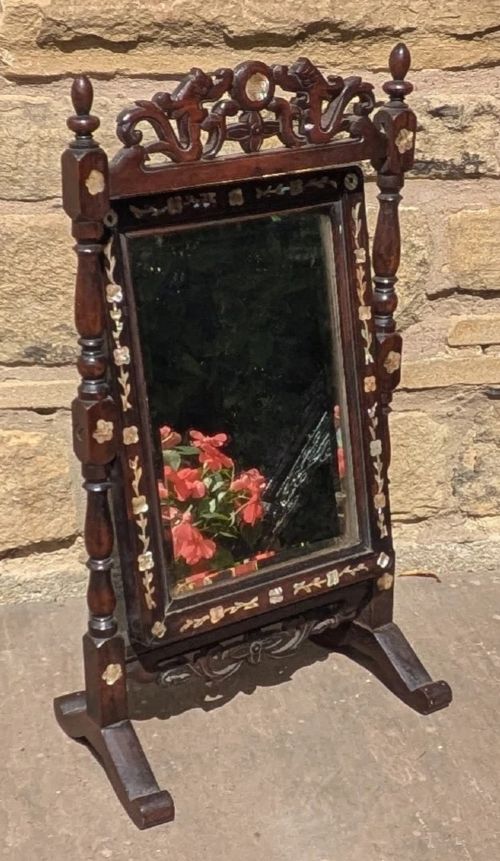
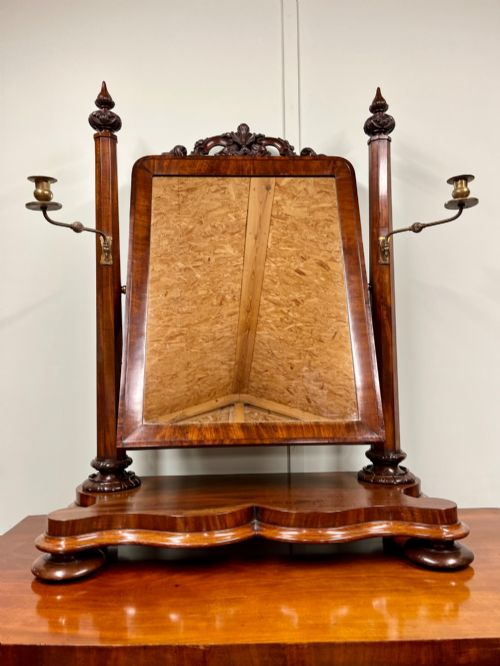
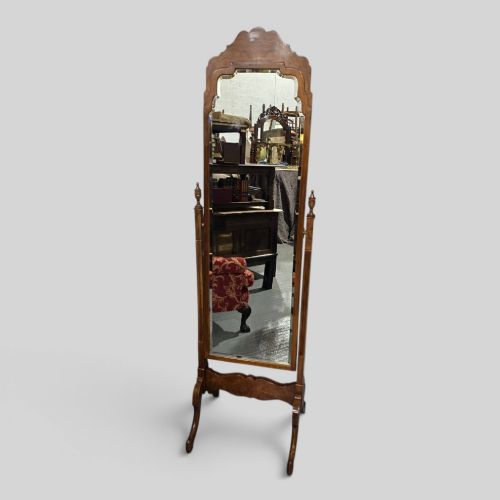
When you search for a cheval dressing glass, you encounter tall, freestanding swing mirrors designed for the bedroom to view an entire outfit. The pieces seen here span from the Georgian and Regency eras through the Victorian period and into the Edwardian years.
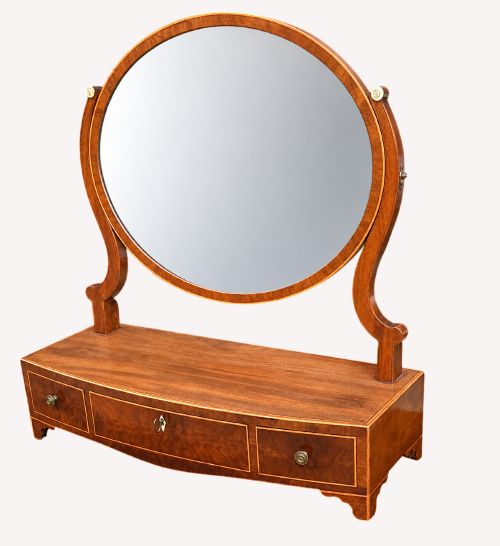
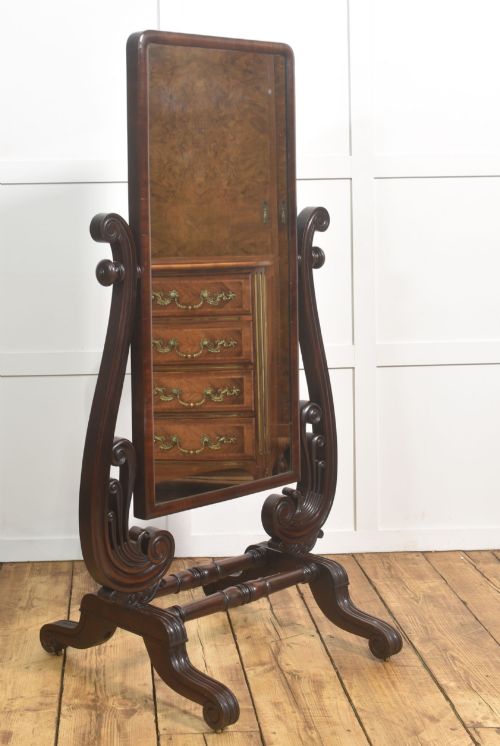
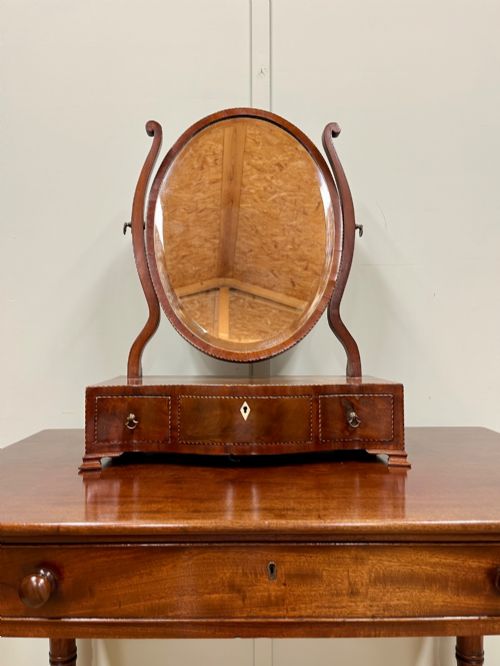
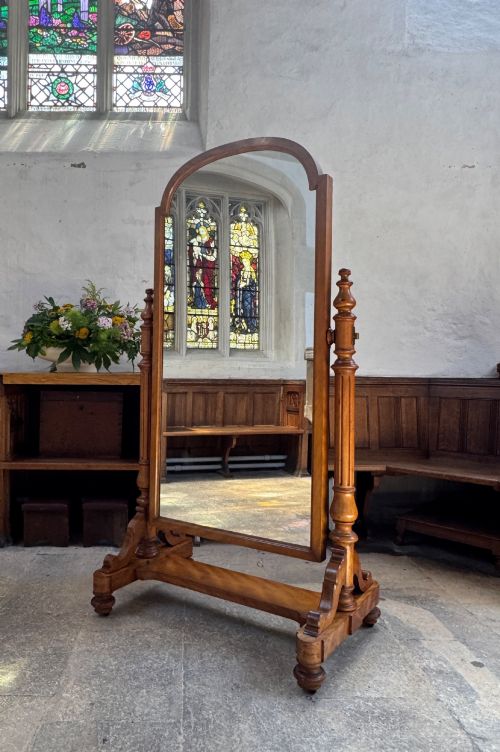
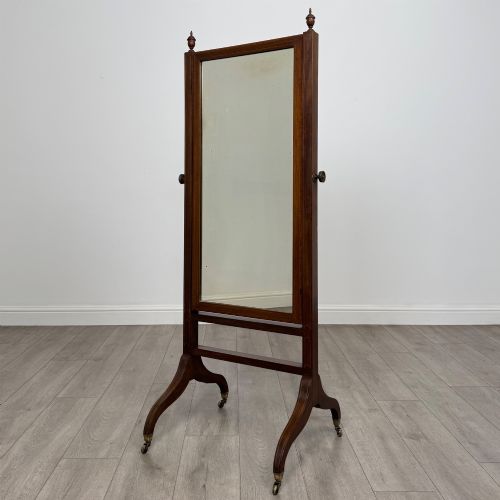
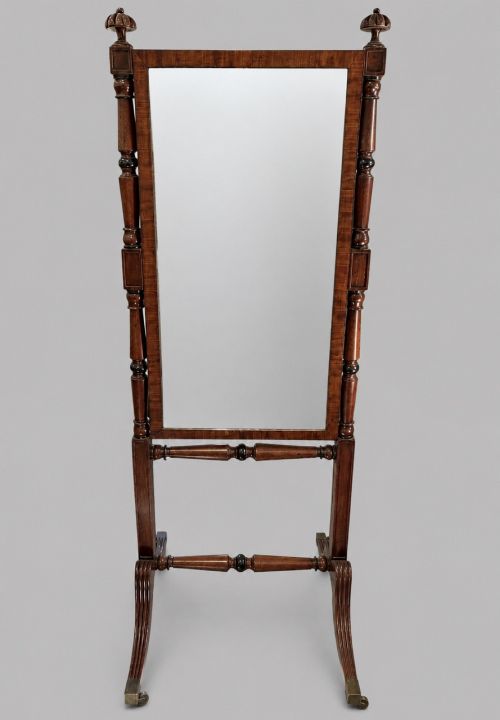
Mahogany is the primary wood you meet on this page, often built as large floor-standing cheval mirrors supported by sturdy frames and pivoting side mounts. Alongside these grand floor models, you will find smaller dressing table mirrors and toilet mirrors equipped with drawers or bureau fitments.
Materials and construction
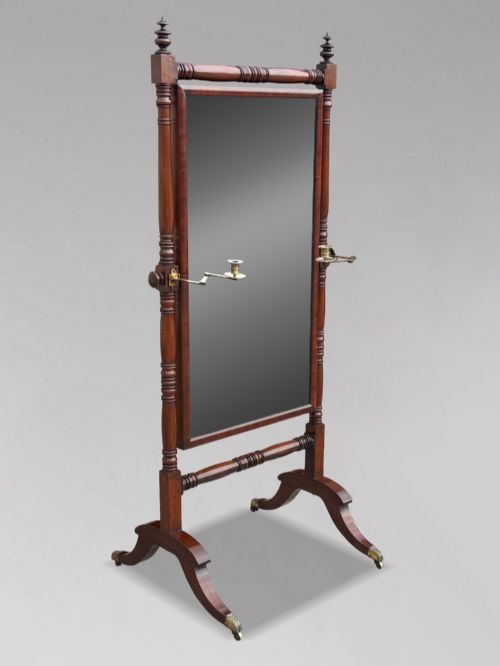
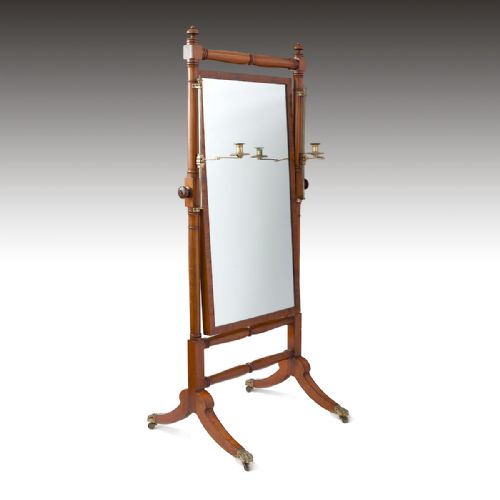
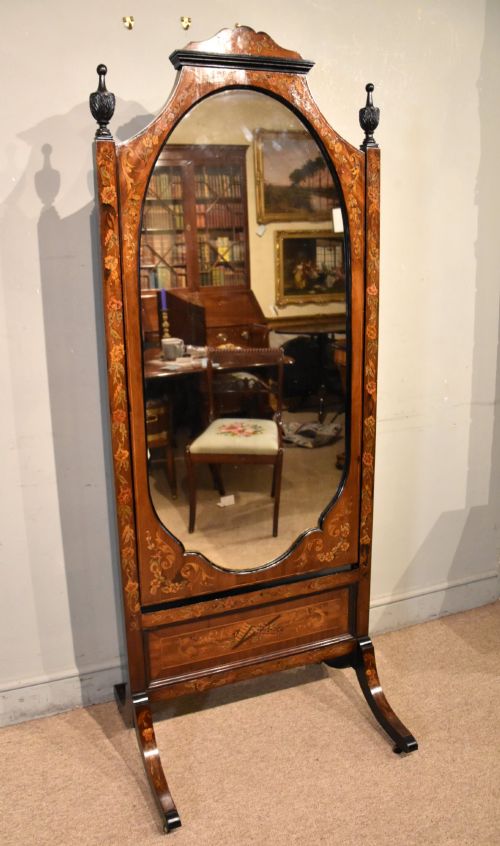
Cabinetmakers built these mirrors predominantly using solid mahogany, walnut, and oak, often selecting highly figured grains for the main uprights and base. Artisans embellished select pieces with boxwood inlay, Dutch marquetry, or intricate brass hardware.
The mirror glass itself rests within a pivoting wooden frame that hangs between two vertical posts, allowing the user to tilt the glass to any desired angle. Floor-standing versions rely on substantial weighted bases or scrolled feet to support the heavy swing glass securely.
Listings feature 19th-century and Victorian pieces predominantly in mahogany, alongside oak, walnut, and giltwood variants.
Judging quality and proportion
The distinction between standard examples and the finest workshop pieces rests on the selection of timber and the crispness of the joinery. Superior frames display deeply figured wood veneers and well-balanced proportions that prevent the tall structure from feeling clumsy.
Hardware details separate ordinary mirrors from exhibition pieces, as seen in substantial turned supports, finely cast brass candle sconces or pivoting pins, and secondary drawer linings executed in solid secondary hardwoods.
Gillow
The Cheval Dressing Glass Glossary
- Cheval mirror
- A large, freestanding swing mirror mounted on a frame with four legs or a heavy base. The name derives from the French word for horse.
- Toilet mirror
- A smaller dressing mirror designed to sit upon a chest of drawers or a dressing table. These often incorporate small storage drawers in the base plinth.
- Marquetry
- Decorative veneer work formed of pieces of wood, shell, or ivory fitted into a wood panel to form geometric or floral patterns. It frequently enhances Georgian and Dutch-influenced pieces.
- Barley twist
- A carved wooden support shaped like a spiral rope or twist. This decorative turning appears frequently on Victorian furniture frames.
Cheval Dressing Glass: Frequently Asked Questions
What is a cheval dressing glass?
A cheval dressing glass is a full-length, freestanding mirror suspended on vertical pivots within a sturdy frame. This design allows the glass to swing back and forth so you can adjust the viewing angle.
Most examples are tall enough to show a person from head to toe, making them essential bedroom furniture from the Georgian period onward.
How do I tell a Georgian mirror from a Victorian one?
Georgian mirrors tend to feature restrained classical lines, delicate mahogany frames, and subtle bracket feet or boxwood stringing. Victorian examples often appear larger, heavier, and feature more ornate carving or turned supports like barley twists.
Looking at the construction of the backboards and the type of screws or fixings used can also help confirm the manufacturing period.
Can I place a cheval mirror on a table?
Floor-standing cheval mirrors are too heavy and tall for furniture, requiring clear floor space against a bedroom wall. However, smaller table top versions and toilet mirrors are specifically proportioned to sit securely on top of a chest of drawers or a dressing table.
What woods were used to make these mirrors?
Mahogany is by far the most common timber found in these listings, valued for its rich colour and strong grain. Cabinetmakers also utilised walnut, oak, and satin birch, frequently adding decorative inlay or marquetry to elevate the surface appearance.