


Inlaid Cheval Mirror
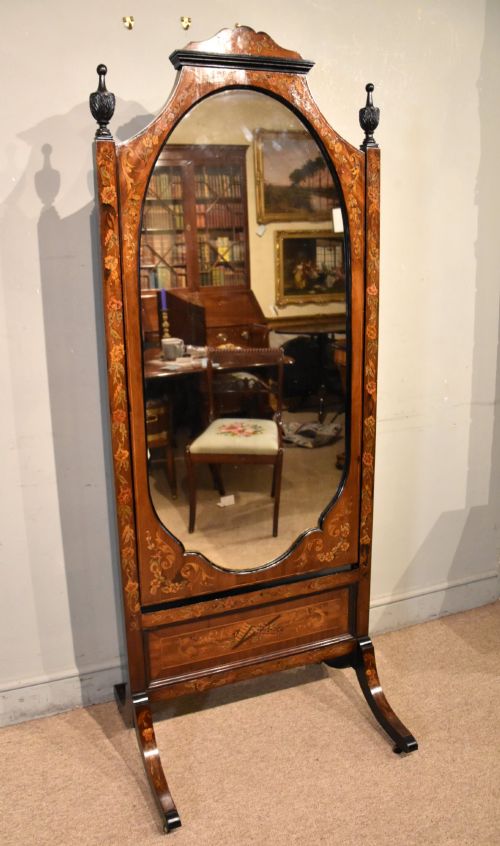
An inlaid cheval mirror offers a full-length reflection set within a pivoting frame enriched by decorative woodwork.
Inlaid Cheval Mirror
An inlaid cheval mirror stands as a substantial piece of furniture designed for the bedroom or dressing room to provide a full-length view. When exploring this selection, buyers frequently encounter Edwardian and Victorian interpretations alongside earlier Regency and Georgian designs.
The assortment spans tall freestanding cheval mirrors as well as smaller toilet and table top mirrors meant for placement on furniture. Woods such as mahogany and satinwood dominate the construction, carrying intricate wood inlay and marquetry across the frames and stands.
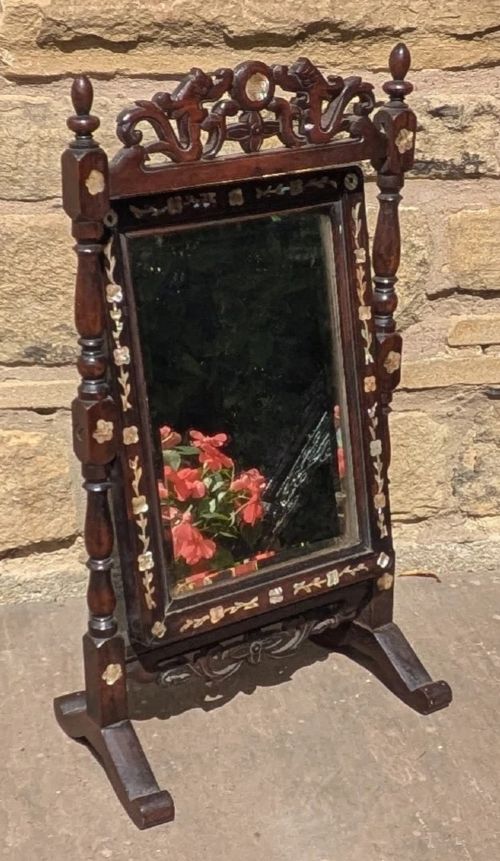
Originating largely from British periods, the selection also includes examples from the Qing Dynasty utilising hardwood and mother of pearl. Each piece combines practical mirror glass with decorative framing intended to stand independently in a room.
Materials and Construction
Craftsmen built these mirrors primarily from hardwoods like mahogany and satinwood, occasionally incorporating rosewood, maple, amboyna, or fruitwood. Frames incorporate glass supported by pivoting stands, often featuring adjustable mechanisms with brass hardware.
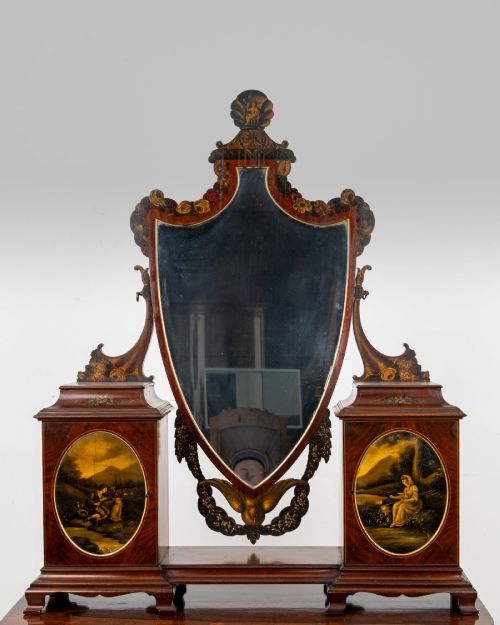
Decorative surfaces rely on wood inlay, marquetry, and mother of pearl to create contrasting patterns on the wood grain. Cabinetmakers shaped the uprights and bases into rectangular, oval, or shield forms, sometimes adding triptych panels or jewellery cabinets.
Listings span multiple eras including the Georgian, Regency, Victorian, and Edwardian periods, alongside nineteenth century interpretations.
Distinctions in Quality
Quality reveals itself in the precision of the woodwork and the complexity of the marquetry patterns set into the frame. Fine examples demonstrate clean lines in the mahogany or satinwood structure, balanced proportions in the pivoting stand, and well-executed brass mounts.
The refinement of the decorative inlay and the selection of figured timber distinguish standard pieces from exhibition quality works. Superior construction ensures the swinging frame operates smoothly on its pivots while maintaining structural stability across the base.
The Inlaid Cheval Mirror Glossary
- Cheval mirror
- A freestanding full-length mirror mounted on a pivoting frame between two upright posts. This design allows the glass to tilt to various angles.
- Marquetry
- Decorative woodwork where pieces of contrasting veneer are assembled into intricate pictorial or geometric patterns. It adorns the surfaces of fine cabinetwork.
- Toilet mirror
- A smaller mirror designed to sit upon a dressing table or chest of drawers. These often incorporate small drawers or compartments in the base.
- Triptych
- A mirror assembly featuring three panels, where the two outer sections can be angled relative to the central glass. This configuration provides multiple viewing angles.
- Satinwood
- A pale, lustrous timber native to India and Sri Lanka used extensively for fine veneer and inlay work. Its yellow colouring provides high visual contrast against darker woods like mahogany.
Inlaid Cheval Mirror: Frequently Asked Questions
Where should a cheval mirror be placed?
These tall mirrors work best in bedrooms, dressing rooms, or large hallways where ample floor space allows the freestanding frame to stand clear of surrounding furniture.
Positioning the piece near a light source enhances its function while displaying the decorative woodwork and inlay to full effect.
How do you adjust the mirror angle?
Most freestanding mirrors utilise pivoting side pins or thumbscrews fitted into the upright support posts. Adjusting these metal fittings permits the glass to tilt forward or backward.
Regular use over the decades means these pivot mechanisms require careful balancing to hold the glass firmly at the desired angle without slipping.
What is the difference between a cheval and a toilet mirror?
A cheval mirror stands directly on the floor as a full-length piece, whereas a toilet mirror is a smaller tabletop version meant for a dressing surface.
While both share pivoting frames and similar stylistic details, their scale and intended placement within a room remain distinct.
How do I identify an Edwardian mirror?
Edwardian pieces often feature lighter satinwood or mahogany frames with Sheraton revival influences, delicate stringing, and oval or rectangular glass shapes.
These mirrors frequently appear alongside matching dressing furniture from the period around nineteen hundred, displaying refined proportions and lighter construction than earlier Victorian examples.