


Cherub Porcelain Clock
A cherub porcelain clock brings sculptural figures and painted panels together in a decorative nineteenth-century timepiece.

Cherub Porcelain Clock
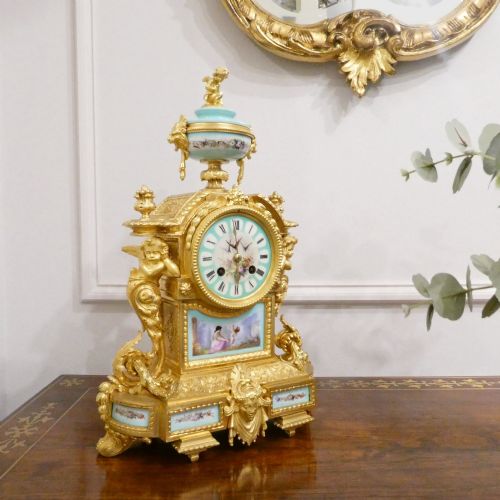
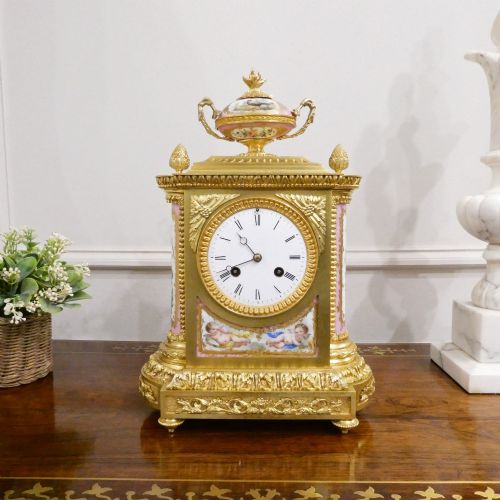
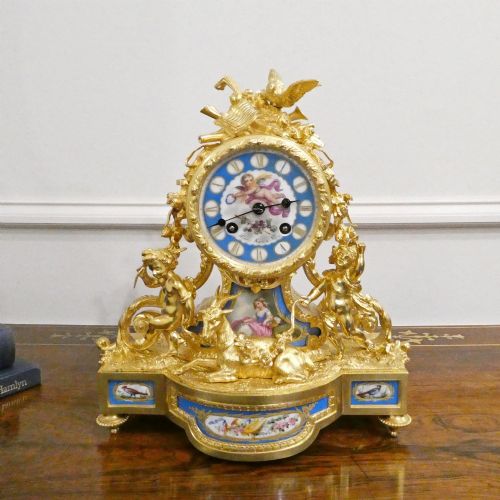
A cherub porcelain clock is a decorative timepiece that incorporates sculpted figures of putti or cherubs alongside porcelain elements, predominantly originating from nineteenth-century French workshops.
The most common form on this page is the French mantel clock, often cast in gilt bronze or ormolu and mounted with painted porcelain panels or dial faces depicting figures.
Pieces span several revival styles, including Rococo Revival and Louis XVI Revival, frequently appearing as standalone mantel clocks or part of wider garniture sets.

Materials and construction methods
Casting forms the structural core of these items, using bronze, brass, or gilt metal shaped into elaborate Rococo and Neoclassical frames.
Porcelain components, including painted panels and enamel dials, are integrated directly into the metal armature, alongside marble or onyx bases.
Gilding techniques such as ormolu application finish the metal surfaces to create a bright, reflective appearance.
Cherub Porcelain Clock Retail Price Guide 2026
Typical asking prices for cherub porcelain clock among the pieces listed under this phrase on Sellingantiques today, from the lower quarter to the upper quarter. They describe what is for sale here now, not the wider market.
Several cherubs are caught mid-mischief, sharing a quiet moment with bunches of grapes among the clockwork.
Distinctions in manufacture and design
The precision of the bronze casting and the crispness of the chased detail define the upper tiers of production.
Painted porcelain panels featuring finely rendered figures or specific makers' marks separate standard output from superior work.
The complexity of the associated movement and the inclusion of matching side garnitures elevate the overall composition.
Jean-Baptiste Delettrez·Henry Marc·Japy Frères·Achille Brocot·Phillipe H. Mourey·Samuel Marti
The Cherub Porcelain Clock Glossary
- Ormolu
- A method of applying finely ground high-carat gold to an object of bronze. This technique creates a rich golden finish characteristic of nineteenth-century decorative items.
- Garniture
- A set of matching decorative objects designed to be displayed together on a mantelpiece. It typically comprises a central clock flanked by two matching vases or candelabra.
- Putto
- A representation of a small winged infant, frequently used as a sculptural motif in nineteenth-century art. These figures often appear resting on the clock case or flanking the dial.
- Drum head clock
- A timepiece featuring a circular clock movement housed within a drum-shaped case. This housing is usually elevated on a decorative plinth or base.
- Champlevé
- An enamelling technique where troughs are dug into a metal surface and filled with vitreous enamel. The piece is then fired and polished smooth.
Cherub Porcelain Clock: Frequently Asked Questions
What is a cherub porcelain clock?
A cherub porcelain clock is a nineteenth-century timepiece that combines metal casting with painted porcelain and sculptural figures of putti.
These objects functioned both as functional timekeepers and as decorative ornaments for formal rooms.
How do I identify the period?
Periods are identified through stylistic cues such as Rococo revival scrolls, materials like gilt bronze, and mechanical indicators within the movement.
Most examples date from the middle to the late nineteenth century, reflecting French manufacturing traditions of that era.
What is a clock garniture?
A clock garniture is a matched set consisting of a central clock and two flanking decorative pieces, such as vases.
These sets were designed to create a balanced display on a mantelpiece or console table.
How should I care for these clocks?
Keep the clock away from direct sunlight and fluctuating temperatures to protect the porcelain panels and gilded surfaces.
Periodic professional servicing of the mechanical movement ensures the clock functions correctly.