

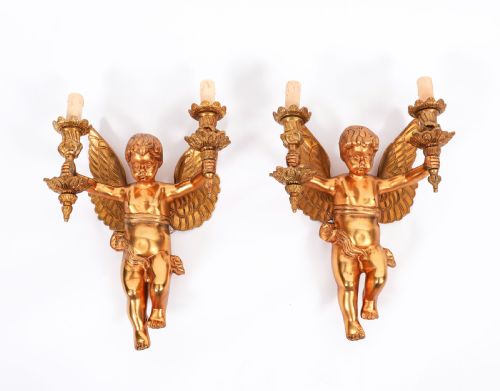
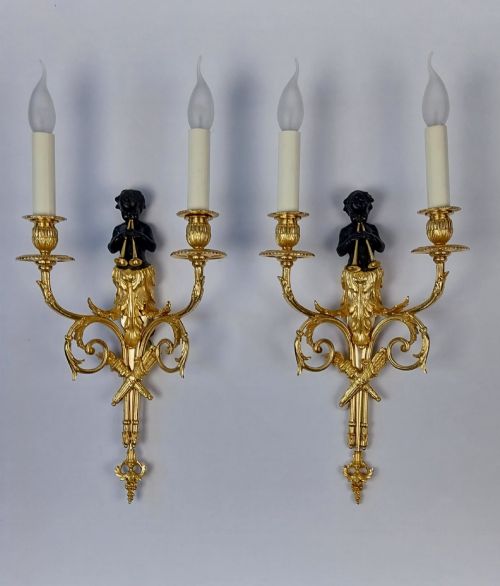


Cherub Gilt Wall Lights
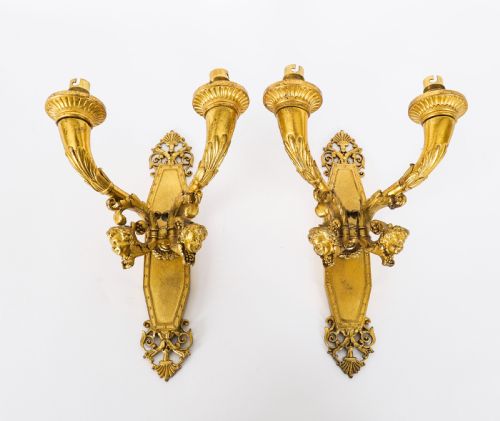
Cherub gilt wall lights bring sculptural presence and golden warmth to a room, cast in ormolu, gilt bronze, brass, and giltwood.
Cherub Gilt Wall Lights
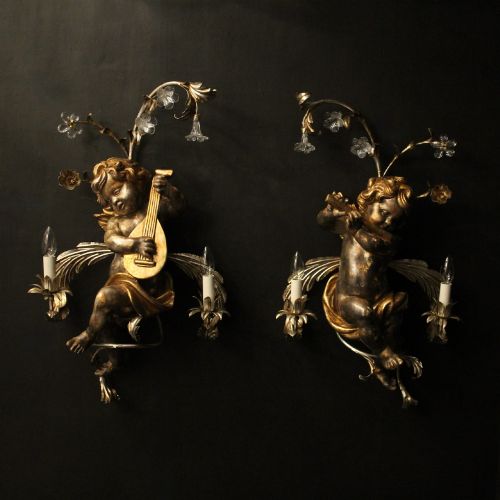
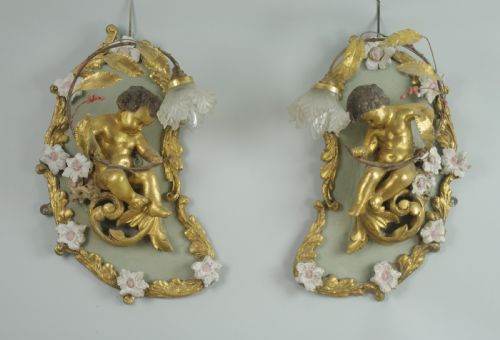
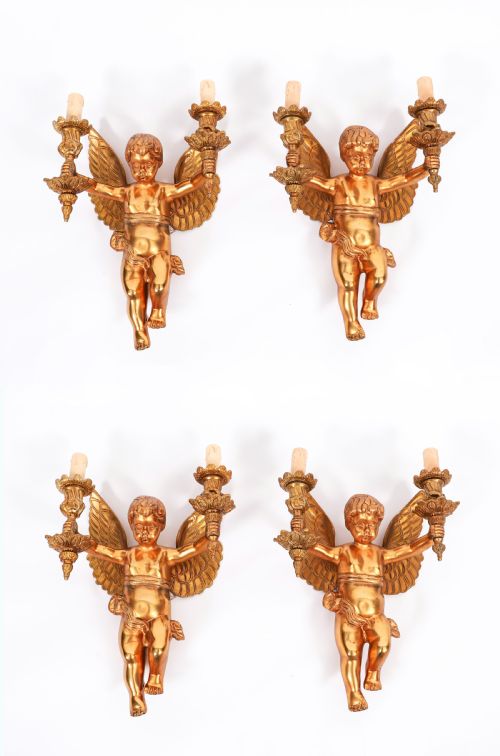
Cherub gilt wall lights combine figurative sculpture with functional illumination, taking the form of wall sconces and light fittings. These pieces depict winged putti or cherubs supporting branches, appearing frequently in pairs and sets of four.
The selection ranges from nineteenth-century French designs to early twentieth-century Italian and French examples. Styles span Rococo Revival, Louis XIV and Louis XVI revivals, Italian Baroque, and French Neo-Classical, reflecting periods from eighteen-hundred through nineteen-thirty.
How they were made
Maker's workshops utilised metals such as gilt bronze, ormolu, brass, cast metal, and silver plate, alongside carved giltwood. These metals were cast and shaped into figures and scrolling arms, often finished with fire gilding or surface plating to achieve a rich golden tone.
Some configurations incorporate glass or crystal drops suspended from the sconces to refract the light from candles or early electric bulbs. Detailed chasing and carving define the wings, hair, and drapery of the figures before mounting onto walls.
Materials recorded include gilt bronze, ormolu, brass, giltwood, glass, silver plate, and cast metal.
What varies in quality
Quality rests in the crispness of the metal casting and the depth of the subsequent gilding or ormolu finish. Finer pieces show sensitive modelling in the cherub's face and limbs, avoiding the flat surfaces seen in simpler cast metal items.
The architectural integration of the twin or multi-branch arms with the backplate dictates the overall balance of the light fitting. Superior examples maintain structural harmony between the figural sculpture and the functional light-bearing branches.
The Cherub Gilt Wall Lights Glossary
- Ormolu
- Gilded bronze produced by applying a mercury-gold amalgam to a bronze base and heating it. This technique creates a durable, luminous golden finish characteristic of fine French pieces.
- Putti
- Plural of putto, representing a chubby, winged male child often depicted in classical art. These figures form the central sculptural motif of the wall lights.
- Rococo Revival
- A nineteenth-century style drawing on eighteenth-century asymmetrical scrollwork and natural motifs. It appears widely in the ornate curves of these light fittings.
- Giltwood
- Timber carved and coated with gold leaf or metallic paint. It provides a lighter alternative to cast bronze in certain Italian wall lights.
- Wall Sconce
- A decorative bracket light fixed to a wall to hold candles or electric lamps. The evidence classifies these interchangeably with wall lights and light fittings.
Cherub Gilt Wall Lights: Frequently Asked Questions
How were cherub wall lights used?
These fixtures were mounted in pairs or larger sets on drawing room and salon walls to provide ambient illumination by candlelight. The polished metal surfaces and crystal drops helped to reflect and multiply the flickering light across the room.
Over time, many examples were adapted for electricity while retaining their original wall-mounted brackets and figural arms. They continue to function as decorative accent lighting in formal interiors.
How do I date a pair of wall lights?
Dating relies on examining the casting techniques, fixing screws, and stylistic details such as the presence of Rococo Revival or Louis XIV revival motifs. Nineteenth-century pieces typically show heavier bronze casting and hand-finished chasing compared to later twentieth-century iterations.
Materials also offer clues, with nineteenth-century French pieces frequently utilising true ormolu and gilt bronze, while later decades saw increased use of brass and general cast metal.
Where should I place wall lights?
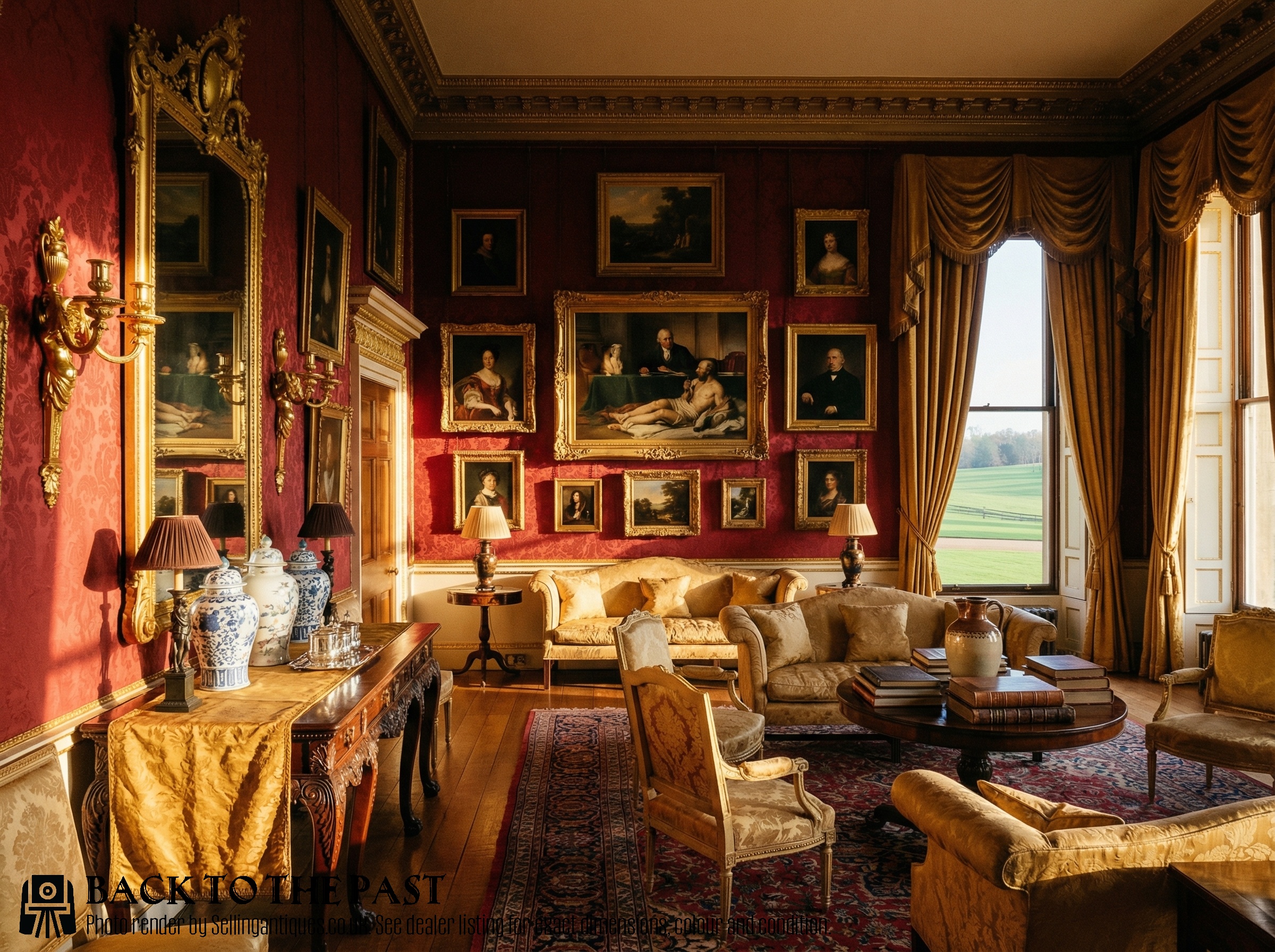
Wall lights look best positioned at eye level or slightly above in hallways, dining rooms, or flanking a fireplace mirror. Placing them in pairs creates symmetry and balances the visual weight of the figural bronze or giltwood carving.
Consider the projection of the multi-branch arms from the wall to ensure clearance around doorways and furniture. Wiring can be surface-mounted or channelled through the wall depending on the age and construction of the building.
What is the difference between ormolu and gilt bronze?
Ormolu specifically refers to cast bronze objects gilded using an antique mercury amalgamation process that leaves a deep, matte gold surface. Gilt bronze is a broader term that can encompass various historical and modern gilding methods applied to a bronze substrate.
Both materials offer durability and a rich golden appearance, though traditional ormolu is generally associated with higher-tier French decorative arts from the nineteenth century and earlier.