


Gilt Brass Wall Candelabra
These gilt brass wall candelabra bring genuine candlelight and reflective brilliance to a room, cast in bronze, brass, and carved wood.
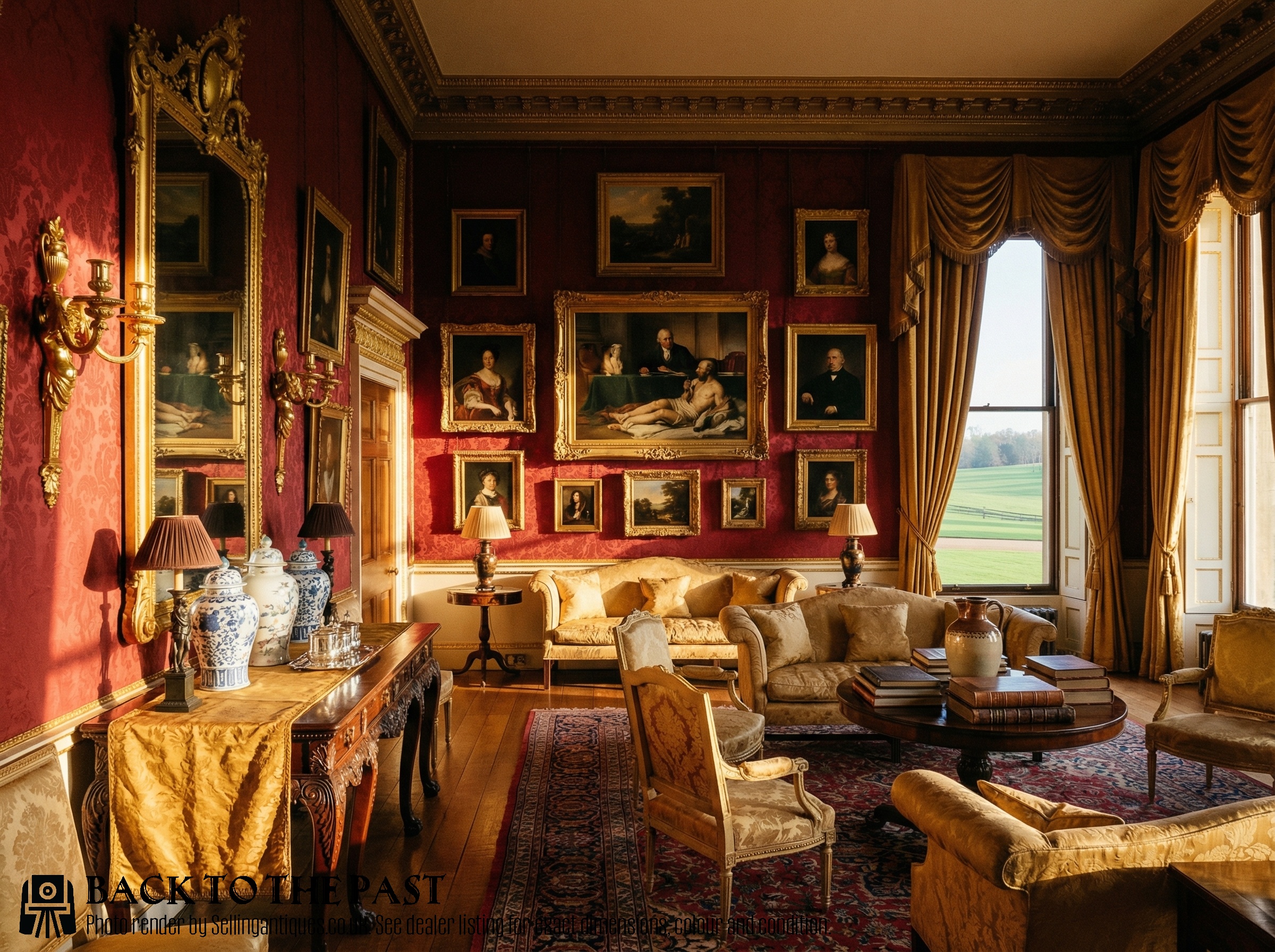
Gilt Brass Wall Candelabra
Gilt brass wall candelabra are decorative lighting fixtures designed to mount directly onto interior walls while holding multiple candles. When buyers search for gilt brass wall candelabra, they encounter multi-branched wall lights originating primarily from nineteenth-century France and Italy.
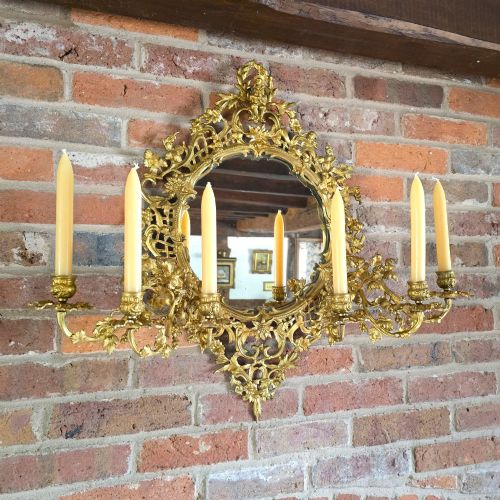
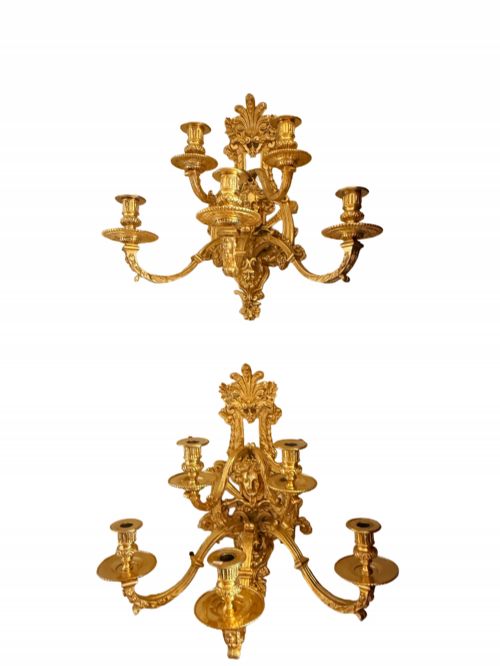
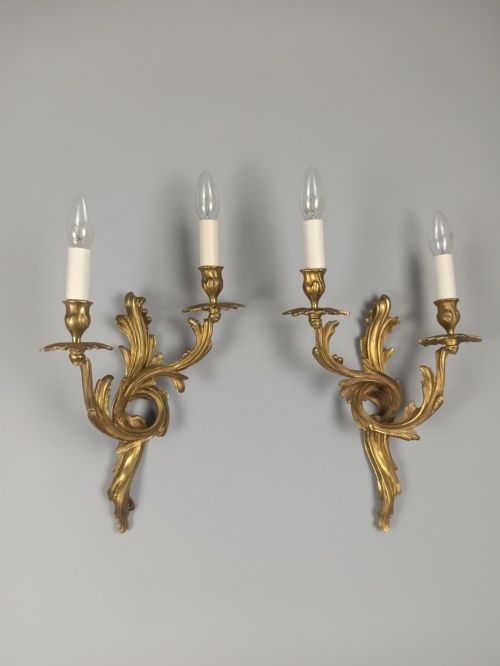
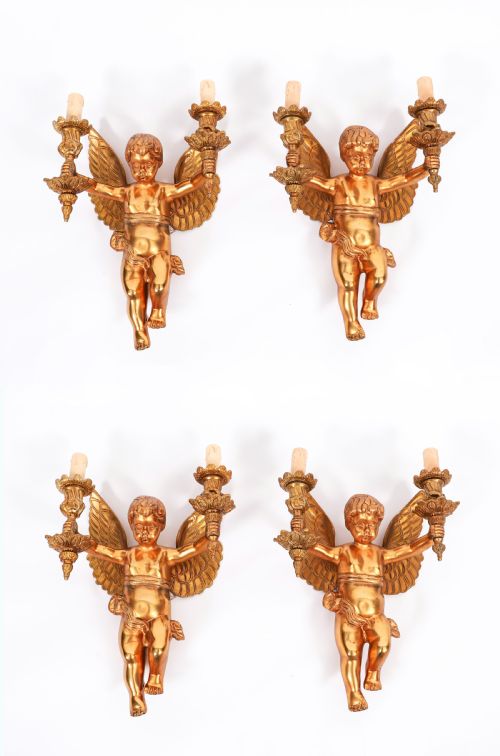
The selections available here range from pairs of two-branch cherub ormolu wall lights to larger French wall mirrors combined with six-branch candelabra. These objects frequently draw upon French Rococo, Louis XIV, Louis XVI, and Florentine styles.
Most examples function as wall sconces, wall lights, or girandoles, utilising glass crystal drops or gold leaf to enhance their visual impact. The dominant forms feature three or more arms designed to illuminate period interiors.
Materials and Construction
The manufacturing process relies heavily on casting bronze, brass, and ormolu into elaborate decorative shapes. Artisans then apply gilding, gold leaf, or silver leaf to the metal surfaces to create a luminous finish.
Certain pieces incorporate carved wood and glass crystal components to supplement the metallic structure. These diverse materials are assembled into sturdy wall-mounted brackets capable of supporting multiple candle branches.
Current listings feature materials including gilt bronze, brass, ormolu, glass crystal, carved wood, and gold leaf across nineteenth- and early twentieth-century periods.
Assessing Quality and Execution
Quality in these lighting fixtures rests on the crispness of the metal casting and the depth of the gilding. Finer pieces display sharply defined ornamentation, particularly in figural elements like cherubs and floral scrolls.
The structural integrity of the branch junctions and the quality of the supporting backplates also distinguish superior examples. Consistency in the application of gold or silver leaf indicates careful workshop production.
The Gilt Brass Wall Candelabra Glossary
- Ormolu
- Finely chopped gold or gold amalgam applied to a bronze or brass base. This technique creates a rich, durable metallic surface seen on French lighting.
- Girandole
- An ornamental wall candelabra featuring a reflective mirror backplate. The glass multiplies the flickering candlelight within the room.
- Wall Sconce
- A fixed wall-mounted lighting fixture designed to hold candles or lamps. These fixtures project outward to illuminate surrounding architectural details.
- Giltwood
- Timber that has been coated with a thin layer of gold leaf. This material appears frequently in Florentine wall light designs.
- French Rococo
- A decorative style characterised by asymmetrical curves, scrollwork, and natural motifs. This aesthetic heavily influences nineteenth-century metalwork.
Gilt Brass Wall Candelabra: Frequently Asked Questions
How do I install antique wall candelabra safely?
These fixtures require secure mounting to wall studs or heavy-duty anchors due to the substantial weight of cast bronze and brass.
While originally designed strictly for wax candles, modern placement should account for the clearance needed around open flames to protect nearby walls and furnishings.
How do I clean gilded brass safely?
Dust the metal surfaces gently using a soft, dry brush to prevent accumulation without disturbing the delicate gold leaf or ormolu.
Avoid commercial brass cleaners and abrasive cloths, as chemical solutions strip away historical gilding permanently.
What is the difference between ormolu and brass?
Ormolu refers specifically to gilded bronze or brass where fine gold is applied to create a warm, deep yellow lustre. Standard brass exhibits a brighter, more uniform metallic yellow colour without the historical amalgamation process.
Both materials form the structural core of nineteenth-century wall lighting.
How do I identify French Rococo style?
French Rococo pieces feature fluid, asymmetrical lines inspired by natural forms such as C-scrolls, shells, and foliage. This ornamentation creates a sense of dynamic movement across the metal surface.
Such decorative flourishes appear predominantly on nineteenth-century French wall sconces.