
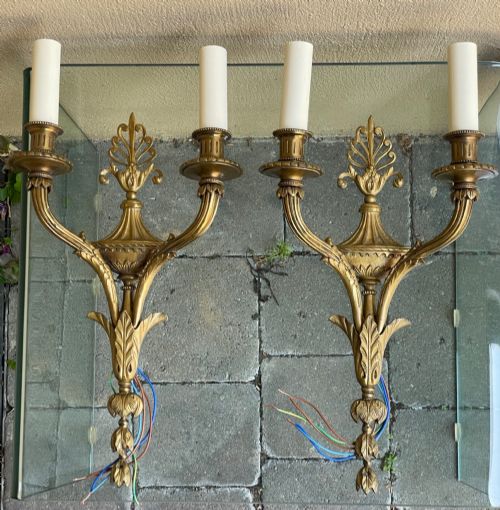
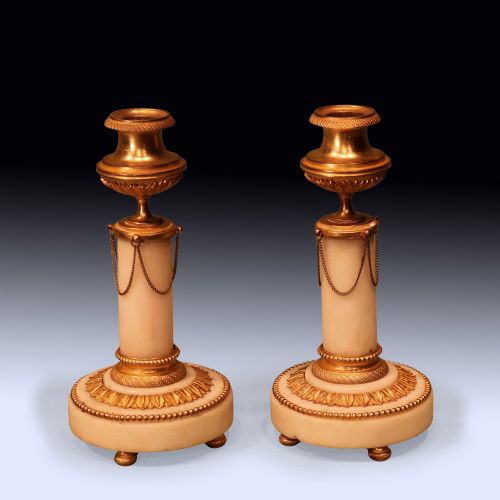
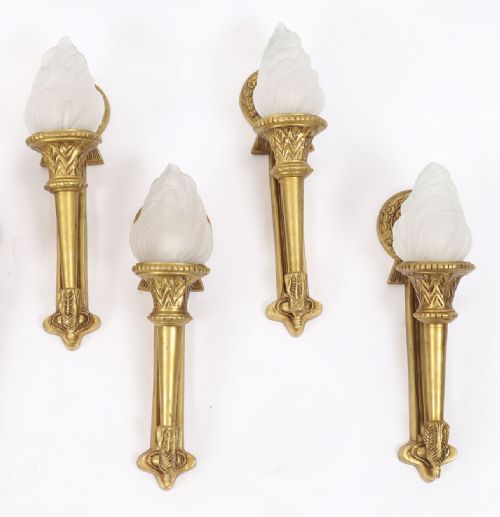


Empire Gilt Bronze Sconces
Empire gilt bronze sconces bring grand neoclassical weight and candle-lit warmth to a room, forged in heavy metals and finished in brilliant gold.
Empire Gilt Bronze Sconces
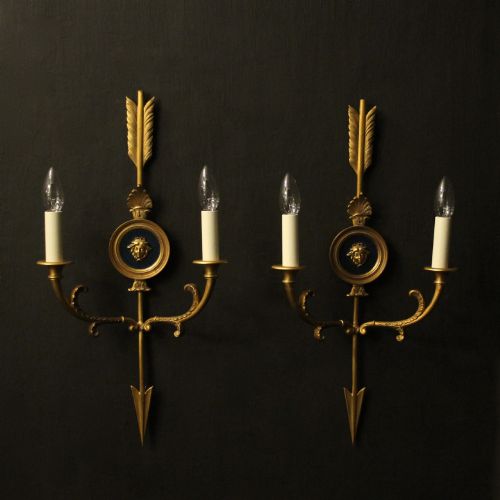
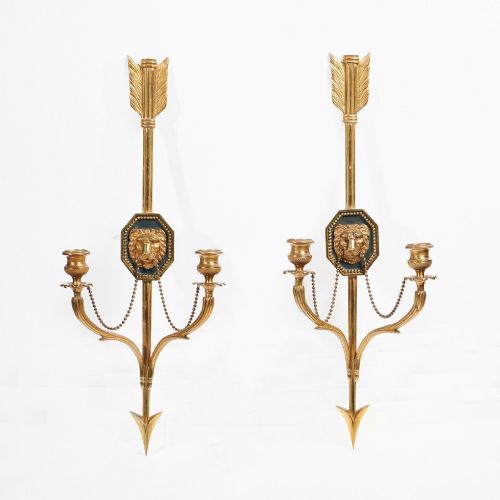
Empire gilt bronze sconces are monumental wall-mounted lighting fixtures and candle holders that channel classical antiquity through heavy cast metalwork. When searching for empire gilt bronze sconces, buyers encounter lighting that reflects French Neoclassical, Regency, and nineteenth-century design idioms.
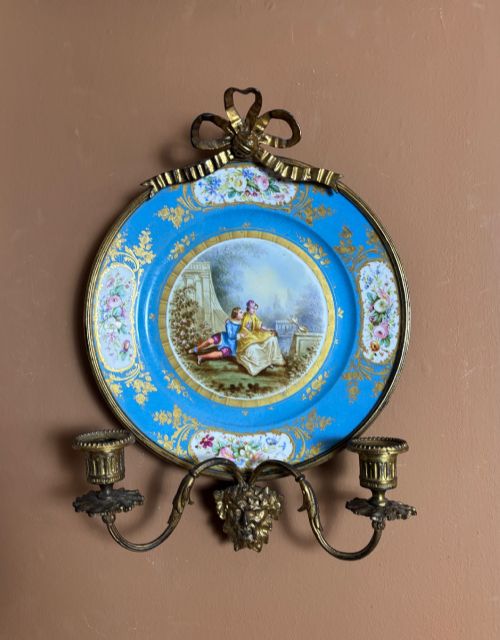
The selections available here lean heavily toward twin and multi-arm wall lights, alongside matched pairs of candelabras adapted from candlesticks. These fixtures frequently incorporate contrasting materials like white marble, onyx, and patinated bronze beneath their brilliant golden surfaces.
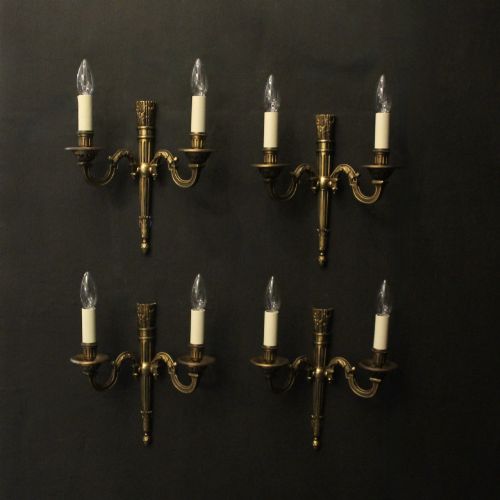
Origins span across French workshops and Italian makers, often drawing on Grand Tour influences and Napoleon III aesthetics. Buyers find everything from single-arm sconces to grand sets of four wall lights designed to flank mirrors or fireplaces.
How they were made
These pieces rely on heavy casting in bronze, brass, and metal, shaped into rigorous classical forms such as flaming torches, caryatids, and putti. Craftsmen combined polished ormolu with patinated bronze to create sharp visual contrast across the body of each fixture.
Gilding was applied through traditional mercury or gold leaf methods, depositing a rich metallic layer over the bronze base. Additional elements like hand-carved white marble, onyx bases, and moulded glass components were integrated into the metal frames to complete the composition.
Materials recorded across the inventory include ormolu, patinated bronze, white marble, onyx, and hand-moulded glass.
What varies in quality
Quality rests in the crispness of the original bronze chasing and the depth of the mercury gilding or ormolu finish. Finer examples display sharp, hand-tooled details in classical motifs like acanthus leaves and drapery, where lesser pieces can appear blunt or smoothed over.
The weight and purity of the foundational materials also dictate the tier of the piece, particularly when combining bronze with genuine white marble or onyx shafts. Superior scale and balanced proportions between the arms, bobeches, and backplates separate ordinary production from exceptional historical items.
The Empire Gilt Bronze Sconces Glossary
- Ormolu
- Finely chopped gold-mercury amalgam applied to a bronze base through fire-gilding. This technique creates a rich, durable golden surface characteristic of nineteenth-century French luxury goods.
- Patinated bronze
- Darkened or chemically treated bronze surface used to contrast against bright ormolu mountings. It highlights sculptural depth in figures and classical columns.
- Candelabra
- A branched candlestick holding multiple lights on separate arms. These pieces often feature central decorative shafts adorned with caryatids or putti.
- Girandole
- An ornamental branched wall light or candelabrum with mirrored glass or reflective backplates. They multiply the candle flame across the room.
- Bobeche
- A removable drip pan fitted beneath a candle nozzle to catch melting wax. It protects the arms and sconce body below from damage.
Empire Gilt Bronze Sconces: Frequently Asked Questions
Are these sconces wired for electricity?
Many wall lights from the nineteenth and early twentieth centuries have been adapted for modern electrical wiring over time. Some retain their original candle-only configuration or show evidence of past conversions.
Inspect the backplate and arms for wiring channels to understand how the fixture interfaces with current domestic power supplies.
How do I clean gilt bronze safely?
Dust the surface gently with a soft, dry brush to remove particles without disturbing the delicate metallic finish. Avoid abrasive cloths, chemical dips, or metal polishes that strip away historical ormolu.
Water and harsh detergents can damage underlying patination and marble bases, so keep moisture away from the metalwork entirely.
What rooms suit empire wall lights?
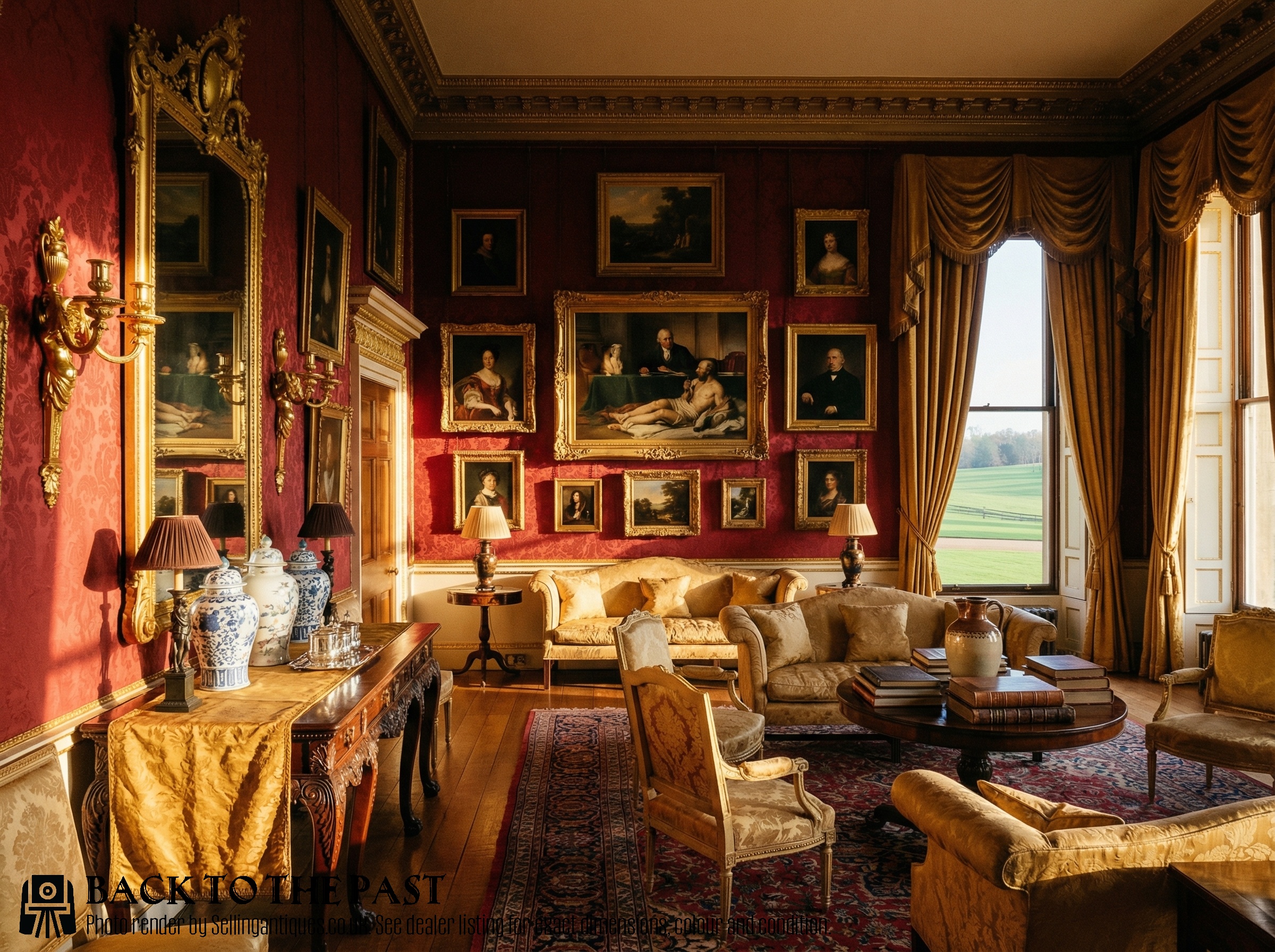
Dining rooms, hallways, and drawing rooms benefit most from the strong neoclassical presence and warm metal reflection of these fixtures. They provide balanced ambient illumination when mounted at eye level or flanking large mirrors and fireplaces.
Their architectural character pairs naturally with period interiors and high ceilings.
How do I date these pieces?
Dating relies on casting techniques, assembly screws, material combinations, and stylistic markers tied to periods like Regency, French Empire, and the later nineteenth century. Secondary elements such as carved marble shafts and glass drops offer additional chronological clues.
Compare the quality of the chasing and the type of bronze alloy against known nineteenth-century production standards.